
OpenAI's GPT-Live: A voice-enabled ChatGPT that can listen and respond.
OpenAI wants users to engage with ChatGPT through conversation rather than typing. On July 8, it introduced GPT-Live, a new generation of voice models, which the company claims makes interactions with AI feel significantly more like a real dialogue. Two variants, GPT-Live-1 and a smaller version called GPT-Live-1 mini, are now available to ChatGPT users globally.
The primary change lies in the architecture. GPT-Live operates in “full-duplex” mode, allowing it to listen and speak simultaneously. This capability enables it to interject with affirmations like “mhmm” or “got it,” engage in quick exchanges, or pause while you formulate your thoughts. Previous voice modes had to wait for users to finish speaking, often resulting in interruptions at inappropriate times.
The second major advancement is in its delegation capabilities. When a question requires an online search or complex reasoning, GPT-Live refers it to a more powerful model operating in the background. At launch, that model is GPT-5.5. While waiting for the answer, GPT-Live continues the conversation and integrates the response seamlessly.
“This mirrors how humans communicate with each other,” said Atty Eleti, the voice product lead for ChatGPT, to reporters as reported by CNET. “We maintain the flow of conversation while thinking in the background.”
One notable demonstration featured the model performing real-time, simultaneous translation, providing a running translation as a presenter spoke. TechRadar, which witnessed the feature, described it as genuinely valuable. The model also responds to a wake word, with OpenAI staff using “Hey Chat” during the demos.
OpenAI describes GPT-Live as its most advanced voice model to date. Users can select a reasoning level: Instant, Medium, or High. The voice can now display visual cards for items like weather, stocks, and sports. The company claims that in five to ten-minute test conversations, GPT-Live-1 and the mini outperform the previous Advanced Voice Mode. Significant improvements were also noted in benchmarks for scientific reasoning and agentic web searches.
According to OpenAI, over 150 million people utilize ChatGPT’s Voice and Dictation features weekly. GPT-Live-1 will serve as the default for Go, Plus, and Pro subscribers, while the mini will be available to free users. It is compatible with iOS, Android, and the web, although the rollout might take a few days.
The challenge of sounding human comes with its own issues. OpenAI states it has implemented voice-specific safety training and real-time safeguards that can guide responses, provide crisis resources, or terminate a conversation in higher-risk situations, with additional protections for teens. OpenAI also emphasizes that GPT-Live uses predetermined voices and will not mimic real individuals.
This caution is crucial. A model that sounds friendly can more easily build trust and, conversely, can also mislead users. Critics, including Meredith Whittaker from Signal, have warned that chatbots “are not your friends.” The market remains competitive, with rivals like ElevenLabs and numerous voice-agent startups pursuing similar goals, prompting Amazon to revamp Alexa.
This launch coincides with OpenAI's rollout of GPT-5.6, part of its rapid release schedule. For years, voice has been a supplementary feature rather than the primary method of interaction with ChatGPT. With GPT-Live, OpenAI is betting that speaking, rather than typing, will become the norm. Whether users desire an AI that remains constantly attentive is still an open question.
Other articles
 Just 6% of managers in the UK believe that Gen Z is prepared for the workforce.
A CMI report reveals that 45% of UK Gen Z believe they are prepared for work, yet only 6% of managers concur, and among those managers, 82% were elevated to their positions without any training.
Just 6% of managers in the UK believe that Gen Z is prepared for the workforce.
A CMI report reveals that 45% of UK Gen Z believe they are prepared for work, yet only 6% of managers concur, and among those managers, 82% were elevated to their positions without any training.
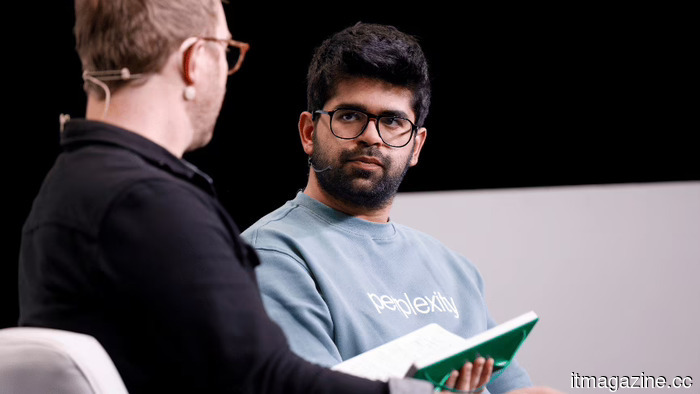 Perplexity is discreetly developing an AI coding tool.
Perplexity has developed an internal coding tool referred to as "Teammate," which may compete with Cursor and Claude Code, according to a report from Business Insider. There is no confirmation regarding a launch.
Perplexity is discreetly developing an AI coding tool.
Perplexity has developed an internal coding tool referred to as "Teammate," which may compete with Cursor and Claude Code, according to a report from Business Insider. There is no confirmation regarding a launch.
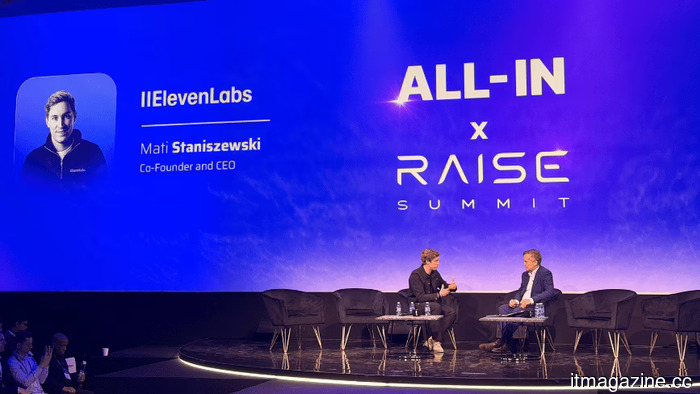 CEO of ElevenLabs discusses $600 million in revenue and the AI laboratories.
At the RAISE Summit in Paris, Mati Staniszewski, the CEO of ElevenLabs, elaborated on the company's journey towards achieving a reported $600 million in revenue and discussed the startup's strategy for surpassing the AI laboratories.
CEO of ElevenLabs discusses $600 million in revenue and the AI laboratories.
At the RAISE Summit in Paris, Mati Staniszewski, the CEO of ElevenLabs, elaborated on the company's journey towards achieving a reported $600 million in revenue and discussed the startup's strategy for surpassing the AI laboratories.
 Mark Cuban: Lovable and Replit have the potential to endure beyond the AI labs.
During the RAISE Summit, Mark Cuban contended that vibe-coding tools such as Lovable and Replit can endure against Anthropic and OpenAI by taking control of the workflow rather than merely the code.
Mark Cuban: Lovable and Replit have the potential to endure beyond the AI labs.
During the RAISE Summit, Mark Cuban contended that vibe-coding tools such as Lovable and Replit can endure against Anthropic and OpenAI by taking control of the workflow rather than merely the code.
 NATO engages Accenture and Leonardo for a secure cloud project valued at €200 million.
NATO has finalized a seven-year agreement worth approximately €200 million with Accenture and Leonardo to create a secure cloud infrastructure, known as the Protected Business Network, for the Alliance.
NATO engages Accenture and Leonardo for a secure cloud project valued at €200 million.
NATO has finalized a seven-year agreement worth approximately €200 million with Accenture and Leonardo to create a secure cloud infrastructure, known as the Protected Business Network, for the Alliance.
 Meta might be developing smart glasses that are capable of always seeing and hearing, equipped with advanced AI sensing technology.
Meta is said to be experimenting with “super sensing” AI glasses designed to gather comprehensive data about your life and provide it to an AI assistant that will aid you.
Meta might be developing smart glasses that are capable of always seeing and hearing, equipped with advanced AI sensing technology.
Meta is said to be experimenting with “super sensing” AI glasses designed to gather comprehensive data about your life and provide it to an AI assistant that will aid you.
OpenAI's GPT-Live: A voice-enabled ChatGPT that can listen and respond.
OpenAI has introduced GPT-Live, a full-duplex voice version of ChatGPT that can listen and speak simultaneously, featuring live translation. This is being made available to all users, including those with free accounts.