
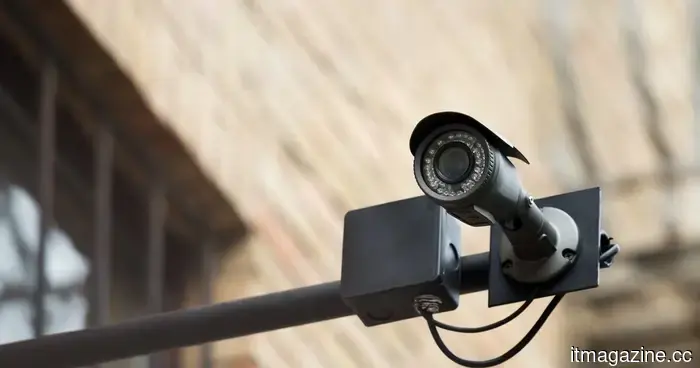
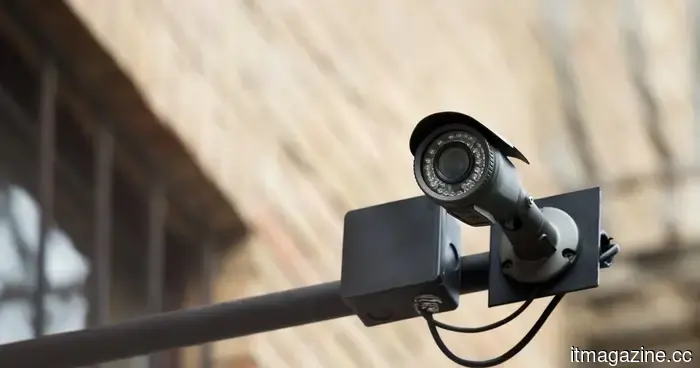
AI security cameras might soon identify your gait before they can recognize your facial features.
A new AI gait recognition system monitors body movement using skeletal keypoints, targeting long-range identity verification where traditional face scans and fingerprints may not be effective.
Security cameras primarily look for faces, but recent research indicates that they may soon focus on the subtle habits evident in an individual's walking style.
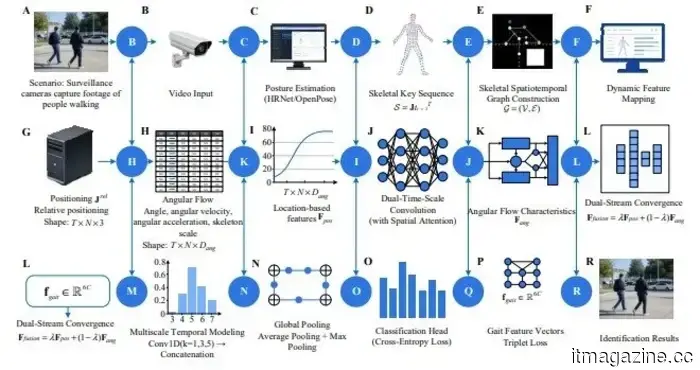
A study published in the International Journal of Reasoning-based Intelligent Systems introduces SKDMap-Net, a system designed to recognize individuals from walking videos, even if the camera cannot capture a clear view of their faces. Rather than depending on close-up images, it analyzes body movements frame by frame.
This capability is both beneficial and concerning. Even from a distance, if someone is turned away or partially obscured, their walking pattern might still permit identification. The model achieved 95.8% accuracy on a significant gait dataset and 83.7% Rank-1 accuracy on a more challenging real-world dataset.
Understanding why gait can be more effective
Unlike faces, fingerprints, and irises, which require close, clear captures that many security cameras cannot provide, gait recognition offers a solution.
The system can analyze movement patterns influenced by stride, timing, and limb motion, which allows cameras to identify individuals without needing them to stand still in ideal lighting conditions.
This ability to recognize gait remains a focus in security research, providing an additional means of identification when facial recognition is hindered by blurriness, angle, or size.
The mechanics of motion analysis
SKDMap-Net does not view walking as a simple outline; various factors such as poor camera angles can distort this outline significantly.
Instead, the system divides the body into moving points, tracking their behavior over time. It observes joint movements, speed of rotation, and the variations in rhythm during walking.
This approach is beneficial even when visibility decreases. If the lower body is obscured, the model can rely more on upper-body movements rather than estimating based on absent leg movements. It emphasizes motion over mere shape.
Privacy implications of gait recognition
A more benign future could involve cameras analyzing skeletal data rather than retaining raw video footage, potentially minimizing the amount of identifiable material processed by security systems.
However, this concept is not without its drawbacks. Gait serves as a behavioral biometric, meaning a person's walking pattern can still be used to identify them, even without facial recognition.
Enhanced long-range identity checks may also facilitate tracking public movement. Therefore, stringent regulations regarding data storage, access, and implementation are essential before "walk normally" becomes a troubling privacy recommendation.




Other articles
 AI security cameras might soon identify your walking pattern before they are able to recognize your face.
A novel AI gait recognition system can recognize individuals based on their walking patterns, providing security cameras with an additional long-distance signal when faces are unclear, obscured, or too small to rely on.
AI security cameras might soon identify your walking pattern before they are able to recognize your face.
A novel AI gait recognition system can recognize individuals based on their walking patterns, providing security cameras with an additional long-distance signal when faces are unclear, obscured, or too small to rely on.
 Rilla spends $1.7 million annually on rent for staff working 72 hours a week.
AI startup Rilla allocates $1.7 million annually for housing stipends to ensure that employees reside close to its New York City office while working 72-hour weeks. The CEO emphasizes that the focus is on productivity rather than comfort.
Rilla spends $1.7 million annually on rent for staff working 72 hours a week.
AI startup Rilla allocates $1.7 million annually for housing stipends to ensure that employees reside close to its New York City office while working 72-hour weeks. The CEO emphasizes that the focus is on productivity rather than comfort.
 Rollme's latest AirCam integrates a camera into your headphones for less than $80.
Rollme's AirCam is a bone conduction headset featuring an 8 MP camera, real-time translation capabilities, and a price that beats all competitors.
OpenAI's GPT-Live: A voice-enabled ChatGPT that can listen and respond.
OpenAI has introduced GPT-Live, a full-duplex voice version of ChatGPT that can listen and speak simultaneously, featuring live translation. This is being made available to all users, including those with free accounts.
OpenAI's GPT-Live: A voice feature for ChatGPT that can listen and engage in conversation.
OpenAI has introduced GPT-Live, a full-duplex voice feature for ChatGPT that can listen and speak simultaneously, complete with live translation. This feature is being made available to all users, including those with free accounts.
Rollme's latest AirCam integrates a camera into your headphones for less than $80.
Rollme's AirCam is a bone conduction headset featuring an 8 MP camera, real-time translation capabilities, and a price that beats all competitors.
OpenAI's GPT-Live: A voice-enabled ChatGPT that can listen and respond.
OpenAI has introduced GPT-Live, a full-duplex voice version of ChatGPT that can listen and speak simultaneously, featuring live translation. This is being made available to all users, including those with free accounts.
OpenAI's GPT-Live: A voice feature for ChatGPT that can listen and engage in conversation.
OpenAI has introduced GPT-Live, a full-duplex voice feature for ChatGPT that can listen and speak simultaneously, complete with live translation. This feature is being made available to all users, including those with free accounts.
AI security cameras might soon identify your gait before they can recognize your facial features.
A novel AI-based gait recognition system can recognize individuals through their walking patterns, providing security cameras with an additional long-range indication when faces are unclear, obscured, or too small to rely on.