

Gyre Energy secures $1.3 million to optimize the efficiency of the world's cold storage facilities during peak energy costs.
During a sweltering summer in Europe, the least glamorous machines within the economy have been working hard behind the scenes. In cold storage facilities and distribution centers, compressors operate more intensively as temperatures rise, consuming more power during peak hours when energy is most expensive. This is a challenge that many operators have simply accepted.
Gyre Energy, an energy tech firm established in Oxford, has built its business on the premise that they can change this situation. They have recently secured over $1.3 million to scale their solution.
This pre-seed round, which combines investment and grant funding, was led by Speedinvest, along with contributions from rule30 and Plug and Play. The funds will support Gyre's largest deployment to date and its first collaboration with a major global logistics firm, one of the largest players in the transportation and storage of temperature-sensitive products.
The identity of the customer remains confidential for commercial reasons, but Gyre plans to integrate its platform within a chamber of a 140,000 square foot cold chain facility, with performance to be assessed against an IPMVP baseline.
The underlying concept is surprisingly straightforward. Gyre’s software analyzes the operational patterns of a site, predicts cooling needs, and optimizes energy use while maintaining temperature control. Their thermal energy storage system performs the more complex task of storing cooling capacity when electricity is cheaper and cleaner, and releasing it during price surges, ensuring that operation costs are minimized when energy prices are highest.
“We are an applied AI company that has taken cutting-edge AI from the lab and used it to address tangible, real-world challenges. We assist companies in transforming their operational frameworks into intelligent infrastructures, enhancing the management of otherwise invisible systems to make them smarter, cleaner, and more resilient. Our core intellectual property lies in our models and thermal energy storage capabilities.
We employ physics-based AI to grasp the thermal dynamics of each cooling site, analyzing how individual rooms and assets function, and then optimizing the overall system performance. Thermal storage enables this process, but the true intelligence is what delivers the savings,” explained Dougald Coulson, co-founder and CEO of Gyre.
The timing of this initiative is not coincidental. Heatwaves across Europe and beyond are putting a significant strain on cold chains, buildings, and power grids simultaneously. The International Energy Agency estimates that cooling currently accounts for around 10% of global electricity usage and nearly 20% of energy consumption in buildings worldwide, warning that this demand is placing pressure on power grids globally.
Projections indicate that global electricity demand will increase approximately 50% faster between 2026 and 2030 compared to the previous decade, spurred by cooling needs, data centers, and electrification—the exact opportunities Gyre claims its platform addresses.
Gyre is not starting from scratch. In its first documented commercial installation at a 2,900 square foot frozen storage facility operated by a UK chilled and frozen goods distributor, Gyre achieved a 38% reduction in electricity costs and a 35% decrease in daily energy consumption, with a payback period of less than 18 months, all without the need to replace existing equipment.
“Energy prices pose the most immediate challenge. For many clients, cooling represents one of their largest operational expenses. In cold storage, cooling can make up a significant portion of total energy demand, so fluctuations in power costs directly impact profit margins. Grid limitations are another consideration.
As electrification and cooling demands increase, many facilities may encounter rising costs or limits on their energy draw from the grid. Additionally, climate factors play a role. Warmer conditions elevate cooling requirements and complicate temperature management,” said Coulson.
This perspective is what attracted investors. “Cooling is one of the most essential yet overlooked challenges in the energy transition, and Gyre is addressing it directly,” stated Alex Davis, an investor at Speedinvest. “This represents AI applied in the real world, leading to reduced energy consumption and strengthened supply chains.”
Coulson founded the company in 2024 alongside Michael McKenna and Tom Gibson, all three Oxford MBAs with expertise in machine learning and energy systems. Since then, Gyre has been recognized as a MIT Climate Solver, received multiple grants from Innovate UK, and secured second place at SXSW London Venture Spotlight.
Its next focus is a highly scrutinized area: data centers, where there is an urgent need to keep AI servers cool and operational. As the power grids that support these data centers struggle, even a simple refrigerator might emerge as a crucial asset in the energy network.
Other articles
 Samsung's profit in the second quarter soared 19 times to reach 89 trillion won, driven by demand for AI memory.
Samsung projected approximately 89.4 trillion won ($58.4 billion) in operating profit for Q2, marking an increase of around 19 times compared to the previous year, attributed to a rise in AI memory prices.
Samsung's profit in the second quarter soared 19 times to reach 89 trillion won, driven by demand for AI memory.
Samsung projected approximately 89.4 trillion won ($58.4 billion) in operating profit for Q2, marking an increase of around 19 times compared to the previous year, attributed to a rise in AI memory prices.
 It's not limited to phones. Samsung's forthcoming Galaxy Watches are also becoming more expensive.
A recent leak regarding European pricing indicates that all configurations of the Galaxy Watch 9, along with the Galaxy Watch Ultra 2, will be priced higher than their predecessors.
It's not limited to phones. Samsung's forthcoming Galaxy Watches are also becoming more expensive.
A recent leak regarding European pricing indicates that all configurations of the Galaxy Watch 9, along with the Galaxy Watch Ultra 2, will be priced higher than their predecessors.
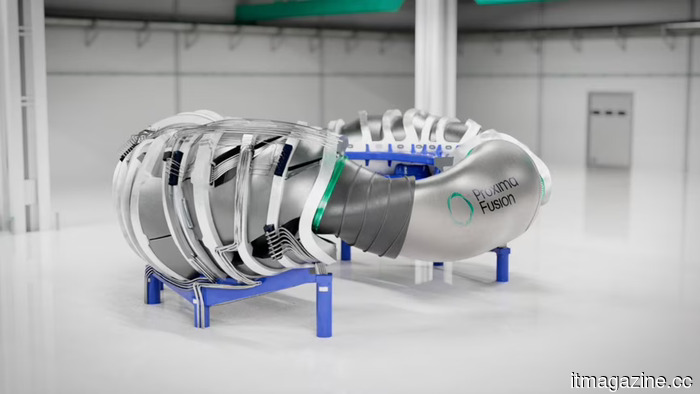 Google and RWE support Proxima Fusion in a historic €411 million funding round.
Proxima Fusion in Munich has secured €411 million in funding from investors such as Google and RWE, marking the largest private fusion funding round in Europe to date.
Google and RWE support Proxima Fusion in a historic €411 million funding round.
Proxima Fusion in Munich has secured €411 million in funding from investors such as Google and RWE, marking the largest private fusion funding round in Europe to date.
 Samsung's profit in the second quarter soared 19 times to reach 89 trillion won due to the demand for AI memory.
Samsung projected approximately 89.4 trillion won ($58.4 billion) in operating profit for Q2, marking an increase of nearly 19 times compared to the previous year, driven by rising AI memory prices.
Samsung's profit in the second quarter soared 19 times to reach 89 trillion won due to the demand for AI memory.
Samsung projected approximately 89.4 trillion won ($58.4 billion) in operating profit for Q2, marking an increase of nearly 19 times compared to the previous year, driven by rising AI memory prices.
 Synopsys steps back from chip fabrication software to pursue profit margins in AI design.
Sources have informed Reuters that Synopsys is discontinuing its fab manufacturing control software to shift its engineers' focus towards more profitable AI chip design.
Synopsys steps back from chip fabrication software to pursue profit margins in AI design.
Sources have informed Reuters that Synopsys is discontinuing its fab manufacturing control software to shift its engineers' focus towards more profitable AI chip design.
 Gyre Energy has secured $1.3 million to optimize the efficiency of cold storage systems during peak energy pricing.
Gyre Energy, founded in Oxford, has secured more than $1.3 million to implement its AI cooling technology within one of the largest cold chains globally, as heatwaves put pressure on power grids.
Gyre Energy has secured $1.3 million to optimize the efficiency of cold storage systems during peak energy pricing.
Gyre Energy, founded in Oxford, has secured more than $1.3 million to implement its AI cooling technology within one of the largest cold chains globally, as heatwaves put pressure on power grids.
Gyre Energy secures $1.3 million to optimize the efficiency of the world's cold storage facilities during peak energy costs.
Gyre Energy, founded in Oxford, has secured more than $1.3 million to implement its AI cooling system within one of the largest cold chains globally as heatwaves put pressure on power grids.