
Synopsys steps back from chip fabrication software to pursue profit margins in AI design.
Synopsys, the major US chip design software company, is planning to step back from the manufacturing control software that supports the operation of semiconductor fabs worldwide, redirecting its engineering team to focus on the more profitable area of AI chip design. This strategy, as reported by Reuters and based on insights from six individuals familiar with the situation, signifies a deliberate withdrawal from manufacturing for a company that has recently garnered a significant $2 billion backing from Nvidia for its AI initiatives.
As per two of the sources, Synopsys has informed over 10 chip manufacturers, including Samsung Electronics, SK Hynix, Kioxia, and Qorvo, that its suite of manufacturing tools has reached its “end of life.” Notices were sent in April and May, indicating that future versions will not be produced, with only maintenance available, and discussions regarding ongoing support obligations expected to finish by July.
Central to this decision are two products: the Equipment Engineering System (EES) and Fault Detection and Classification (FDC). According to two sources, these tools act like the nervous system of a fabrication plant, monitoring equipment in real-time and identifying anomalies before they can lead to expensive defects. Synopsys did not publicly specify these products, with a spokesperson telling Reuters that the company is “discontinuing certain manufacturing analytics products, which are older diagnostic tools not in our customers’ critical paths of production,” while asserting its commitment to further investments and honoring current contracts.
So, why discontinue software that is critical for global fabs? The concise answer, according to those familiar with the plan, is profit margins: Synopsys aims to redirect engineers engaged in support and maintenance towards AI design, an area it has been vigorously expanding since its $35 billion acquisition of Ansys in 2025.
There is a strategic rationale beyond workforce considerations. Enhancements to the EES reportedly necessitated chipmakers to share sensitive manufacturing data, leading some clients, including Samsung, to develop their own internal tools, which two sources indicated has diminished the competitiveness of Synopsys’s offerings.
Reactions to the associated risks are mixed. One source, corroborated by another, warned that eliminating maintenance and updates could negatively impact production yields at certain chipmakers over time, given that the software requires ongoing care. Conversely, four other sources expressed that they anticipated no repercussions for major manufacturers.
Samsung confirmed the end-of-life decision and stated that discussions with Synopsys are ongoing. It has identified compatible alternatives and foresees “no negative impact on production,” according to a spokesperson. SK Hynix declined to comment, while Kioxia and Qorvo did not respond to inquiries.
This withdrawal entails a human cost that Synopsys has not quantified. The company has already laid off several dozen employees associated with these products, according to three sources, though it has not confirmed any job cuts or provided details on timing.
The software is relatively new to Synopsys, having been integrated into the company following its 2021 acquisition of manufacturing solutions from the South Korean firm BISTel. This decision aligns with a broader transformation in the EDA industry, where companies are increasingly prioritizing investments in AI design tools while chipmakers are developing their own factory software and startups are re-evaluating the economics of silicon ownership.
For Synopsys, the direction is quite clear. The company has spent decades providing software that organizes the tens of billions of transistors on modern chips, featuring dimensions that can be up to 2,000 times thinner than a human hair. In March, it presented technology that it claimed would allow AI agents to manage many tasks involved in chip creation, indicating a clear intention to pursue this future. The belief is that the next decade of growth will stem from autonomous design software, rather than factory maintenance agreements.
Other articles
 The US cyber agency is reportedly utilizing Anthropic’s Mythos to review government code, according to sources.
According to sources, CISA is allegedly utilizing Anthropic's Mythos AI to examine government code for vulnerabilities, several months after a conflict with the White House.
The US cyber agency is reportedly utilizing Anthropic’s Mythos to review government code, according to sources.
According to sources, CISA is allegedly utilizing Anthropic's Mythos AI to examine government code for vulnerabilities, several months after a conflict with the White House.
 Nscale secures a $900 million revolving credit facility to finance its data center expansion.
Nscale has finalized a $900 million revolving credit facility, which has been syndicated among 12 banks, enhancing its flexible liquidity for the development of AI data centers.
Nscale secures a $900 million revolving credit facility to finance its data center expansion.
Nscale has finalized a $900 million revolving credit facility, which has been syndicated among 12 banks, enhancing its flexible liquidity for the development of AI data centers.
 Australia's under-16 social media prohibition falters at the initial age verification, according to testers.
Testers involved in the creation of Australia's age-verification system opened 50 accounts, stating they were 16 years old. Out of the 10 platforms, 9 never requested any proof of age.
Australia's under-16 social media prohibition falters at the initial age verification, according to testers.
Testers involved in the creation of Australia's age-verification system opened 50 accounts, stating they were 16 years old. Out of the 10 platforms, 9 never requested any proof of age.
 Gyre Energy has secured $1.3 million to optimize the efficiency of cold storage systems during peak energy pricing.
Gyre Energy, founded in Oxford, has secured more than $1.3 million to implement its AI cooling technology within one of the largest cold chains globally, as heatwaves put pressure on power grids.
Gyre Energy has secured $1.3 million to optimize the efficiency of cold storage systems during peak energy pricing.
Gyre Energy, founded in Oxford, has secured more than $1.3 million to implement its AI cooling technology within one of the largest cold chains globally, as heatwaves put pressure on power grids.
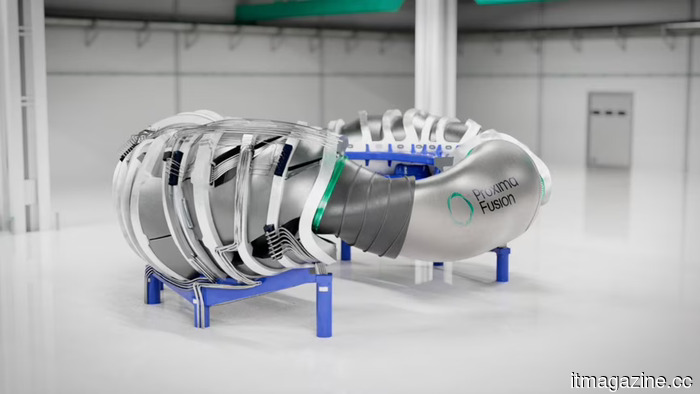 Google and RWE support Proxima Fusion in a historic €411 million funding round.
Proxima Fusion in Munich has secured €411 million in funding from investors such as Google and RWE, marking the largest private fusion funding round in Europe to date.
Google and RWE support Proxima Fusion in a historic €411 million funding round.
Proxima Fusion in Munich has secured €411 million in funding from investors such as Google and RWE, marking the largest private fusion funding round in Europe to date.
 Why CNAPP is Becoming Crucial for Cloud-Native Security
Grasping the contemporary demands of online security. Previously, cloud-native security appeared to be an issue solely for highly technical teams operating within intricate systems. This perspective has evolved. As organizations adopt containers, Kubernetes, APIs, serverless functions, and rapid deployment cycles, security teams require a method to monitor risk throughout all these elements without having to assemble […]
Why CNAPP is Becoming Crucial for Cloud-Native Security
Grasping the contemporary demands of online security. Previously, cloud-native security appeared to be an issue solely for highly technical teams operating within intricate systems. This perspective has evolved. As organizations adopt containers, Kubernetes, APIs, serverless functions, and rapid deployment cycles, security teams require a method to monitor risk throughout all these elements without having to assemble […]
Synopsys steps back from chip fabrication software to pursue profit margins in AI design.
Sources have informed Reuters that Synopsys is discontinuing its fab manufacturing control software to shift its engineers' focus towards more profitable AI chip design.