
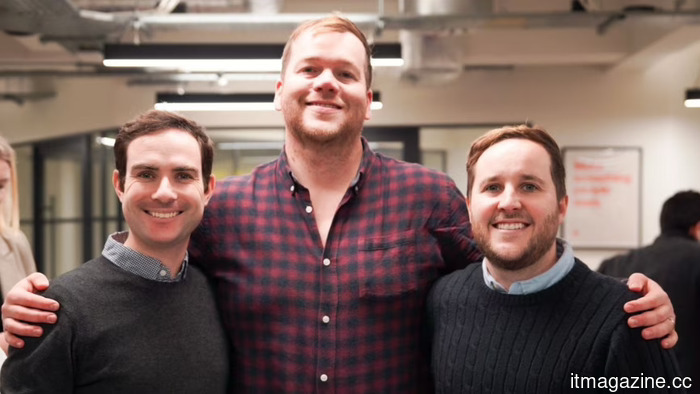
Gyre Energy has secured $1.3 million to optimize the efficiency of cold storage systems during peak energy pricing.
During a sweltering summer in Europe, the less glamorous machines in the economy have been quietly overworked. In cold storage facilities and distribution centers, compressors are operating harder as temperatures rise, consuming more energy during peak pricing hours. This issue is one that many operators have simply accepted.
Gyre Energy, a tech company founded in Oxford, has built its business on the belief that operators no longer need to endure this problem, recently raising over $1.3 million to demonstrate their solution on a much larger scale.
The pre-seed funding round, comprising both investments and grant funding, was led by Speedinvest, with contributions from rule30 and Plug and Play. This funding supports Gyre’s largest deployment to date, and its first collaboration with a major global logistics partner, one of the top handlers of temperature-sensitive products.
The identity of the customer remains confidential for commercial reasons. However, Gyre will implement its platform within a section of a 140,000 square foot cold chain operation, with performance evaluated against an IPMVP baseline.
The underlying concept is surprisingly straightforward. Gyre’s software analyzes facility behavior, predicts cooling needs, and reduces energy consumption without allowing temperature fluctuations. Its thermal energy storage system then efficiently banks cooling capacity when electricity is inexpensive and cleaner, releasing it during price surges to minimize costs during peak times.
“We are an applied AI company, bringing advanced AI from the lab to address tangible, physical, real-world challenges. We assist companies in transforming operational systems into intelligent infrastructure, enhancing efficiency, sustainability, and resilience. Our primary intellectual property consists of our models and thermal energy storage,” explained Dougald Coulson, Gyre’s co-founder and CEO.
The timing of Gyre's solutions is critical. Heatwaves across Europe and elsewhere are putting significant pressure on cold chains, buildings, and power grids simultaneously. The International Energy Agency estimates that cooling already represents around 10% of global electricity consumption, and nearly 20% of energy use in buildings worldwide, warning that this demand is straining global power grids.
Forecasts predict that global electricity demand will increase approximately 50% faster between 2026 and 2030 than in the previous decade, driven by cooling, data centers, and electrification—the very challenges Gyre claims its platform is designed to manage.
Gyre is not starting from scratch. In its first public commercial deployment at a 2,900 square foot frozen store operated by a UK distributor, the company reduced electricity costs by 38% and daily energy consumption by 35%, achieving a payback period of less than 18 months—all without replacing the existing equipment.
“Energy prices pose the most immediate challenge. For many clients, cooling is among their largest operational expenses. In cold storage, cooling can constitute the bulk of a facility's energy demand, meaning fluctuations in power costs significantly affect profit margins. Grid constraints are another concern. As electrification expands and cooling needs escalate, many facilities will experience increased costs or restrictions on their grid usage. Climate conditions also factor in, as rising temperatures boost cooling demands and complicate temperature management,” said Dougald Coulson.
This perspective attracted investors. “Cooling represents one of the most fundamental yet often overlooked challenges in the energy transition, and Gyre is addressing it directly,” stated Alex Davis, an investor at Speedinvest. “This is AI applied to real-world scenarios, resulting in reduced energy consumption and more robust supply chains.”
Coulson established the company in 2024 with Michael McKenna and Tom Gibson, all three holding MBAs from Oxford with expertise in machine learning and energy systems. Since then, Gyre has been recognized as a MIT Climate Solver, received multiple Innovate UK grants, and earned second place in the SXSW London Venture Spotlight.
Next on their agenda is the data center sector, where there is a rush to keep AI servers cooled and operational. As power grids supporting these facilities buckle under pressure from Denmark to the wider continent, the unassuming refrigerator could emerge as a vital asset within the network.
Other articles
 I discovered a free universal TV remote app for both iOS and Android that is ad-free.
This complimentary TV remote application for iOS and Android includes volume controls, a D-pad, a touchpad, keyboard input, voice command, and screen mirroring functionalities.
I discovered a free universal TV remote app for both iOS and Android that is ad-free.
This complimentary TV remote application for iOS and Android includes volume controls, a D-pad, a touchpad, keyboard input, voice command, and screen mirroring functionalities.
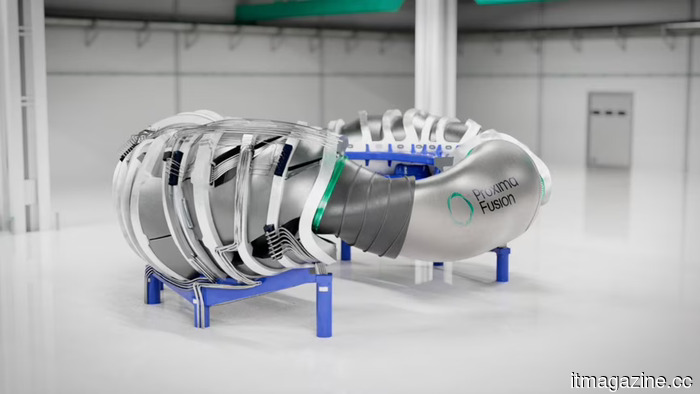 Google and RWE support Proxima Fusion in a historic €411 million funding round.
Proxima Fusion in Munich has secured €411 million in funding from investors such as Google and RWE, marking the largest private fusion funding round in Europe to date.
Google and RWE support Proxima Fusion in a historic €411 million funding round.
Proxima Fusion in Munich has secured €411 million in funding from investors such as Google and RWE, marking the largest private fusion funding round in Europe to date.
 According to sources, the US cyber agency is utilizing Anthropic's Mythos to examine government code.
According to sources, CISA is said to be employing Anthropic’s Mythos AI to examine government code for vulnerabilities, just months following a confrontation with the White House.
According to sources, the US cyber agency is utilizing Anthropic's Mythos to examine government code.
According to sources, CISA is said to be employing Anthropic’s Mythos AI to examine government code for vulnerabilities, just months following a confrontation with the White House.
 WiseTech co-founder Richard White resigns from his role as chair, yet retains his position on the board.
Richard White, co-founder of WiseTech, has resigned from his position as executive chair during a police investigation but will remain on the board as chief innovation officer. Shares increased.
WiseTech co-founder Richard White resigns from his role as chair, yet retains his position on the board.
Richard White, co-founder of WiseTech, has resigned from his position as executive chair during a police investigation but will remain on the board as chief innovation officer. Shares increased.
 TechEx Europe 2026: eight events, 8,000 technology leaders, a unified enterprise agenda.
TechEx Europe 2026 will take place at the RAI Amsterdam on October 19-20, combining eight co-located events into a unified enterprise agenda focused on execution.
TechEx Europe 2026: eight events, 8,000 technology leaders, a unified enterprise agenda.
TechEx Europe 2026 will take place at the RAI Amsterdam on October 19-20, combining eight co-located events into a unified enterprise agenda focused on execution.
 The US cyber agency is reportedly utilizing Anthropic’s Mythos to review government code, according to sources.
According to sources, CISA is allegedly utilizing Anthropic's Mythos AI to examine government code for vulnerabilities, several months after a conflict with the White House.
The US cyber agency is reportedly utilizing Anthropic’s Mythos to review government code, according to sources.
According to sources, CISA is allegedly utilizing Anthropic's Mythos AI to examine government code for vulnerabilities, several months after a conflict with the White House.
Gyre Energy has secured $1.3 million to optimize the efficiency of cold storage systems during peak energy pricing.
Gyre Energy, founded in Oxford, has secured more than $1.3 million to implement its AI cooling technology within one of the largest cold chains globally, as heatwaves put pressure on power grids.