
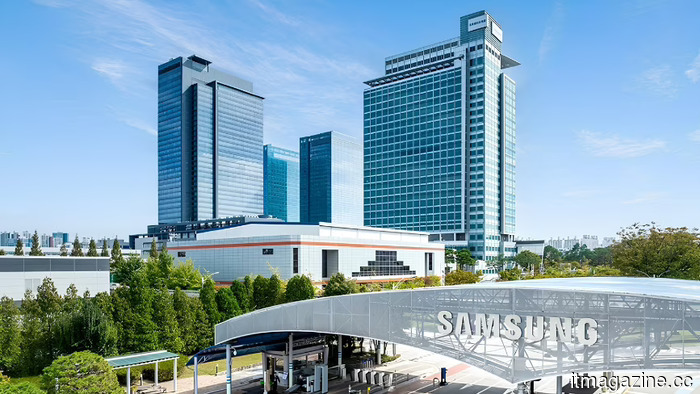
Samsung's profit in the second quarter soared 19 times to reach 89 trillion won, driven by demand for AI memory.
On Tuesday, Samsung Electronics announced an estimated operating profit of approximately 89.4 trillion won ($58.4 billion) for the second quarter, marking about a 19-fold increase from the same period last year, and likely representing the largest quarterly operating profit ever reported by any technology company. This marks Samsung’s third successive record quarter, surpassing the roughly 84 trillion won anticipated by analysts, a significant leap that TNW had previously highlighted as an 18-fold increase during the estimation phase.
Revenue totaled around 171 trillion won, more than double the 74.57 trillion won from a year prior, although it fell slightly short of the 173 trillion won some analysts had predicted. Operating profit increased about 56% compared to the first quarter and approximately 1,810% year-on-year, based on a low of just 4.68 trillion won in the second quarter of 2025, when the memory segment was still struggling instead of becoming the powerhouse it is today due to AI's impact on the memory market.
The driving factor behind these results is pricing. Contract prices for DRAM rose around 44% quarter-over-quarter, while NAND flash prices increased by about 53%, according to Citi Research, as demand for chips used in AI servers continued to exceed the supply from the three major memory manufacturers. High-bandwidth memory, the stacked DRAM used with Nvidia’s accelerators, remains the most profitable segment, with Samsung spending much of the past year closing the gap with SK Hynix.
A pivotal moment occurred in September 2025, when Samsung achieved Nvidia's qualification for its 12-layer HBM3E, overcoming a series of technical challenges related to thermal performance. This development opened the door to a crucial customer whose expenditures influence the entire sector, even though SK Hynix was progressing more rapidly with the next generation and secured a multi-year HBM4 contract with Nvidia.
What distinguishes this cycle is its wide scope. The price increases are not limited to HBM but extend into traditional DRAM and NAND, as AI workloads expand beyond training clusters into standard server and storage implementations that enable large-scale inference. A similar trend was observed in Micron’s significant revenue growth in June, reflecting an industry unable to produce memory quickly enough.
There is, however, a caveat in the reported figures. Samsung’s guidance reportedly includes a bonus provision worth tens of trillions of won, and if this is excluded, the underlying operating profit would have surpassed 100 trillion won, as noted by the Seoul Economic Daily. These bonuses have become substantial enough to spark ongoing disputes over how the profits should be distributed and have also caught the attention of South Korea’s central bank regarding wage considerations.
Investor reactions were mixed. Samsung’s shares decreased by more than 6% on the announcement day, representing a round of profit-taking after a rally that had already accounted for much of the positive news. Essentially, such a large beat is not equivalent to a surprise upside, and the revenue shortfall provided critics with a point of concern.
The guidance is preliminary and only outlines total sales and profits, with a detailed divisional breakdown expected along with full results on July 30. That report will clarify how much revenue was generated from the chip division and how much was offset by the smartphone and display units, which purchase limited memory at the same elevated prices as other customers.
If current trends persist, the company’s total profit for the year could match what it earned over the previous four decades combined, reflecting a shift in demand dynamics rather than a commentary on just a single quarter.
Other articles
 WiseTech co-founder Richard White resigns from his role as chair, yet retains his position on the board.
Richard White, co-founder of WiseTech, has resigned from his position as executive chair during a police investigation but will remain on the board as chief innovation officer. Shares increased.
WiseTech co-founder Richard White resigns from his role as chair, yet retains his position on the board.
Richard White, co-founder of WiseTech, has resigned from his position as executive chair during a police investigation but will remain on the board as chief innovation officer. Shares increased.
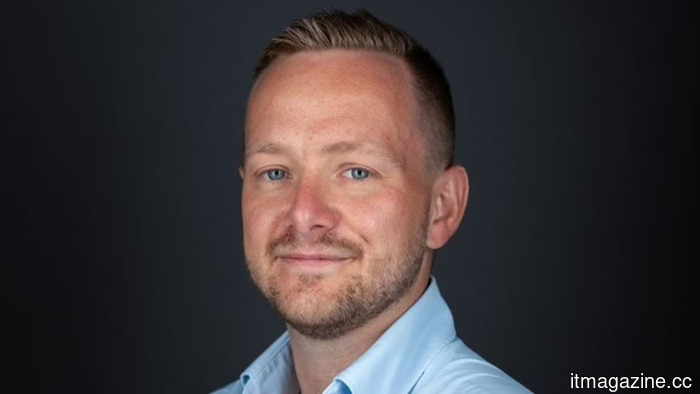 Nscale secures a $900 million revolving credit facility to finance its data center expansion.
Nscale has finalized a $900 million revolving credit facility, which has been syndicated among 12 banks, enhancing its flexible liquidity for the development of AI data centers.
Nscale secures a $900 million revolving credit facility to finance its data center expansion.
Nscale has finalized a $900 million revolving credit facility, which has been syndicated among 12 banks, enhancing its flexible liquidity for the development of AI data centers.
 TechEx Europe 2026: eight events, 8,000 technology leaders, a unified enterprise agenda.
TechEx Europe 2026 will take place at the RAI Amsterdam on October 19-20, combining eight co-located events into a unified enterprise agenda focused on execution.
TechEx Europe 2026: eight events, 8,000 technology leaders, a unified enterprise agenda.
TechEx Europe 2026 will take place at the RAI Amsterdam on October 19-20, combining eight co-located events into a unified enterprise agenda focused on execution.
 Australia's under-16 social media prohibition falters at the initial age verification, according to testers.
Testers involved in the creation of Australia's age-verification system opened 50 accounts, stating they were 16 years old. Out of the 10 platforms, 9 never requested any proof of age.
Australia's under-16 social media prohibition falters at the initial age verification, according to testers.
Testers involved in the creation of Australia's age-verification system opened 50 accounts, stating they were 16 years old. Out of the 10 platforms, 9 never requested any proof of age.
 Gyre Energy secures $1.3 million to optimize the efficiency of the world's cold storage facilities during peak energy costs.
Gyre Energy, founded in Oxford, has secured more than $1.3 million to implement its AI cooling system within one of the largest cold chains globally as heatwaves put pressure on power grids.
Gyre Energy secures $1.3 million to optimize the efficiency of the world's cold storage facilities during peak energy costs.
Gyre Energy, founded in Oxford, has secured more than $1.3 million to implement its AI cooling system within one of the largest cold chains globally as heatwaves put pressure on power grids.
 The US cyber agency is reportedly utilizing Anthropic’s Mythos to review government code, according to sources.
According to sources, CISA is allegedly utilizing Anthropic's Mythos AI to examine government code for vulnerabilities, several months after a conflict with the White House.
The US cyber agency is reportedly utilizing Anthropic’s Mythos to review government code, according to sources.
According to sources, CISA is allegedly utilizing Anthropic's Mythos AI to examine government code for vulnerabilities, several months after a conflict with the White House.
Samsung's profit in the second quarter soared 19 times to reach 89 trillion won, driven by demand for AI memory.
Samsung projected approximately 89.4 trillion won ($58.4 billion) in operating profit for Q2, marking an increase of around 19 times compared to the previous year, attributed to a rise in AI memory prices.