

WiseTech co-founder Richard White resigns from his role as chair, yet retains his position on the board.
Richard White, the billionaire co-founder of WiseTech Global, has resigned as executive chair of the Australian logistics-software firm, effective immediately, following a period of heightened scrutiny. Nonetheless, he will remain with the company.
According to a statement from WiseTech, White will continue as an executive director on the ASX-listed company's board and will retain his position as chief innovation officer. Raelene Murphy, who joined the board at the beginning of the year and became lead independent director in May, will step in as independent chair.
The timing of this change is notable. In late June, media outlets reported that the Australian Federal Police were investigating White over allegations that he took advantage of a woman’s immigration status for sexual purposes and provided false information on a visa application. He has categorically denied any claims of trafficking, stating his position “strenuously and unequivocally,” and none of the allegations have been adjudicated in court.
“Recent personal media scrutiny is causing an unnecessary distraction from the strength of WiseTech’s business,” White asserted, suggesting that senior management should concentrate on implementing the company's growth strategy. This rationale is familiar for a founder whose transitions tend to lead back to the company.
White established WiseTech in 1994 and took the company public on the ASX in 2016, transforming it into one of Australia’s most valuable tech firms while remaining its largest shareholder. This founder-as-owner dynamic has complicated efforts to ease his control over the business.
He resigned as CEO in late 2024 amid unrelated sexual misconduct allegations, which he also disputed, before returning as executive chairman in February 2026. During his absence, four independent directors resigned, citing “intractable differences” regarding his ongoing involvement.
WiseTech’s board had commissioned two law firms to investigate the previous allegations, and the initial findings cleared White of serious wrongdoing in several instances. The company's market value, in the tens of billions of Australian dollars, has fluctuated significantly with each new development.
Investors perceived the recent restructuring as a positive step in governance. Shares of WiseTech surged as much as 10.6% following the announcement, marking a rare positive occurrence for a stock that has fluctuated with every new headline. The same shares had dropped by double digits in late June, coinciding with the onset of the police investigation.
Analysts and various investors had been urging WiseTech to strengthen its governance, and the installation of an independent chair addresses a long-standing concern for proxy advisers and index funds. Despite the company’s robust revenue growth, the narrative continues to revolve around one individual rather than the software itself.
WiseTech is a significant player, with its primary CargoWise platform operating behind the scenes at numerous freight forwarders, including major companies like FedEx, UPS, and DHL, thus placing it at a critical juncture in global trade.
Murphy, the new chair, provided a strong defense of White, stating, “My personal experience working with Richard is completely contrary to media reports,” and characterized him as “an incredibly hardworking, focused, and committed founder.”
This situation positions WiseTech in a unique position often seen in founder-led tech firms: a new independent chair introduced to bolster market confidence while the founder remains significantly involved. Companies such as Reddit and Dropbox have faced similar challenges in balancing the founder’s legacy with new leadership.
The future will depend on the board and the Australian Federal Police. White retains his innovation responsibilities and board position; the company holds onto its founder and, it hopes, a more peaceful media environment. Whether these elements can coexist remains a question the market will continue to evaluate. For now, the market's judgment is tentative, and White has demonstrated a reluctance to fully step away.
Other articles
 The Importance of CNAPP in Cloud-Native Security
Grasping the current requirements of online security. Cloud-native security once seemed to be an issue for highly technical teams operating within intricate systems. However, that perspective has evolved. As organizations utilize containers, Kubernetes, APIs, serverless functions, and rapid deployment cycles, security teams require a method to monitor risk throughout all these elements without having to assemble […]
The Importance of CNAPP in Cloud-Native Security
Grasping the current requirements of online security. Cloud-native security once seemed to be an issue for highly technical teams operating within intricate systems. However, that perspective has evolved. As organizations utilize containers, Kubernetes, APIs, serverless functions, and rapid deployment cycles, security teams require a method to monitor risk throughout all these elements without having to assemble […]
 Australia's under-16 social media prohibition falters during the initial age verification, as testers have discovered.
Testers involved in the creation of Australia's age-verification system created 50 accounts stating they were 16 years old. Of these, nine out of ten platforms did not request any proof.
Australia's under-16 social media prohibition falters during the initial age verification, as testers have discovered.
Testers involved in the creation of Australia's age-verification system created 50 accounts stating they were 16 years old. Of these, nine out of ten platforms did not request any proof.
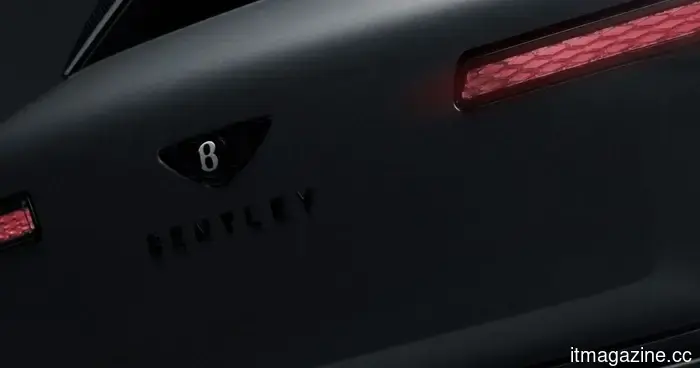 Bentley's inaugural fully electric SUV will be named Torcal.
Bentley has introduced the Torcal, its inaugural electric SUV, focusing on high-quality craftsmanship and rapid charging amidst a decline in demand within the luxury EV market.
Bentley's inaugural fully electric SUV will be named Torcal.
Bentley has introduced the Torcal, its inaugural electric SUV, focusing on high-quality craftsmanship and rapid charging amidst a decline in demand within the luxury EV market.
 Carely's innovative wearables monitor elderly parents so you don't have to.
A wearable device without a screen, known as Carely, monitors vital signs and daily habits to notify families before a health concern escalates into an emergency.
Carely's innovative wearables monitor elderly parents so you don't have to.
A wearable device without a screen, known as Carely, monitors vital signs and daily habits to notify families before a health concern escalates into an emergency.
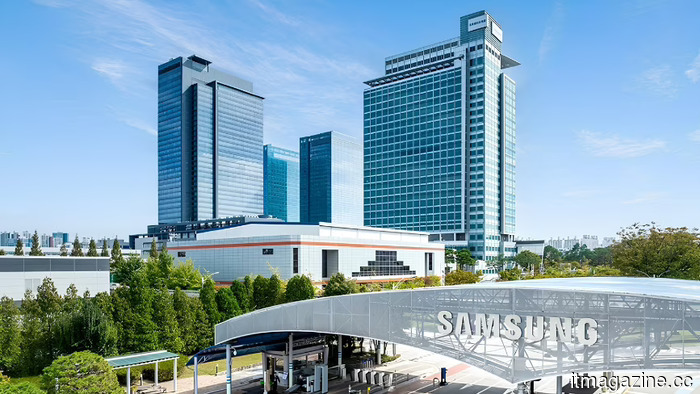 Samsung's profit in the second quarter soared 19 times to reach 89 trillion won, driven by demand for AI memory.
Samsung projected approximately 89.4 trillion won ($58.4 billion) in operating profit for Q2, marking an increase of around 19 times compared to the previous year, attributed to a rise in AI memory prices.
Samsung's profit in the second quarter soared 19 times to reach 89 trillion won, driven by demand for AI memory.
Samsung projected approximately 89.4 trillion won ($58.4 billion) in operating profit for Q2, marking an increase of around 19 times compared to the previous year, attributed to a rise in AI memory prices.
 Synopsys steps back from chip fabrication software to pursue profit margins in AI design.
Sources have informed Reuters that Synopsys is discontinuing its fab manufacturing control software to shift its engineers' focus towards more profitable AI chip design.
Synopsys steps back from chip fabrication software to pursue profit margins in AI design.
Sources have informed Reuters that Synopsys is discontinuing its fab manufacturing control software to shift its engineers' focus towards more profitable AI chip design.
WiseTech co-founder Richard White resigns from his role as chair, yet retains his position on the board.
Richard White, co-founder of WiseTech, has resigned from his position as executive chair during a police investigation but will remain on the board as chief innovation officer. Shares increased.