

Australia's under-16 social media prohibition falters during the initial age verification, as testers have discovered.
The world's first national prohibition on social media for individuals under 16 is stumbling right from the start, as indicated by the testers who assisted the Australian government in developing its age verification system. In a follow-up study reported by Reuters, the team created 50 accounts on nine of the ten platforms impacted by the law, declaring the users’ age as 16, and none of the platforms required any age verification.
This revelation emerges from a scheme that was implemented on December 10, 2025, highlighting a gap that regulators had mostly ignored. Much of the discussion, and a considerable portion of our enforcement reporting, has centered on the effectiveness of photo-based age estimation. However, the testers argue that the issue lies earlier in the process, specifically at the initial vetting stage intended to identify potential underage users for further scrutiny.
This stage, which estimates a user's age range based on their general online behavior, seems incapable of detecting younger users. Andrew Hammond, a director at the Melbourne testing firm KJR, which conducted the government's original age-assurance trial in 2024 and 2025, stated clearly, “You should be asked to prove your age, yet we were never prompted to confirm our age or utilize age-assurance methods.”
The 50 test accounts are still active, spread across Meta's Instagram and Facebook, Snap’s Snapchat, TikTok, and Alphabet's YouTube, among others. Only one platform, the Australian live-streaming site Kick, denied account creation without age verification.
This exception is significant because it illustrates that the verification process is technically feasible when a platform opts to enforce it. The outcome corresponds to the compliance issues that prompted regulators to put Meta, TikTok, and YouTube on alert earlier this year.
Australia's law prohibits children under 16 from having accounts on ten specified platforms, including Facebook, Instagram, Snapchat, Threads, TikTok, Twitch, X, YouTube, Kick, and Reddit, and mandates that companies take “reasonable steps” to prevent underage users from accessing them. eSafety Commissioner Julie Inman Grant, the country's online safety regulator, has indicated that, leading up to the deadline, platforms purged millions of accounts belonging to individuals under 16.
The Act threatens companies that consistently fail to enforce the ban with fines as high as A$54.6 million (around $36 million), and the government has proposed legislation to nearly double that limit and allow eSafety to require evidence from age-assurance vendors and app stores, not just from the platforms themselves. These expanded powers, however, have stalled in the Senate.
KJR’s original trial, which evaluated age-assurance tools with over 1,000 Australians, concluded last year that the technology could function effectively when carefully selected and applied. Nevertheless, some advisers had previously noted that the test did not address real-world methods of evasion, such as a 14-year-old inputting a false date of birth.
That warning now seems prescient. A different study released in late June found that over 85% of Australians aged 12 to 15 continued to use social media three months after the ban started, most of them using the oldest trick of claiming to be over 16.
Regulators in other regions are observing closely. The EU has been trialing its own age verification application, and the UK, Norway, and others are considering similar restrictions. The implication is concerning; if the first country to implement such a ban cannot overcome the registration hurdle, the outlook for other countries drafting similar measures is bleak.
eSafety has positioned enforcement as a long-term effort, stating that they are examining the systems of the designated platforms for systematic failures instead of just isolated incidents. The companies contend that they are consistently integrating age assurance into the registration process and enhancing detection methods over time. Based on the evidence from the 50 test accounts that bypassed these measures, this development is evidently incomplete.
Other articles
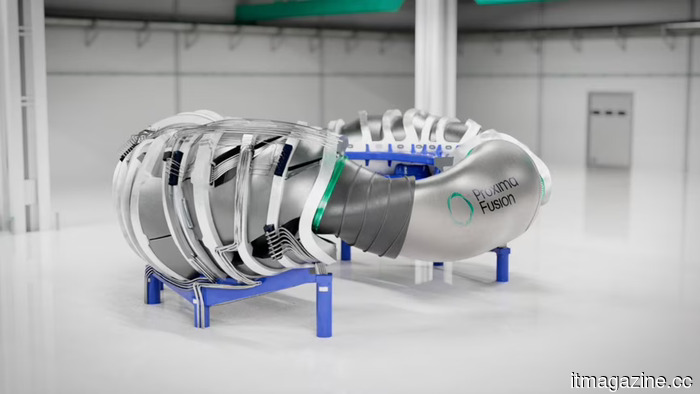 Google and RWE support Proxima Fusion in a historic €411 million funding round.
Proxima Fusion in Munich has secured €411 million in funding from investors such as Google and RWE, marking the largest private fusion funding round in Europe to date.
Google and RWE support Proxima Fusion in a historic €411 million funding round.
Proxima Fusion in Munich has secured €411 million in funding from investors such as Google and RWE, marking the largest private fusion funding round in Europe to date.
 WiseTech co-founder Richard White resigns from his role as chair, yet retains his position on the board.
Richard White, co-founder of WiseTech, has resigned from his position as executive chair during a police investigation but will remain on the board as chief innovation officer. Shares increased.
WiseTech co-founder Richard White resigns from his role as chair, yet retains his position on the board.
Richard White, co-founder of WiseTech, has resigned from his position as executive chair during a police investigation but will remain on the board as chief innovation officer. Shares increased.
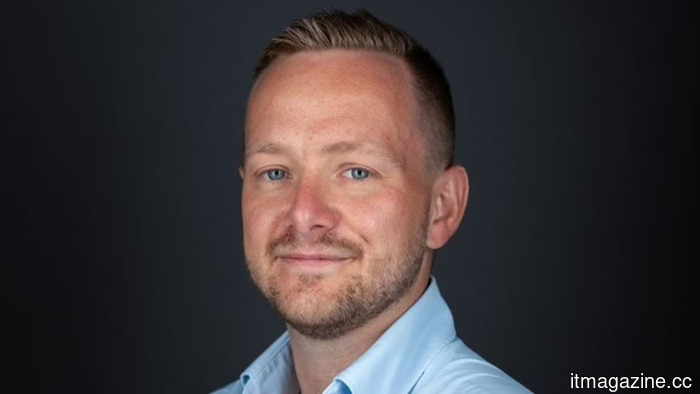 Nscale secures a $900 million revolving credit facility to finance its data center expansion.
Nscale has finalized a $900 million revolving credit facility, which has been syndicated among 12 banks, enhancing its flexible liquidity for the development of AI data centers.
Nscale secures a $900 million revolving credit facility to finance its data center expansion.
Nscale has finalized a $900 million revolving credit facility, which has been syndicated among 12 banks, enhancing its flexible liquidity for the development of AI data centers.
 Samsung's profit in the second quarter soared 19 times to reach 89 trillion won due to the demand for AI memory.
Samsung projected approximately 89.4 trillion won ($58.4 billion) in operating profit for Q2, marking an increase of nearly 19 times compared to the previous year, driven by rising AI memory prices.
Samsung's profit in the second quarter soared 19 times to reach 89 trillion won due to the demand for AI memory.
Samsung projected approximately 89.4 trillion won ($58.4 billion) in operating profit for Q2, marking an increase of nearly 19 times compared to the previous year, driven by rising AI memory prices.
 Samsung's profit in the second quarter soared 19 times to reach 89 trillion won, driven by demand for AI memory.
Samsung projected approximately 89.4 trillion won ($58.4 billion) in operating profit for Q2, marking an increase of around 19 times compared to the previous year, attributed to a rise in AI memory prices.
Samsung's profit in the second quarter soared 19 times to reach 89 trillion won, driven by demand for AI memory.
Samsung projected approximately 89.4 trillion won ($58.4 billion) in operating profit for Q2, marking an increase of around 19 times compared to the previous year, attributed to a rise in AI memory prices.
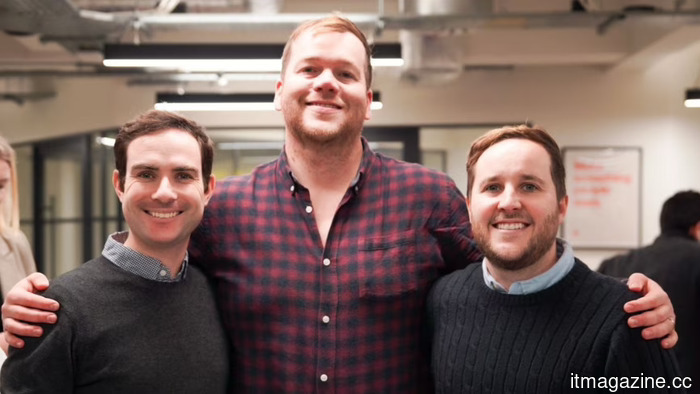 Gyre Energy secures $1.3 million to optimize the efficiency of the world's cold storage facilities during peak energy costs.
Gyre Energy, founded in Oxford, has secured more than $1.3 million to implement its AI cooling system within one of the largest cold chains globally as heatwaves put pressure on power grids.
Gyre Energy secures $1.3 million to optimize the efficiency of the world's cold storage facilities during peak energy costs.
Gyre Energy, founded in Oxford, has secured more than $1.3 million to implement its AI cooling system within one of the largest cold chains globally as heatwaves put pressure on power grids.
Australia's under-16 social media prohibition falters during the initial age verification, as testers have discovered.
Testers involved in the creation of Australia's age-verification system created 50 accounts stating they were 16 years old. Of these, nine out of ten platforms did not request any proof.