
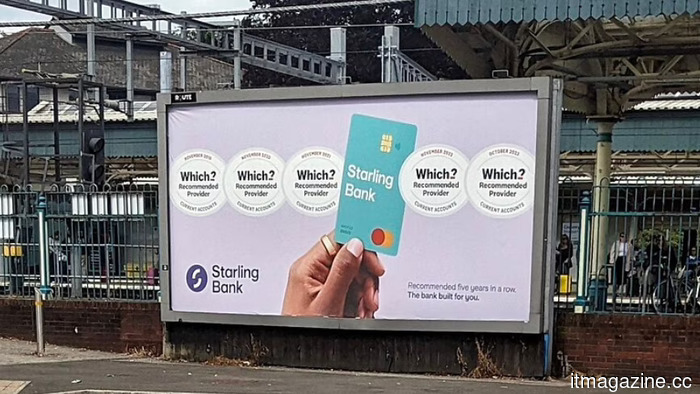
Starling Bank eliminates 130 positions as part of its AI initiatives and restructuring efforts.
Starling Bank is reducing its workforce by approximately 130 jobs, which constitutes about 3% of its 4,000 employees, as the London-based neobank restructures its banking and technology functions. Employees were informed this week that the adjustments aim to simplify operations, minimize redundancy, and speed up product delivery.
These job cuts coincide with Starling's effort to integrate AI more extensively into its processes. In March, the bank introduced Starling Assistant, an AI tool that enables users to establish savings goals, manage bill payments, and inquire about their spending habits via voice or text prompts.
Declining profits amid lower interest rates
This restructuring comes after the bank experienced a decline in profits for the second consecutive year. Pre-tax profit decreased to £217 million for the year ending in March, down from £223 million the prior year, while overall revenue fell from £940 million to £887 million. Starling attributes this downturn to lower interest rates, which have affected profit margins in UK banking. Although the neobank has achieved profitability for five consecutive years, the trend is concerning.
Customer growth continued, with accounts on the platform reaching 6.2 million, up from 5.3 million the previous year, and deposits increasing to £12.7 billion.
The AI competition among neobanks
Starling’s focus on AI is part of a larger trend among digital banks to automate customer-facing services. In April, Revolut introduced its own AI assistant, AIR, to UK users, offering similar functionalities for spending analysis and account management.
Starling’s scam detection tool, which debuted in October 2025, utilizes Google’s Gemini models to evaluate marketplace listings and identify fraud in real time. This feature has since expanded to detect over ten different types of scams, including romance fraud and deepfake phishing.
“A significant advantage we have over traditional banks is our agility, allowing us to test, launch, learn, and adapt quickly,” a spokesperson for Starling stated, noting that the bank continues to recruit technology and AI engineers even as it makes job cuts.
Engine as a growth narrative
A more positive aspect of Starling’s operations is Engine, the software-as-a-service division that licenses the bank's core technology to other financial institutions. Last year, Engine's revenue rose by 25% as its client base doubled due to international demand.
Engine currently supports banks in the UK, Romania, Australia, and New Zealand and is now aiming to enter the US market. The division has established an office in New York with a reported investment of $50 million and is in talks with mid-tier American lenders.
A sector-wide transformation
Morgan Stanley projected in June that AI could displace as many as 400,000 banking jobs in Europe by 2030, doubling its previous estimate of 200,000. Last year, ABN Amro announced plans to cut approximately 20% of its workforce by 2028, largely through automation.
In contrast, Starling's plan to cut 130 jobs appears modest, but it indicates a significant shift within the neobank sector. Digital challengers, which once distinguished themselves from the large workforces of traditional banks, are now applying similar efficiency measures to their own operations.
Other articles
 Android 17 presents a compelling argument for disregarding Android version numbers altogether.
Android 17 includes some beneficial updates, but when the most significant everyday enhancement is a Quick Settings button that actually makes sense again, the yearly version number begins to seem rather insignificant.
Android 17 presents a compelling argument for disregarding Android version numbers altogether.
Android 17 includes some beneficial updates, but when the most significant everyday enhancement is a Quick Settings button that actually makes sense again, the yearly version number begins to seem rather insignificant.
 Hong Kong manages more than 50% of China's chip imports.
In five months, Hong Kong re-exported $124 billion worth of chips to China, which accounted for 52% of the mainland's total, as the AI boom positions the city as Asia's central semiconductor hub.
Hong Kong manages more than 50% of China's chip imports.
In five months, Hong Kong re-exported $124 billion worth of chips to China, which accounted for 52% of the mainland's total, as the AI boom positions the city as Asia's central semiconductor hub.
 Australia's prohibition on children's use of social media is not succeeding. The Senate postponed the solution.
Seventy percent of children are still subject to restrictions on platforms seven months following Australia's social media ban for those under 16. The Senate has recently rejected amendments aimed at enhancing enforcement.
Australia's prohibition on children's use of social media is not succeeding. The Senate postponed the solution.
Seventy percent of children are still subject to restrictions on platforms seven months following Australia's social media ban for those under 16. The Senate has recently rejected amendments aimed at enhancing enforcement.
 The Galaxy Z Fold 8 series from Samsung may be priced several hundred dollars higher this year.
A recent leak indicates that Samsung's Galaxy Z Fold 8, Fold 8 Ultra, Flip 8, and Galaxy Watch 9 series may debut at significantly increased prices throughout Europe.
The Galaxy Z Fold 8 series from Samsung may be priced several hundred dollars higher this year.
A recent leak indicates that Samsung's Galaxy Z Fold 8, Fold 8 Ultra, Flip 8, and Galaxy Watch 9 series may debut at significantly increased prices throughout Europe.
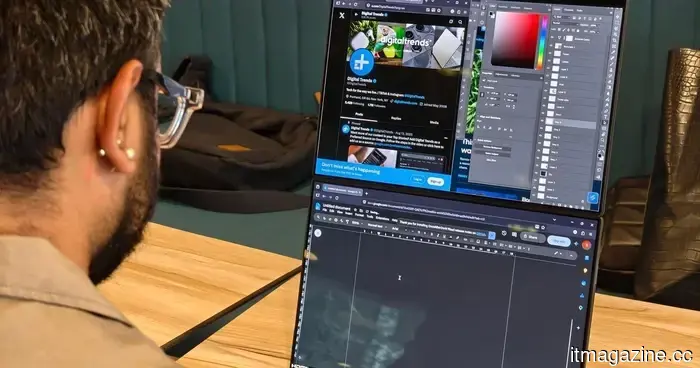 I utilized ASUS' dual-screen laptop as a mobile creative hub, and my desktop PC began to gather dust.
The ASUS Zenbook Duo UX8407AA features two OLED touchscreens, supports pen input, and includes a detachable keyboard, offering a versatile mobile configuration for designers and multitaskers.
I utilized ASUS' dual-screen laptop as a mobile creative hub, and my desktop PC began to gather dust.
The ASUS Zenbook Duo UX8407AA features two OLED touchscreens, supports pen input, and includes a detachable keyboard, offering a versatile mobile configuration for designers and multitaskers.
 Hong Kong accounts for more than 50% of China's chip imports.
In five months, Hong Kong re-exported $124 billion worth of chips to China, accounting for 52% of the mainland's total, as the AI surge establishes the city as Asia's primary semiconductor center.
Hong Kong accounts for more than 50% of China's chip imports.
In five months, Hong Kong re-exported $124 billion worth of chips to China, accounting for 52% of the mainland's total, as the AI surge establishes the city as Asia's primary semiconductor center.
Starling Bank eliminates 130 positions as part of its AI initiatives and restructuring efforts.
London-based neobank Starling is reducing its workforce by 3% as it experiences a decline in profits for the second consecutive year. At the same time, it is recruiting AI engineers and broadening its Engine SaaS platform into the United States.