
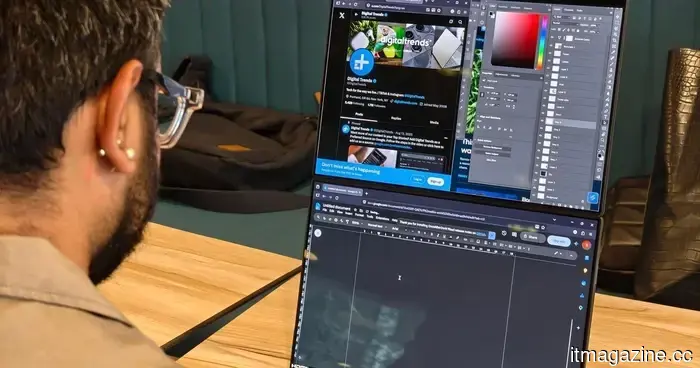
I utilized ASUS' dual-screen laptop as a mobile creative hub, and my desktop PC began to gather dust.
When it comes to laptops, brands are continually trying to strike a balance between portability and productivity. The ASUS Zenbook Duo UX8407AA attempts to sidestep this dilemma with a design that consolidates an entire setup into a compact form.
I utilized the Zenbook Duo as a creative tool, focusing primarily on design applications, illustration tasks, writing, and multitasking. The version I tested is equipped with Intel's Core Ultra 7 355 processor, 32GB of RAM, and a 1TB SSD. This configuration provides ample power to run Photoshop and Animate for sketches and animations, among many other tasks effortlessly.
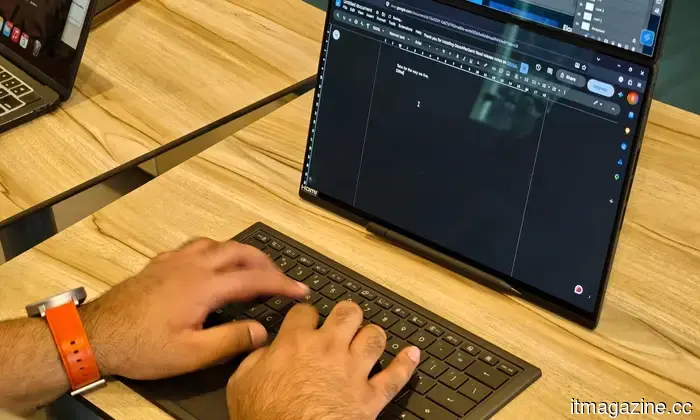
However, the standout feature is its form factor. This laptop can transform into a dual-monitor workstation, a standard notebook, or a drawing setup with the detachable keyboard set aside. For many creative professionals, particularly beginners, students, and those who work on the go, this adaptability is highly beneficial.
Vikhyaat Vivek / Digital Trends
How the second screen transforms the workflow
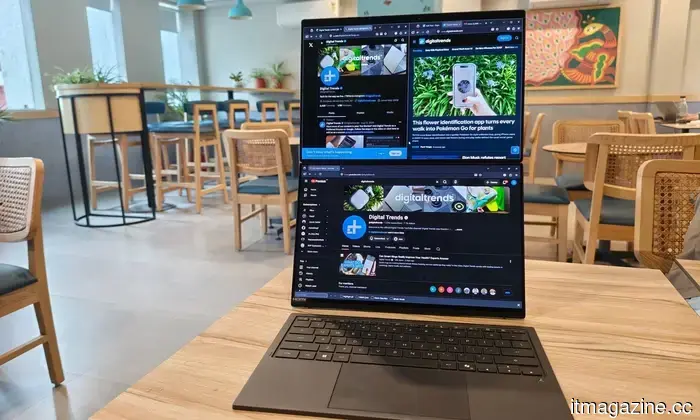
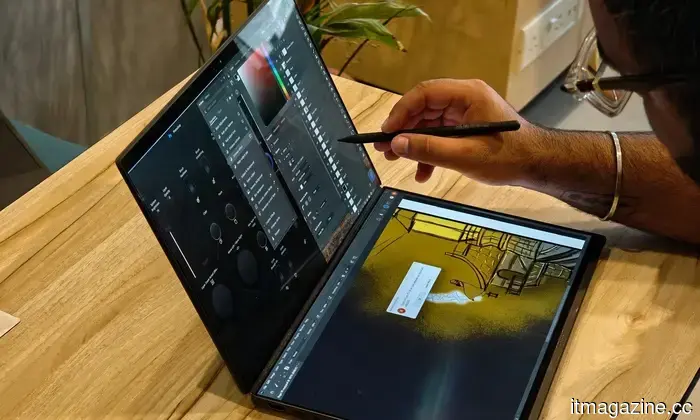
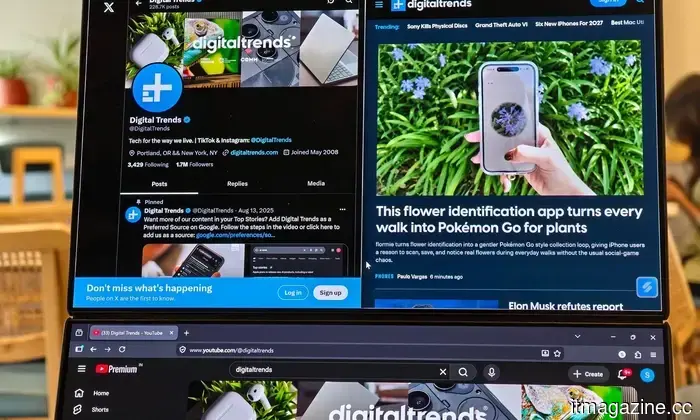
The Zenbook Duo features two 14-inch 3K OLED touch displays, and the most straightforward way to use them is with the built-in kickstand supporting both screens vertically. In this configuration, it offers two stacked displays instead of a single cramped laptop screen. For my typical work, which involves extensive writing and research, having that extra screen space was immensely helpful. I could have a document open on one display and a browser on the other, thus avoiding the constant window-switching that makes small laptops frustrating during real work.
Vikhyaat Vivek / Digital Trends
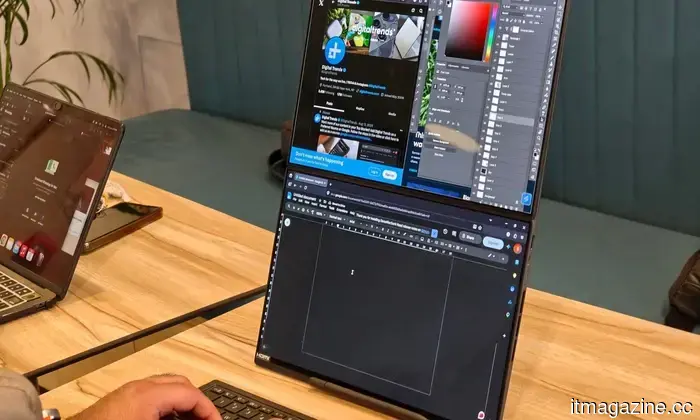
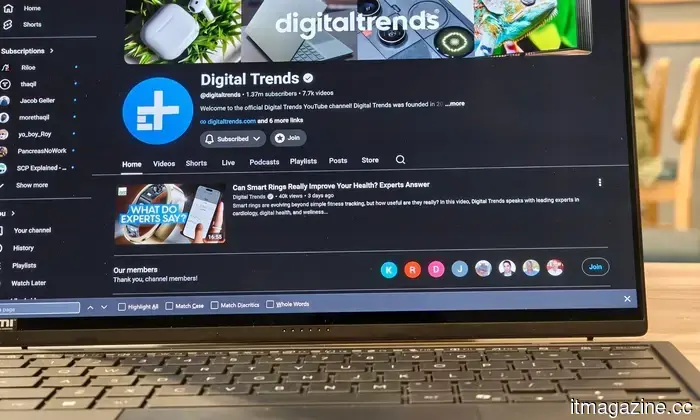
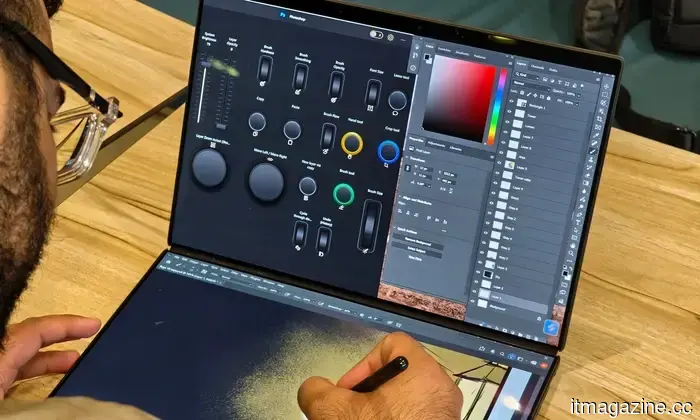
Even while working on content, I was able to keep YouTube, social media accounts, and multiple tabs open simultaneously without feeling cramped. The Zenbook Duo truly excels in design work, which is clearly its intended use. In Photoshop, the upper screen functioned as a control and reference area, while the lower screen served as the canvas. Tool panels, layers, color controls, browser references, and the ASUS utilities panel could remain positioned away from the drawing area. Additionally, the precise controls in the utilities app for the stylus were quite useful.
Vikhyaat Vivek / Digital Trends
Creative applications often clutter the canvas with panels, pop-ups, timelines, brushes, and layers. The Zenbook Duo allows all these elements to reside directly on the surface, always just a tap away on the other screen.
The ASUS Pen enhances the experience
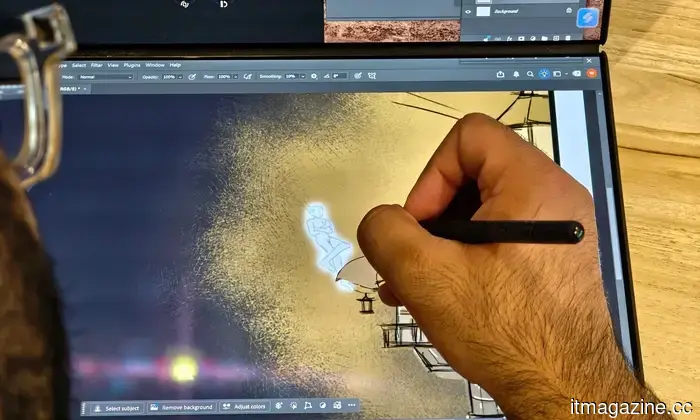
The ASUS Pen elevates the Zenbook Duo beyond just a multitasking laptop. Drawing directly on the lower screen felt natural when I removed the detachable keyboard and set it aside on the table. In this arrangement, the laptop began to function more as a portable drawing station than a conventional notebook.
Vikhyaat Vivek / Digital Trends
The screen is vibrant, sharp, and responsive, and the 144Hz refresh rate contributes to a smooth interaction. Touch response was reliable, and the pen effectively managed pressure and tilt for sketching, illustrating, and casual design tasks. For beginner and intermediate creators, this performance will likely be sufficient.
However, palm rejection was one aspect that slightly diminished the experience. It was occasionally inconsistent when I utilized the power screen as a drawing surface, resulting in my palm and forearm unintentionally registering touches, which became frustrating as these false inputs led to random lines on my sketches.
Vikhyaat Vivek / Digital Trends
Professional illustrators who depend on advanced drawing tablets may still prefer dedicated hardware, as many entry-level drawing tablets provide higher pressure sensitivity than the ASUS Pen's 4096 levels. Nonetheless, most users may not notice the difference. Another significant advantage is the convenience; this single device encompasses two screens, a stylus, and creative controls.
A design that maintains versatility
Vikhyaat Vivek / Digital Trends
The Zenbook Duo allows for flexible layout options. With the keyboard attached, it resembles a standard laptop. Detach it, use the kickstand, and you have two displays stacked vertically. Adjust it differently, and the lower screen turns into a drawing pad while the upper screen manages tools and references.
Vikhyaat Vivek / Digital Trends
You might require a regular laptop at one moment and a second display at another. ASUS' dual-screen laptop adapts to these scenarios more effectively than a typical laptop. It is still thicker and heavier than a simple ultrabook, and its price point means it isn't something you buy on a whim. Depending on your choices, a separate drawing tablet in addition to a laptop may cost less. However, having an all-in-one solution provides artists with added convenience. You eliminate the need to carry multiple devices, extra wires, and other peripherals. Simply open one machine, and you have a functional creative workspace almost anywhere.
An innovative, all-in-one creative machine
Vikhyaat Vivek / Digital Trends
The Zenbook Duo UX8407AA is most suitable for individuals who switch between various types of work. Designers
Other articles
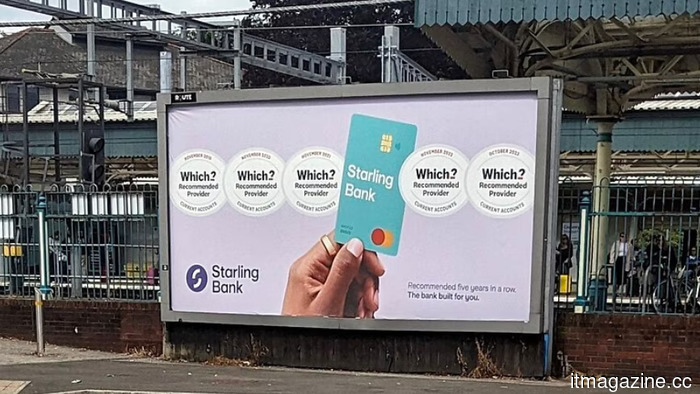 Starling Bank eliminates 130 positions as part of its AI and restructuring initiative.
London-based neobank Starling is reducing its workforce by 3% due to a decline in profits for the second consecutive year. At the same time, it is bringing on AI engineers and growing its Engine SaaS platform in the United States.
Starling Bank eliminates 130 positions as part of its AI and restructuring initiative.
London-based neobank Starling is reducing its workforce by 3% due to a decline in profits for the second consecutive year. At the same time, it is bringing on AI engineers and growing its Engine SaaS platform in the United States.
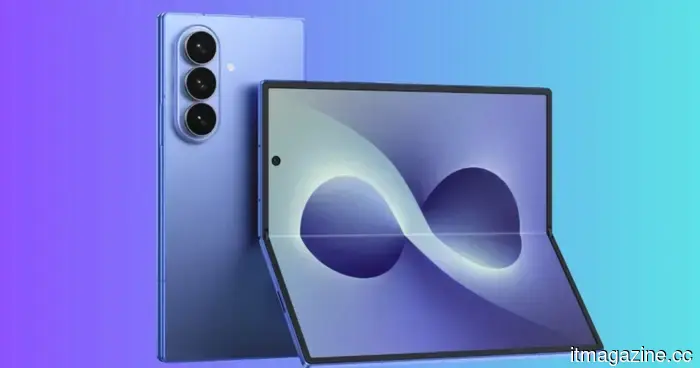 The Galaxy Z Fold 8 series from Samsung may be priced several hundred dollars higher this year.
A recent leak indicates that Samsung's Galaxy Z Fold 8, Fold 8 Ultra, Flip 8, and Galaxy Watch 9 series may debut at significantly increased prices throughout Europe.
The Galaxy Z Fold 8 series from Samsung may be priced several hundred dollars higher this year.
A recent leak indicates that Samsung's Galaxy Z Fold 8, Fold 8 Ultra, Flip 8, and Galaxy Watch 9 series may debut at significantly increased prices throughout Europe.
 Hong Kong manages more than 50% of China's chip imports.
In five months, Hong Kong re-exported $124 billion worth of chips to China, which accounted for 52% of the mainland's total, as the AI boom positions the city as Asia's central semiconductor hub.
Hong Kong manages more than 50% of China's chip imports.
In five months, Hong Kong re-exported $124 billion worth of chips to China, which accounted for 52% of the mainland's total, as the AI boom positions the city as Asia's central semiconductor hub.
 Australia's prohibition on children's access to social media is not succeeding. The Senate has postponed the resolution.
Seven out of ten children remain on restricted platforms seven months following Australia's ban on social media for those under 16. The Senate recently rejected amendments aimed at enhancing enforcement.
Australia's prohibition on children's access to social media is not succeeding. The Senate has postponed the resolution.
Seven out of ten children remain on restricted platforms seven months following Australia's ban on social media for those under 16. The Senate recently rejected amendments aimed at enhancing enforcement.
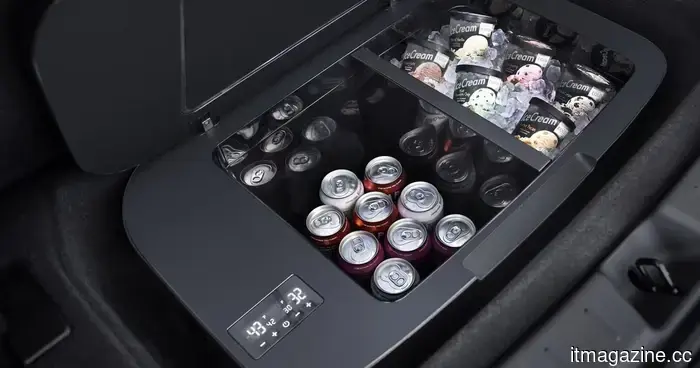 You can now purchase a frunk fridge for your Model Y directly from Tesla.
Tesla has refreshed its store with a new Summer Collection, which includes a $595 Dual Zone Fridge designed specifically to fit in the Model Y's frunk.
You can now purchase a frunk fridge for your Model Y directly from Tesla.
Tesla has refreshed its store with a new Summer Collection, which includes a $595 Dual Zone Fridge designed specifically to fit in the Model Y's frunk.
 Android 17 presents a compelling argument for disregarding Android version numbers altogether.
Android 17 includes some beneficial updates, but when the most significant everyday enhancement is a Quick Settings button that actually makes sense again, the yearly version number begins to seem rather insignificant.
Android 17 presents a compelling argument for disregarding Android version numbers altogether.
Android 17 includes some beneficial updates, but when the most significant everyday enhancement is a Quick Settings button that actually makes sense again, the yearly version number begins to seem rather insignificant.
I utilized ASUS' dual-screen laptop as a mobile creative hub, and my desktop PC began to gather dust.
The ASUS Zenbook Duo UX8407AA features two OLED touchscreens, supports pen input, and includes a detachable keyboard, offering a versatile mobile configuration for designers and multitaskers.