
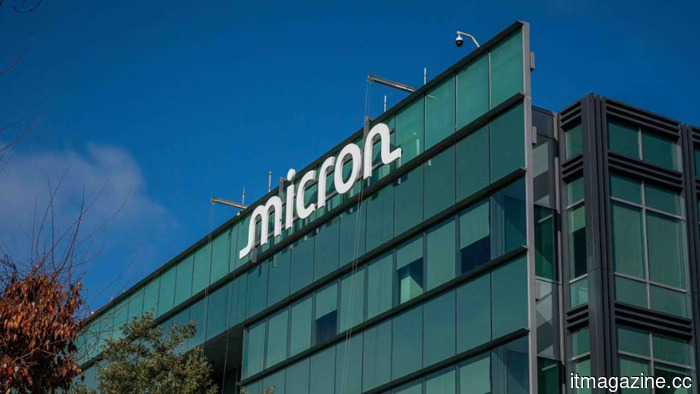
Micron initiates construction on a $9 billion expansion in Hiroshima to meet the demand for AI memory.
On Saturday, Micron Technology commenced construction on a ¥1.5 trillion (approximately $9.3 billion) expansion of its factory in Hiroshima, western Japan, marking the company's latest investment in the AI memory sector, which has already elevated its market value beyond $1 trillion.
The chip manufacturer based in Boise, Idaho, plans to utilize this facility for the production of high-bandwidth memory (HBM), the stacked DRAM located near GPUs within AI accelerators supplied by Nvidia and other clients.
Commercial production from the enlarged facility is anticipated to start around the summer of 2028. This timeline is significant in an industry where HBM has become a critical limitation on AI infrastructure, and Micron is among only three global firms capable of producing it at scale.
According to Bloomberg's coverage of the groundbreaking, Japan’s Ministry of Economy, Trade and Industry has pledged up to ¥500 billion towards the project’s capital expenses. When combined with research and development assistance already promised, the government’s support for Micron’s operations in Japan now amounts to roughly ¥775 billion, a subsidy package that accounts for nearly half of the new investment.
During the ceremony, CEO Sanjay Mehrotra emphasized the location's significance, noting that Micron’s first HBM production wafer was created at this same Hiroshima site, which is now central to the AI expansion.
This expansion is part of a larger Micron initiative that includes advanced facilities in Boise and a $100 billion manufacturing complex near Syracuse, New York, all aimed at increasing DRAM capacity to meet rising demand.
Micron's latest quarterly results indicated that it can only satisfy between half and two-thirds of customer orders for HBM, with its entire output for 2026 already contracted.
Japan considers the deal a component of a broader industrial strategy. Prime Minister Sanae Takaichi recently presented a long-term roadmap aiming for ¥101.6 trillion in total public and private investment in semiconductors and AI by 2041.
Since 2021, Tokyo has committed tens of billions of dollars to chipmakers in a bid to restore a domestic industry that once dominated the global memory market before losing ground to South Korea.
This historical context lends additional significance to the Hiroshima project. In the 1980s and 1990s, Japan was the epicenter of global memory manufacturing until it was surpassed by Samsung and SK Hynix, making the current subsidy strategy backing Micron's expansion a means for Tokyo to regain some of that relevance rather than simply hosting a foreign factory.
Micron has previously strengthened this relationship; in 2023, it pursued a similar subsidy route when announcing plans to introduce extreme ultraviolet lithography to Japan with up to $3.6 billion in government support. Additionally, it has recently aligned its prospects with the broader AI ecosystem through a multi-year supply agreement with Anthropic, covering HBM, DRAM, and storage for the AI company's data centers.
Competitors are also progressing. Samsung and SK Hynix have been producing HBM at scale for a longer period than Micron and are implementing their own expansion initiatives, which means the competitive landscape may significantly change by the time Hiroshima's new production lines are operational in 2028.
Currently, the effects of the memory shortage are being felt well beyond AI data centers. Consumer electronics manufacturers have already started to bear the costs associated with the DRAM shortage, as producers reallocate wafer capacity to capture the higher margins that HBM offers.
Micron’s expansion in Hiroshima will significantly contribute to future supply; however, shipments are still two years away, and the ongoing shortage shows little indication of easing in that timeframe.
Other articles
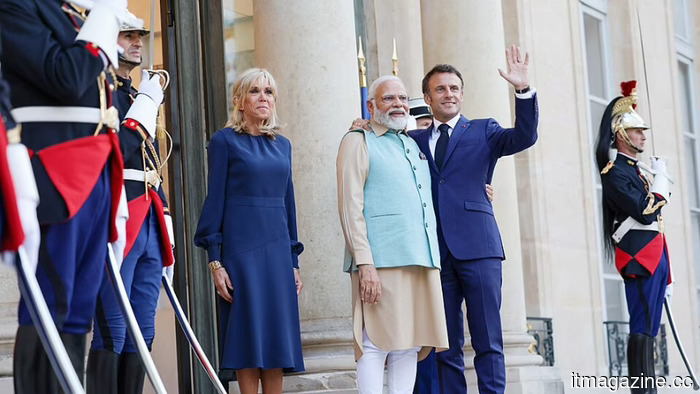 Macron and Modi engage with tech CEOs in the competition for AI infrastructure.
Macron persuaded SoftBank to invest €75 billion in French data centers. Modi obtained $48 billion from Amazon. The competition for AI infrastructure is being dominated by personal diplomacy.
Macron and Modi engage with tech CEOs in the competition for AI infrastructure.
Macron persuaded SoftBank to invest €75 billion in French data centers. Modi obtained $48 billion from Amazon. The competition for AI infrastructure is being dominated by personal diplomacy.
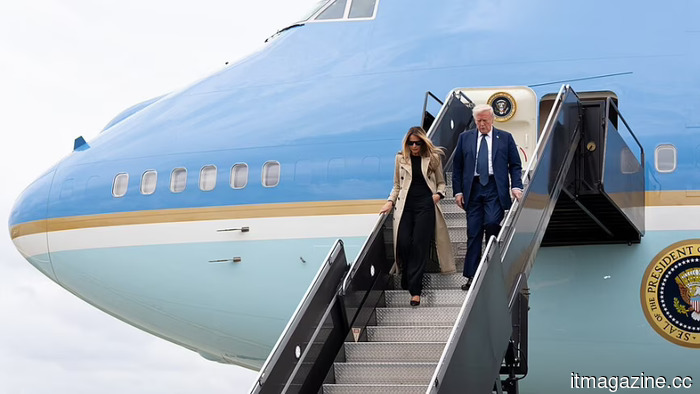 The Trump memecoin resulted in a $3.8 billion loss for investors, while the president made $636 million.
Nansen data indicates that 988,905 buyers of the $TRUMP token experienced losses totaling $3.81 billion, whereas Trump made $636 million in royalties. His financial disclosure for 2025 reports $1.4 billion in cryptocurrency income.
The Trump memecoin resulted in a $3.8 billion loss for investors, while the president made $636 million.
Nansen data indicates that 988,905 buyers of the $TRUMP token experienced losses totaling $3.81 billion, whereas Trump made $636 million in royalties. His financial disclosure for 2025 reports $1.4 billion in cryptocurrency income.
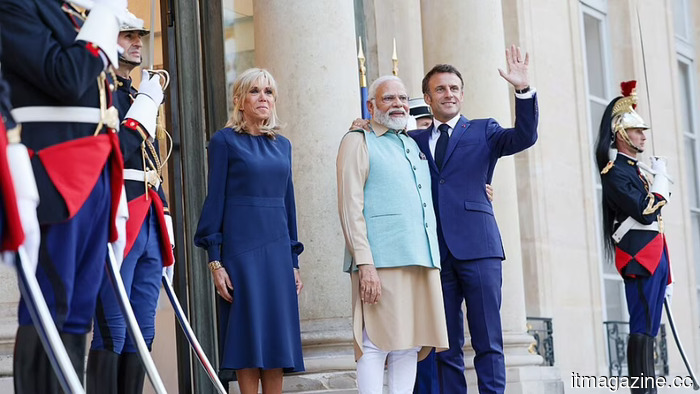 Macron and Modi seek the support of tech CEOs in the competition for AI infrastructure.
Macron persuaded SoftBank to invest €75 billion in data centers in France. Modi obtained $48 billion from Amazon. Personal diplomacy is dominating the competition for AI infrastructure.
Macron and Modi seek the support of tech CEOs in the competition for AI infrastructure.
Macron persuaded SoftBank to invest €75 billion in data centers in France. Modi obtained $48 billion from Amazon. Personal diplomacy is dominating the competition for AI infrastructure.
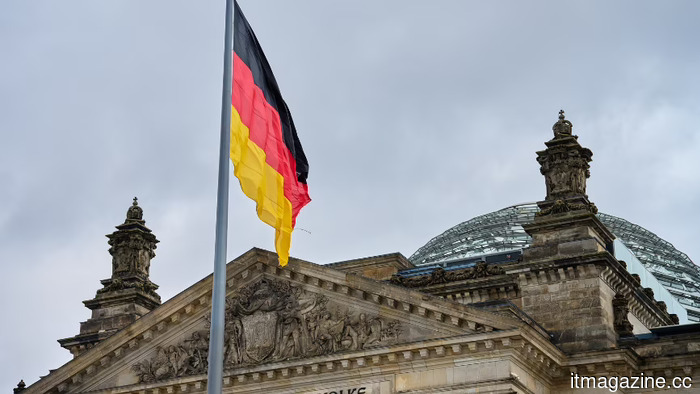 Germany's cooperative and savings banks begin cryptocurrency trading.
Germany's cooperative and savings banks are introducing cryptocurrency trading to millions of retail clients, four years after labeling digital assets as an unpredictable risk.
Germany's cooperative and savings banks begin cryptocurrency trading.
Germany's cooperative and savings banks are introducing cryptocurrency trading to millions of retail clients, four years after labeling digital assets as an unpredictable risk.
 India calls on Meta regarding Instagram advertisements that endorse child sexual abuse content.
India's IT ministry has called in Meta executives following a BBC investigation which revealed that Instagram had been running paid advertisements promoting CSAM and directing users to Telegram.
India calls on Meta regarding Instagram advertisements that endorse child sexual abuse content.
India's IT ministry has called in Meta executives following a BBC investigation which revealed that Instagram had been running paid advertisements promoting CSAM and directing users to Telegram.
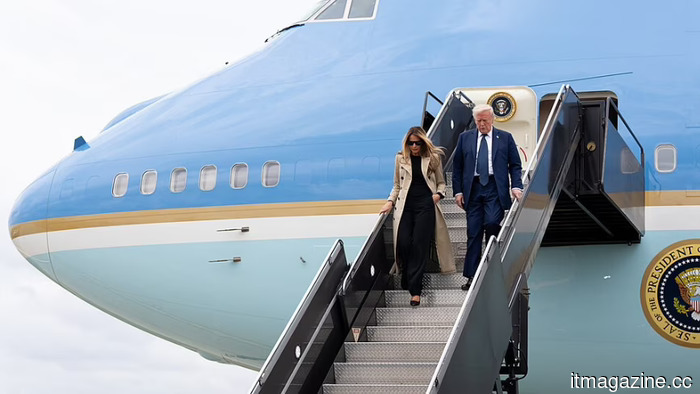 Trump's memecoin resulted in a loss of $3.8 billion for investors while he made $636 million during his presidency.
Nansen data indicates that 988,905 buyers of the $TRUMP token suffered losses amounting to $3.81 billion, while Trump himself earned $636 million in royalties. In his 2025 financial disclosure, he reports $1.4 billion in cryptocurrency income.
Trump's memecoin resulted in a loss of $3.8 billion for investors while he made $636 million during his presidency.
Nansen data indicates that 988,905 buyers of the $TRUMP token suffered losses amounting to $3.81 billion, while Trump himself earned $636 million in royalties. In his 2025 financial disclosure, he reports $1.4 billion in cryptocurrency income.
Micron initiates construction on a $9 billion expansion in Hiroshima to meet the demand for AI memory.
Micron has commenced construction on a ¥1.5 trillion expansion in Hiroshima to produce HBM chips for AI accelerators, with support from the Japanese government reaching as much as ¥775 billion.