
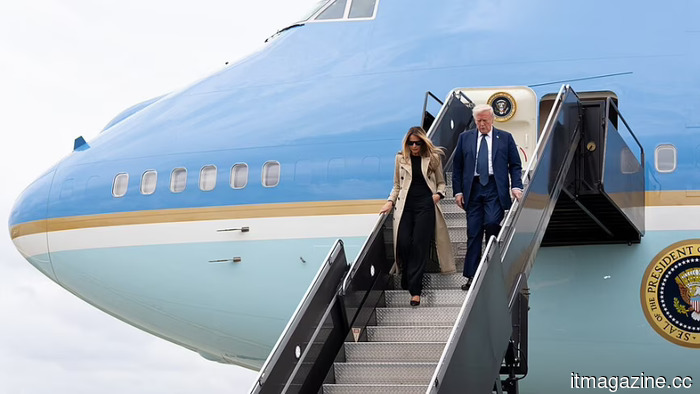
The Trump memecoin resulted in a loss of $3.8 billion for investors while the president made $636 million.
In summary, blockchain analytics company Nansen has reported that 988,905 purchasers of Trump’s $TRUMP memecoin have lost a total of $3.81 billion as of the end of June. Trump's financial disclosure indicates that he received $636 million in royalties from the coin and has a total of $1.4 billion in crypto-related income projected for 2025.
Nearly one million individuals who invested in President Donald Trump’s $TRUMP memecoin have experienced combined losses amounting to $3.81 billion, per an analysis from Nansen. This analysis, accounting for all transactions up to the end of June, reveals that 988,905 of the token's buyers are at a loss.
Trump generated $636 million from this specific coin. His financial disclosure statement, which spans 927 pages and was made public by the Office of Government Ethics on June 30, attributes this amount to royalties received from CIC Digital LLC, a subsidiary of the Trump Organization, under a licensing agreement with a company named Celebration Coins, which has not been publicly referenced elsewhere.
Trump introduced the $TRUMP token on the Solana blockchain on January 17, 2025, just three days prior to his second inauguration. The price of the coin soared to $75.26 shortly after its launch, briefly reaching a fully diluted market capitalization exceeding $75 billion.
Melania Trump, the First Lady, added to the family’s crypto presence by launching her own token, $MELANIA, on January 19, the day before the inauguration. However, both tokens have since significantly declined in value.
Currently, $TRUMP trades around $1.78, a drop of over 97% from its highest point. An investment of $10,000 on inauguration day would now be valued at approximately $364.
This structure ensures that Trump benefits regardless of the token's price fluctuations, as he receives royalties and transaction fees with each buy or sell.
Of the one billion tokens minted, 80% are owned by two Trump-linked entities, CIC Digital and Fight Fight Fight LLC, which are releasing tokens according to a three-year unlock schedule, with an estimated 900,000 tokens circulating daily.
The $TRUMP token launched in a regulatory environment that Trump was actively influencing. The SEC has either dismissed or paused around 60% of its crypto enforcement actions since Trump's administration began, including lengthy investigations involving Binance, Coinbase, and Kraken.
In July 2025, Trump enacted the GENIUS Act, establishing the initial federal framework for stablecoins. This legislation provided institutional participants with regulatory clarity for launching tokenized products, yet it lacked regulations concerning memecoins or tokens affiliated with elected officials.
Conversely, Europe’s MiCA regulation mandates that any crypto asset available to the public comply with disclosure and consumer protection standards, irrespective of its designation. The American framework, however, does not offer similar protections for retail investors, who predominantly comprise memecoin buyers.
On May 22, 2025, Trump organized a formal gala at his Virginia golf club for the top 220 holders of the $TRUMP token, who collectively spent $148 million. The guest list featured Justin Sun, a crypto mogul from China and the coin's largest holder, who was simultaneously facing SEC fraud allegations that the agency has since paused.
A Bloomberg analysis indicated that 19 of the top 25 wallets were likely controlled by individuals outside of the United States. The event provided direct access to the sitting president in exchange for the purchase of a financial product that generates profit for him.
The $TRUMP memecoin is merely one aspect of a broader enterprise. Trump's financial disclosure details at least $1.4 billion in crypto-related income projected for 2025, including approximately $800 million from World Liberty Financial token sales and $197 million from an equity sale linked to a stablecoin holding company.
World Liberty Financial is a decentralized finance protocol where a Trump business entity owns 60% and captures 75% of all revenue from coin sales. This venture has faced its own controversies, having pledged 5 billion of its tokens to obtain a $75 million loan from a platform co-founded by one of its advisers, thereby impacting existing depositors.
In the first quarter of 2026, Trump Media & Technology Group reported a loss of $405.9 million, largely attributed to unrealized markdowns on cryptocurrency it had accumulated. The company invested around $2 billion in Bitcoin purchases near market peaks the prior summer.
Looking ahead, Senator Kirsten Gillibrand has suggested prohibiting elected officials and their spouses from issuing or promoting crypto tokens. She had sought to include similar restrictions during the negotiation of the GENIUS Act, but those provisions were removed from the final bill.
The proposal is expected to face significant challenges in a Congress that has largely accepted the industry. Recently, Visa, Mastercard, and 140 other firms introduced a competing stablecoin based on the GENIUS Act framework, highlighting the rapid advancement of institutional crypto
Other articles
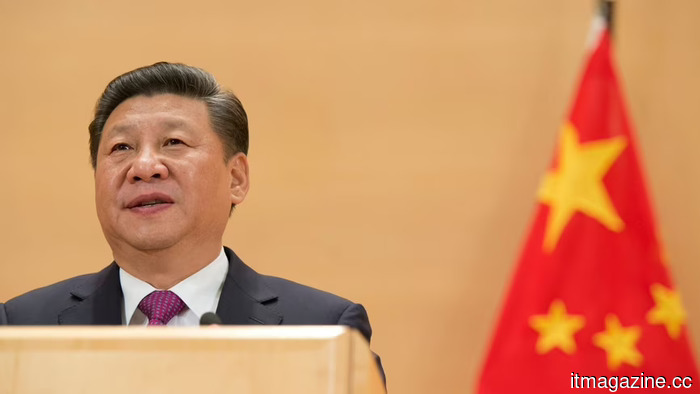 China amends its e-commerce law to oversee and protect platforms.
China's proposed amendments to its e-commerce law introduce regulation of domestic platforms and international response strategies as Temu and Shein encounter tariffs and penalties in the US and EU.
China amends its e-commerce law to oversee and protect platforms.
China's proposed amendments to its e-commerce law introduce regulation of domestic platforms and international response strategies as Temu and Shein encounter tariffs and penalties in the US and EU.
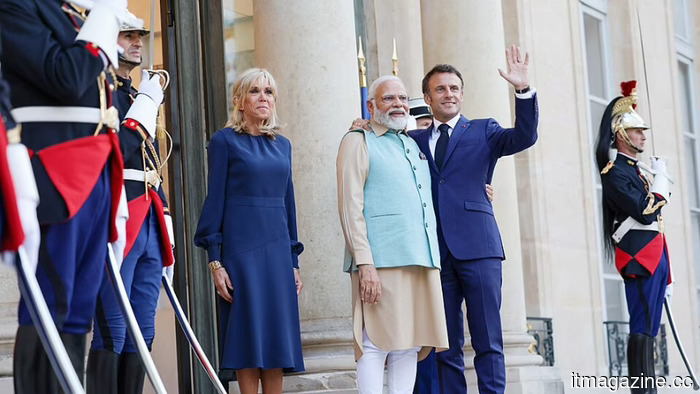 Macron and Modi engage with tech CEOs in the competition for AI infrastructure.
Macron persuaded SoftBank to invest €75 billion in French data centers. Modi obtained $48 billion from Amazon. The competition for AI infrastructure is being dominated by personal diplomacy.
Macron and Modi engage with tech CEOs in the competition for AI infrastructure.
Macron persuaded SoftBank to invest €75 billion in French data centers. Modi obtained $48 billion from Amazon. The competition for AI infrastructure is being dominated by personal diplomacy.
 The Guardian has discovered that OpenAI never conducted a visit to its Stargate UK location.
It seems that OpenAI did not visit an important Stargate UK site prior to launching the project. A prior investigation revealed that the location of the supercomputer was a scaffolding yard.
The Guardian has discovered that OpenAI never conducted a visit to its Stargate UK location.
It seems that OpenAI did not visit an important Stargate UK site prior to launching the project. A prior investigation revealed that the location of the supercomputer was a scaffolding yard.
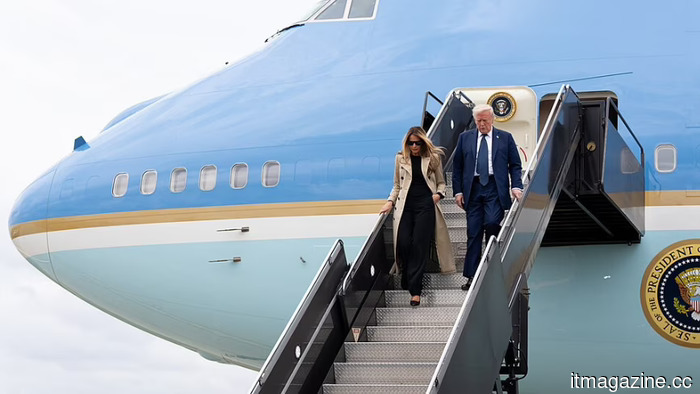 Trump's memecoin resulted in a loss of $3.8 billion for investors while he made $636 million during his presidency.
Nansen data indicates that 988,905 buyers of the $TRUMP token suffered losses amounting to $3.81 billion, while Trump himself earned $636 million in royalties. In his 2025 financial disclosure, he reports $1.4 billion in cryptocurrency income.
Trump's memecoin resulted in a loss of $3.8 billion for investors while he made $636 million during his presidency.
Nansen data indicates that 988,905 buyers of the $TRUMP token suffered losses amounting to $3.81 billion, while Trump himself earned $636 million in royalties. In his 2025 financial disclosure, he reports $1.4 billion in cryptocurrency income.
 Chrome is improving its ability to interpret the pauses and punctuation that are never vocalized.
Chrome 151 Beta brings automatic punctuation for voice recognition, enabling the browser to deduce commas and periods from natural speech without needing specific spoken commands.
Chrome is improving its ability to interpret the pauses and punctuation that are never vocalized.
Chrome 151 Beta brings automatic punctuation for voice recognition, enabling the browser to deduce commas and periods from natural speech without needing specific spoken commands.
 Amazon discreetly enhances its Fire HD 10 tablet by adding an impressive 1GB of RAM.
Amazon has upgraded the Fire HD 10 by adding an additional gigabyte of RAM, thus prolonging the lifespan of its flagship tablet instead of introducing a completely new model.
Amazon discreetly enhances its Fire HD 10 tablet by adding an impressive 1GB of RAM.
Amazon has upgraded the Fire HD 10 by adding an additional gigabyte of RAM, thus prolonging the lifespan of its flagship tablet instead of introducing a completely new model.
The Trump memecoin resulted in a loss of $3.8 billion for investors while the president made $636 million.
Data from Nansen indicates that 988,905 buyers of the $TRUMP token incurred losses totaling $3.81 billion, while Trump earned $636 million in royalties. His financial disclosure for 2025 reports $1.4 billion in earnings from cryptocurrency.