
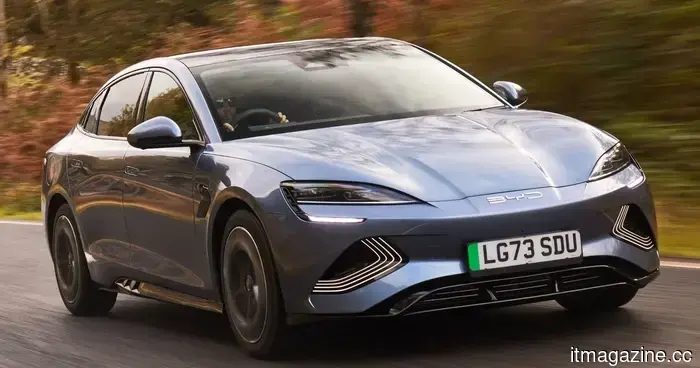
A novel technology that enables drones to experience pain may prevent your self-driving car from inflicting harm on itself.
Drones are leading the way, followed by autonomous vehicles. A pain-sensing technology designed to identify failures before they occur has significant implications for self-driving cars.
When you twist your ankle while running, your body sends a pain message to your brain, compelling you to stop. This ability to sense pain essentially prevents you from exacerbating the injury.
Researchers from Delft University of Technology and Wageningen University have implemented this concept in drones, equipping them with a digital version of a nervous system that identifies faulty components and generates a pain-like alert. Interestingly, this technology may also be applicable to self-driving cars.
So, how does this "pain" system function?
The team has created early warning indicators, termed “critical slowing down” signals, derived from a principle initially used to anticipate ecosystem collapse in ecology. Their study has been published in the Proceedings of the National Academy of Sciences (via TechXplore).
In any complex system, whether biological or engineered, subtle changes in sensor data appear prior to actual failure. This system detects those changes using only real-time data, eliminating the need for predictive models or historical data.
They tested the system on quadrotors at the CyberZoo drone research facility by incrementally damaging rotor blades up to 55% tip damage. Through testing, they observed loss of control at 15% tip damage on the front-right rotor, and the system successfully flagged the instability as it progressed.
“You can liken our method to the way humans perceive pain,” stated lead researcher Jasper van Beers. “Following an injury, pain serves as immediate feedback about our condition and assists us in determining which actions are still safe. Machines typically do not possess this type of self-awareness.”
How could this benefit your vehicle?
This principle can be applied to autonomous vehicles and advanced driver-assistance systems, particularly those used as commercial robotaxis.
A self-driving car encountering a failing sensor, a malfunctioning actuator, or adverse road conditions that push it towards its handling limits faces a similar issue: it has no method to receive a warning before losing control.
Since the system relies solely on real-time data, it does not require any modifications or new hardware; it utilizes what is already present. The researchers specifically mention self-driving cars as an intended application, which is indeed appealing.
Over the past five years, Shikhar has consistently simplified advancements in consumer tech and presented them…
A counterfeit version of Maccy, a widely-used clipboard manager for macOS, is being utilized to distribute a newly identified Mac malware strain called PamStealer. Researchers at Jamf state that the malware masquerades as the legitimate open-source app, but its true function is to steal data and capture users’ login passwords.
PamStealer is delivered as a disk image containing an AppleScript file that pretends to be Maccy. When the user opens this file, macOS launches it in Script Editor, where the displayed instructions instruct them to press Command-R. To someone expecting a standard app installation, this may seem like an unusual setup step. In reality, that action executes hidden malware code and initiates the attack.
Claude Fable 5 is exiting subscriptions, but perhaps not permanently.
High demand is causing Claude Fable 5 to leave standard subscription access after July 7, though the company is now attempting to alleviate concerns that this change is forever.
Fable 5 recently rejoined Claude following scrutiny from the U.S. government. Anthropic announced it would be included in Pro, Max, Team, and selected Enterprise plans for up to 50% of weekly usage limits until July 7. After this date, the model will shift to usage-credit billing, meaning users will incur charges for access beyond their standard plan limits.
A new research study has revealed serious security vulnerabilities in AI browsers.
Four out of seven of the most popular AI browsers have significant security risks that allow malicious websites to steal data from other open tabs. Although AI browsers are marketed as the next significant innovation capable of summarizing pages, making travel arrangements, and completing purchases, a recent study from the University of Washington has found that the more advanced the browser, the greater the risk. The 30-year rule of security that AI browsers are violating has been highlighted.



Other articles
 Google Maps might soon allow you to order food for you through Gemini.
According to reports, Google Maps is working on a feature powered by Gemini that may enable users to find restaurants and place food orders without exiting the app.
Google Maps might soon allow you to order food for you through Gemini.
According to reports, Google Maps is working on a feature powered by Gemini that may enable users to find restaurants and place food orders without exiting the app.
 Sony might have been slowly undermining physical PlayStation games for quite some time.
Sony's disc manufacturing facility has been updating the skills of its employees to work with microlenses, indicating that the strategy to phase out physical game discs may have been in preparation for some time prior to the public announcement.
Sony might have been slowly undermining physical PlayStation games for quite some time.
Sony's disc manufacturing facility has been updating the skills of its employees to work with microlenses, indicating that the strategy to phase out physical game discs may have been in preparation for some time prior to the public announcement.
 The macOS clipboard application Maccy has a counterfeit version that is attempting to steal passwords.
Maccy users have been cautioned about fraudulent websites, as researchers discovered malware that uses the app's name to obtain Mac login credentials.
The macOS clipboard application Maccy has a counterfeit version that is attempting to steal passwords.
Maccy users have been cautioned about fraudulent websites, as researchers discovered malware that uses the app's name to obtain Mac login credentials.
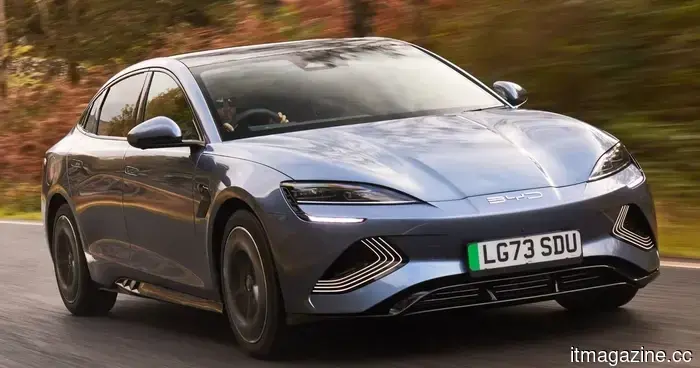 A recent technological advancement that enables drones to experience pain may prevent your self-driving car from causing itself harm.
The same real-time early warning signals that help drones maintain control might someday inform your self-driving car that something is about to go awry.
A recent technological advancement that enables drones to experience pain may prevent your self-driving car from causing itself harm.
The same real-time early warning signals that help drones maintain control might someday inform your self-driving car that something is about to go awry.
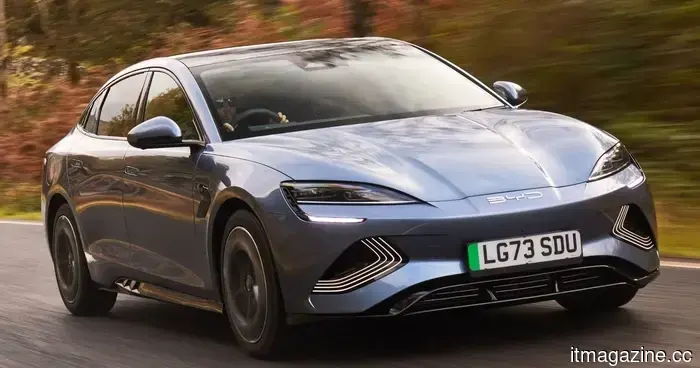 A novel technology that enables drones to experience pain could prevent your self-driving car from causing harm to itself.
The same real-time early warning signals that help prevent drones from losing control may eventually inform your self-driving car when something is likely to go awry.
A novel technology that enables drones to experience pain could prevent your self-driving car from causing harm to itself.
The same real-time early warning signals that help prevent drones from losing control may eventually inform your self-driving car when something is likely to go awry.
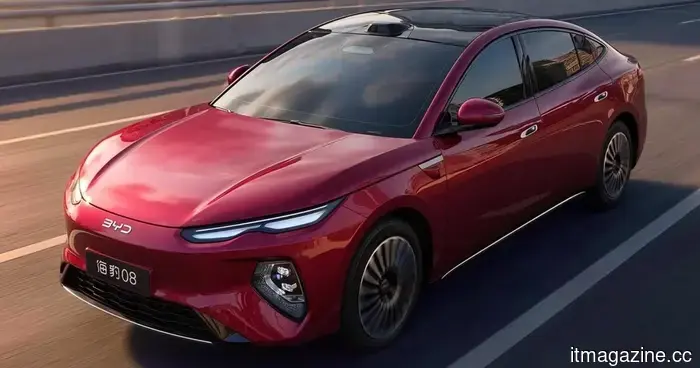 The BYD Seal 08 is making waves with a price tag below $30,000, offering a serious competition to the Tesla Model 3.
BYD introduced all of these features, including zero-gravity seats, a 26-inch AR display, and a PHEV range of 1,660 km, for less than $30,000 in China.
The BYD Seal 08 is making waves with a price tag below $30,000, offering a serious competition to the Tesla Model 3.
BYD introduced all of these features, including zero-gravity seats, a 26-inch AR display, and a PHEV range of 1,660 km, for less than $30,000 in China.
A novel technology that enables drones to experience pain may prevent your self-driving car from inflicting harm on itself.
The same real-time early warning signals that help prevent drones from losing control might eventually notify your self-driving car when something is about to go awry.