
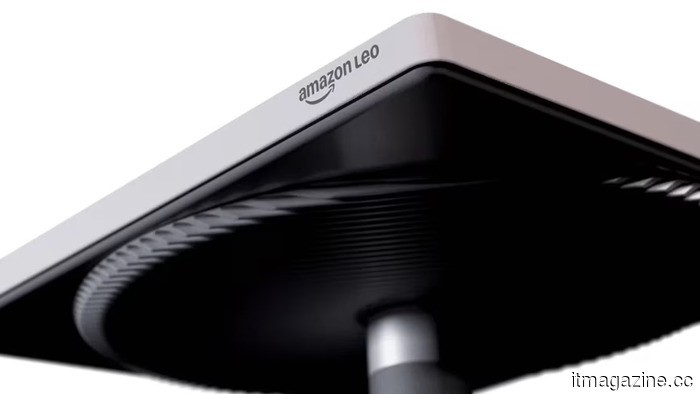
Amazon Leo possesses a sufficient number of satellites to compete with Starlink.
Amazon has finally entered the satellite-internet competition. It announced that it now has enough satellites in orbit to activate its Leo broadband network later this year. The goal is straightforward: to compete with Elon Musk’s Starlink.
A launch on July 2 shifted the momentum. A United Launch Alliance Atlas V rocket delivered 29 additional satellites into orbit from Cape Canaveral, elevating Amazon Leo’s constellation to approximately 396 operational satellites. “This is sufficient to provide continuous service across the initial latitudes,” stated Chris Weber, the network’s vice-president of business and product, in a post. Amazon confirmed that initial commercial services will commence this year, aiming to meet a mid-2026 goal it had previously set.
However, there is a caveat, and Amazon is being transparent about it. The initial coverage will be limited. Services will begin in a narrow band at mid-latitudes and will gradually extend towards the equator as more satellites are launched. Early users are advised to moderate their expectations.
A Distant Second
The 💜 of EU tech
The latest developments from the EU tech landscape, a tale from our esteemed founder Boris, and some questionable AI art. It's free, delivered to your inbox weekly. Sign up now!
The gap with Starlink is significant. SpaceX has approximately 10,000 satellites in orbit and over 10 million subscribers, having launched in 2015, four years before Amazon unveiled its competing network.
For context, SpaceX initiated its own “better than nothing” beta in 2020 with around 900 satellites. Amazon is starting with about 396, suggesting that it will take years and thousands more launches to catch up.
Thursday's launch marked the last of eight Atlas V missions previously reserved by Amazon. Moving forward, it will rely on ULA’s larger Vulcan rocket, as well as Jeff Bezos’ Blue Origin, Arianespace, and even SpaceX. In total, Amazon has scheduled around 100 launches valued at approximately $82 billion.
Grounded Rockets
Deploying those satellites has proven challenging. Amazon requires a fleet of operational rockets, but two of its crucial launch vehicles remain grounded. A Blue Origin New Glenn rocket exploded on its launch pad in May, damaging the tower, while Vulcan has been delayed since February due to a fault with the rocket motor.
Amazon anticipates that New Glenn should be operational again by the end of the year. Until then, the deployment schedule that raised concerns among regulators remains tight. The first-generation network aims to deploy 3,232 satellites by 2029, with a significantly larger second generation already receiving approval.
The Bigger Prize
Broadband is just one aspect of the strategy. With its $11.6 billion acquisition of Globalstar, Amazon is targeting the direct-to-device market. It has agreed to enable satellite features for Apple’s iPhone starting in 2028, positioning itself against Starlink’s own aspirations in the phone sector.
This competition extends beyond the two U.S. behemoths. The dominance of Starlink has made governments uneasy about relying on a single company, and Europe has struggled to provide a serious alternative. A recent $3.1 billion satellite merger was considered too small to compete with Musk. Despite its late entry, a credible Amazon presence ensures that the satellite landscape is no longer a one-horse race.
Other articles
 GoDaddy cautions that India's efforts to combat fake websites might have unintended consequences.
GoDaddy is contesting a Delhi court ruling regarding fraudulent websites, cautioning that eliminating default domain privacy could reveal the identities of millions of genuine owners.
GoDaddy cautions that India's efforts to combat fake websites might have unintended consequences.
GoDaddy is contesting a Delhi court ruling regarding fraudulent websites, cautioning that eliminating default domain privacy could reveal the identities of millions of genuine owners.
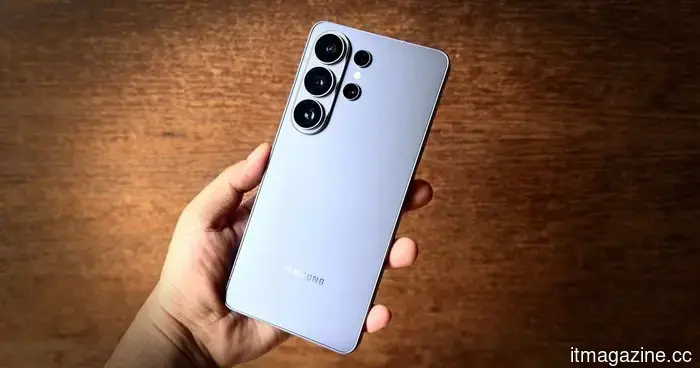 Samsung's Galaxy S27 Pro and Ultra may finally replace the outdated selfie camera.
Samsung's Galaxy S27 Pro and Ultra could replace the outdated 12MP selfie camera with a higher resolution 16MP sensor, along with enhanced telephoto and ultra-wide lenses.
Samsung's Galaxy S27 Pro and Ultra may finally replace the outdated selfie camera.
Samsung's Galaxy S27 Pro and Ultra could replace the outdated 12MP selfie camera with a higher resolution 16MP sensor, along with enhanced telephoto and ultra-wide lenses.
 Argentina's AI-driven companies still rely on human input.
The proposed legislation in Argentina for AI-operated 'non-human corporations' still mandates the presence of a human legal representative and a human promoter who holds unlimited liability.
Argentina's AI-driven companies still rely on human input.
The proposed legislation in Argentina for AI-operated 'non-human corporations' still mandates the presence of a human legal representative and a human promoter who holds unlimited liability.
 IQM debuts on Nasdaq: The first publicly traded quantum company in Europe.
Finland's IQM has started trading on Nasdaq, marking it as the first European quantum firm to be listed on a major US exchange, while maintaining its headquarters in Helsinki and holding €337 million in cash.
IQM debuts on Nasdaq: The first publicly traded quantum company in Europe.
Finland's IQM has started trading on Nasdaq, marking it as the first European quantum firm to be listed on a major US exchange, while maintaining its headquarters in Helsinki and holding €337 million in cash.
 Brave's new Container feature is a game changer for those managing several accounts.
Brave now allows desktop users to open tabs in individual Containers, enabling multiple accounts from the same website to operate simultaneously.
Brave's new Container feature is a game changer for those managing several accounts.
Brave now allows desktop users to open tabs in individual Containers, enabling multiple accounts from the same website to operate simultaneously.
 Brave’s new Container feature is a game-changer for anyone managing several accounts.
Brave now allows desktop users to open tabs in individual Containers, enabling different accounts of the same website to function simultaneously.
Brave’s new Container feature is a game-changer for anyone managing several accounts.
Brave now allows desktop users to open tabs in individual Containers, enabling different accounts of the same website to function simultaneously.
Amazon Leo possesses a sufficient number of satellites to compete with Starlink.
Amazon reports that its recent launch has brought the total number of Amazon Leo satellites to approximately 396, which is sufficient to begin commercial internet services this year in competition with Starlink.