
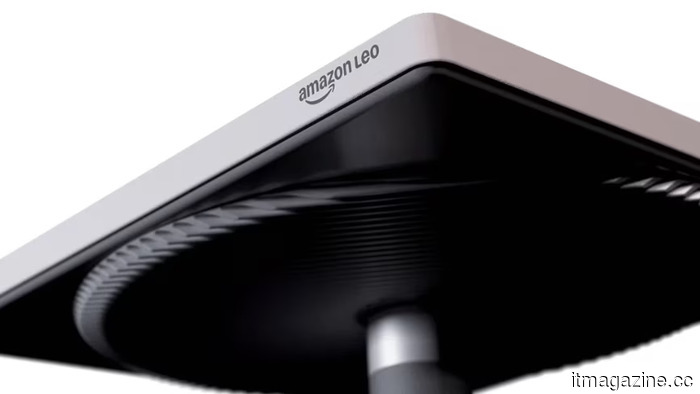
Amazon Leo possesses a sufficient number of satellites to rival Starlink.
Amazon has finally begun its journey in the satellite-internet competition. The company has announced that it has sufficient spacecraft in orbit to activate its Leo broadband network later this year, with a clear goal of challenging Elon Musk’s Starlink.
A significant launch on July 2 tilted the scales in Amazon's favor. A United Launch Alliance Atlas V rocket successfully deployed 29 more satellites into orbit from Cape Canaveral, raising the total number of operational satellites in Amazon’s Leo constellation to approximately 396.
According to Chris Weber, the network’s vice-president of business and product, the constellation is “enough to support continuous service across initial latitudes.” Amazon has confirmed that commercial service will commence this year, aiming to meet the mid-2026 deadline it previously set.
However, there is a caveat that Amazon openly acknowledges. The coverage will initially be uneven, starting in a narrow band at mid-latitudes and gradually expanding towards the equator as additional satellites are launched. Early users should manage their expectations accordingly.
A significant gap remains
In terms of scale, SpaceX's Starlink surpasses Amazon significantly, with approximately 10,000 satellites in orbit and over 10 million subscribers. Starlink was launched in 2015, four years prior to Amazon's announcement of its competing network.
For perspective, SpaceX began its “better than nothing” beta service in 2020 with around 900 satellites, while Amazon is launching with about 396. Bridging this gap will require years and thousands of additional launches.
The flight on Thursday marked the conclusion of eight Atlas V missions that Amazon had reserved. Moving forward, Amazon will depend on ULA’s larger Vulcan rocket, as well as Jeff Bezos’ Blue Origin, Arianespace, and even SpaceX. In total, Amazon has arranged approximately 100 launches, amounting to around $82 billion.
Challenges in launching rockets
Launching these satellites has posed significant challenges. Amazon requires a fleet of operational rockets, but two of its key vehicles are currently grounded. A Blue Origin New Glenn rocket exploded on its launch pad in May, damaging the launch tower, while the Vulcan has been on hold since February due to a rocket-motor issue.
Amazon anticipates that New Glenn will be back in action by the end of the year. Until then, the deployment schedule remains tight and concerning for regulators. The first-generation network is expected to feature 3,232 satellites by 2029, with an even larger second generation already approved.
The bigger goal
Broadband service is just one facet of Amazon's strategy. Through its $11.6 billion acquisition of Globalstar, Amazon is targeting the direct-to-device market. It has committed to providing satellite features for Apple’s iPhone starting in 2028, putting it in direct competition with Starlink’s ambitions in the phone market.
This race has implications beyond the two American giants. Starlink's dominance has raised concerns among governments wary of dependence on a single company, and Europe has struggled to present a serious competitor. A recent merger valued at $3.1 billion was deemed too small to rival Musk. Despite its late entry, a credible Amazon presence ensures that the race in space no longer has just one clear frontrunner.
Other articles
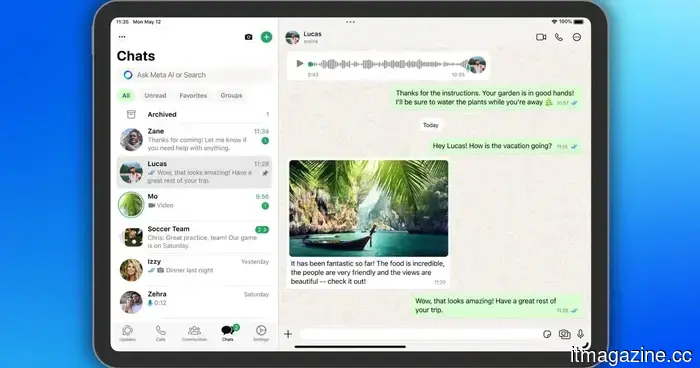 You will soon be able to access WhatsApp on your iPad without needing to use your iPhone.
iPad users can now operate WhatsApp as a standalone main device without requiring an iPhone.
You will soon be able to access WhatsApp on your iPad without needing to use your iPhone.
iPad users can now operate WhatsApp as a standalone main device without requiring an iPhone.
 Amazon Leo possesses a sufficient number of satellites to compete with Starlink.
Amazon reports that its recent launch has brought the total number of Amazon Leo satellites to approximately 396, which is sufficient to begin commercial internet services this year in competition with Starlink.
Amazon Leo possesses a sufficient number of satellites to compete with Starlink.
Amazon reports that its recent launch has brought the total number of Amazon Leo satellites to approximately 396, which is sufficient to begin commercial internet services this year in competition with Starlink.
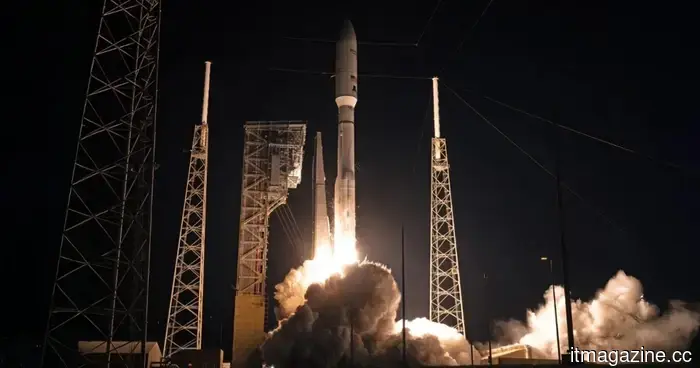 Amazon's competitor to Starlink is expected to roll out satellite internet service later this year.
Amazon intends to introduce its inaugural Leo satellite internet service later this year following the deployment of nearly 400 satellites into orbit, presenting a greater challenge to SpaceX's Starlink.
Amazon's competitor to Starlink is expected to roll out satellite internet service later this year.
Amazon intends to introduce its inaugural Leo satellite internet service later this year following the deployment of nearly 400 satellites into orbit, presenting a greater challenge to SpaceX's Starlink.
 Argentina's AI-driven companies still rely on human input.
The proposed legislation in Argentina for AI-operated 'non-human corporations' still mandates the presence of a human legal representative and a human promoter who holds unlimited liability.
Argentina's AI-driven companies still rely on human input.
The proposed legislation in Argentina for AI-operated 'non-human corporations' still mandates the presence of a human legal representative and a human promoter who holds unlimited liability.
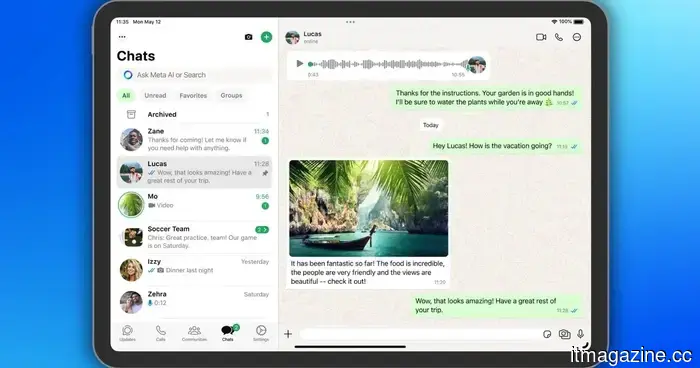 Soon, you'll have the ability to use WhatsApp on your iPad without needing to interact with your iPhone.
iPad users can now operate WhatsApp as an independent primary device without requiring an iPhone.
Soon, you'll have the ability to use WhatsApp on your iPad without needing to interact with your iPhone.
iPad users can now operate WhatsApp as an independent primary device without requiring an iPhone.
 AI agent conducts the initial complete ransomware attack.
Sysdig reports that it identified the first ransomware attack executed entirely by an AI agent. The attack breached a system, erased a database, and demanded a ransom that the victim is unable to pay.
AI agent conducts the initial complete ransomware attack.
Sysdig reports that it identified the first ransomware attack executed entirely by an AI agent. The attack breached a system, erased a database, and demanded a ransom that the victim is unable to pay.
Amazon Leo possesses a sufficient number of satellites to rival Starlink.
Amazon states that its recent launch has brought the total number of Amazon Leo satellites to approximately 396, which is sufficient to initiate commercial internet services this year, aiming to compete with Starlink.