
The US is negotiating with AI companies regarding voluntary standards for new models.
The U.S. government is in talks with AI companies to establish voluntary standards regarding the release of new models, as reported by the Financial Times, with a potential announcement expected within the week. These standards aim to create benchmarks and timelines for advanced models and specify access for these models both domestically and internationally.
The discussions build upon an executive order signed by Trump in June, which instructed developers to provide the government with early access to cutting-edge models prior to their broader release. However, this order was not mandatory, and the final version represented a concession from an earlier draft that included a longer review timeframe, as previously covered.
Reaching this point involved months of internal conflict. A three-way power struggle among the Commerce Department, national security officials, and pro-industry aides had delayed a stricter version of the order, which Trump abandoned due to concerns that it would hinder American AI advancement.
The Financial Times indicates that Washington's primary concern is not consumer protection but rather ensuring that advanced technologies do not benefit military or intelligence operations in China, Russia, or other adversarial countries. The proposed framework would allow officials to designate a model as a “covered frontier model” and negotiate access terms prior to its distribution, without establishing a licensing requirement that the White House has specifically ruled out.
Google is reportedly among the companies currently engaged in discussions, particularly concerning an advanced coding model under development. However, neither Google nor the White House has publicly confirmed the specifics of these discussions, and the information is based on the FT's sources rather than official statements. Therefore, the scope and timing remain tentative until an announcement is made.
The mechanics closely align with what was outlined in the June order. Within 60 days of its signing, the Treasury Department, the National Security Agency, the Cybersecurity and Infrastructure Security Agency, and the National Institute of Standards and Technology were assigned to create a classified benchmarking process to evaluate the cybersecurity capabilities of advanced models. This timeline suggests that early August could be a feasible timeframe for solidifying the framework, coinciding with the announcement period mentioned by the FT.
Several major laboratories, including Microsoft, Google, and xAI, had previously agreed to let the government assess their models prior to launch, leaving Meta as the only significant company not participating in these pre-release security evaluations. Additionally, OpenAI has experienced similar pressure from the administration to postpone the release of future models until reviews are completed.
What is currently being discussed appears to be an effort to standardize this patchwork approach into a more structured process, incorporating defined benchmarks instead of negotiating on a case-by-case basis. Earlier this year, Sam Altman shared with Congress his preference for funding infrastructure for testing rather than a formal approval process—an inclination that a voluntary standards framework would largely fulfill.
This latest round of discussions seems to aim at giving a practical basis to the previous retreat from oversight, allowing the White House to assert the existence of a functioning regime without having to defend a mandatory one in legal settings. The effectiveness of these standards in reducing friction or merely formalizing the ongoing ad hoc reviews remains uncertain, as neither the FT's sources nor the June order has disclosed specific details.
Companies retain the option to opt out of participation without facing penalties, which means the framework's effectiveness will largely depend on how many of the major labs choose to engage. As of the time of writing, there has been no immediate response from the White House or the companies mentioned in the FT's report to requests for comments relayed through wire services.
The timeline referenced by the FT, with an announcement anticipated within the week, provides a clear point for when the framework’s details should become more transparent.
Other articles
 Microsoft teams up with a consortium led by Lightstorm to establish a subsea cable connecting India and Southeast Asia.
Microsoft has partnered with Lightstorm, Tata, Singtel, and NEC to develop the 3,600km I-2SEA subsea cable, which will connect India to Singapore and Malaysia by 2029.
Microsoft teams up with a consortium led by Lightstorm to establish a subsea cable connecting India and Southeast Asia.
Microsoft has partnered with Lightstorm, Tata, Singtel, and NEC to develop the 3,600km I-2SEA subsea cable, which will connect India to Singapore and Malaysia by 2029.
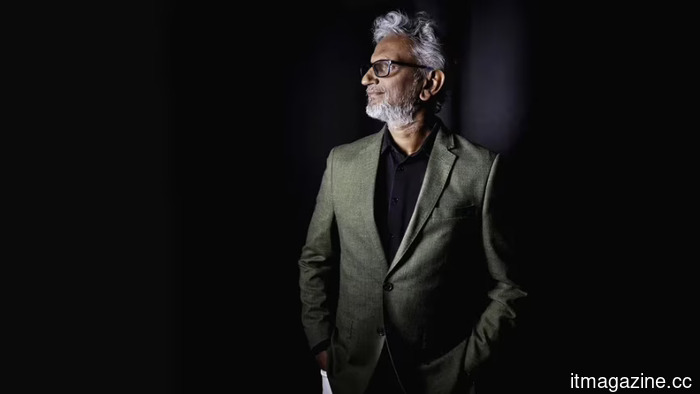 Raja Koduri's Oxmiq secures $35 million to lease AI chip designs rather than selling the chips.
Oxmiq Labs has secured $35 million in a Series A funding round to expand OxCore, a licensable GPU architecture designed to reduce the expenses associated with creating custom AI silicon.
Raja Koduri's Oxmiq secures $35 million to lease AI chip designs rather than selling the chips.
Oxmiq Labs has secured $35 million in a Series A funding round to expand OxCore, a licensable GPU architecture designed to reduce the expenses associated with creating custom AI silicon.
 Nvidia provides computing resources to AI startups with the option to pay later.
Nvidia is providing AI clouds with a revenue-sharing and credit-support model, granting access to its GPUs for startups that may have not been able to afford them before.
Nvidia provides computing resources to AI startups with the option to pay later.
Nvidia is providing AI clouds with a revenue-sharing and credit-support model, granting access to its GPUs for startups that may have not been able to afford them before.
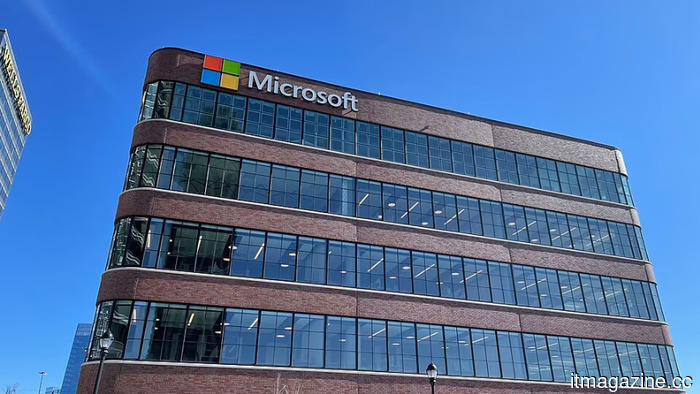 Microsoft partners with a consortium led by Lightstorm to establish a subsea cable connecting India and Southeast Asia.
Microsoft has partnered with Lightstorm, Tata, Singtel, and NEC to develop the 3,600km I-2SEA subsea cable that will connect India to Singapore and Malaysia by 2029.
Microsoft partners with a consortium led by Lightstorm to establish a subsea cable connecting India and Southeast Asia.
Microsoft has partnered with Lightstorm, Tata, Singtel, and NEC to develop the 3,600km I-2SEA subsea cable that will connect India to Singapore and Malaysia by 2029.
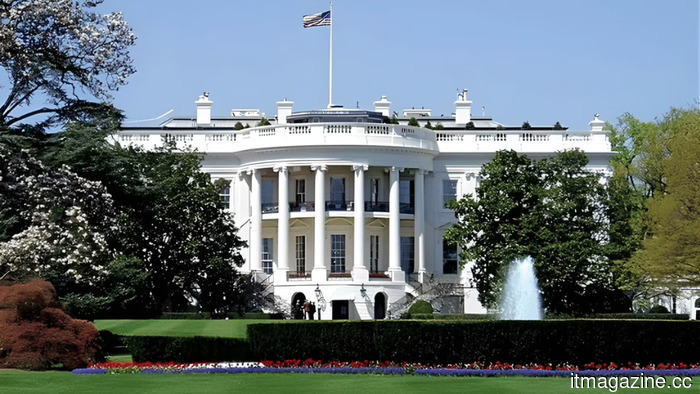 The United States is in discussions with artificial intelligence companies regarding voluntary standards for new models.
According to the Financial Times, the US is in discussions about voluntary guidelines for the release of advanced AI models, following Trump's executive order from June.
The United States is in discussions with artificial intelligence companies regarding voluntary standards for new models.
According to the Financial Times, the US is in discussions about voluntary guidelines for the release of advanced AI models, following Trump's executive order from June.
 UNICEF reports that children are embracing AI at a rate three times quicker than that of adults.
UNICEF reports that 20 million children in 10 countries have utilized AI, embracing it at more than triple the speed of adults, and cautions that regulations for child safety are lagging behind.
UNICEF reports that children are embracing AI at a rate three times quicker than that of adults.
UNICEF reports that 20 million children in 10 countries have utilized AI, embracing it at more than triple the speed of adults, and cautions that regulations for child safety are lagging behind.
The US is negotiating with AI companies regarding voluntary standards for new models.
According to the FT, the US is in discussions regarding voluntary standards for the release of advanced AI models, based on the executive order issued by Trump in June.