

Raja Koduri's Oxmiq secures $35 million to lease AI chip designs rather than selling the chips.
Oxmiq Labs has successfully secured $35 million in Series A funding to expand OxCore, a licensable GPU architecture that the startup claims allows chipmakers to create custom AI chips without engaging in lengthy, multi-year design processes. With this latest funding round, the total capital raised by the company reaches $60 million since its establishment by seasoned chip architect Raja Koduri.
The proposition is simple, even if the underlying engineering is complex. Developing a sophisticated AI chip from the ground up generally costs hundreds of millions of dollars and takes years, which has made custom silicon largely inaccessible to all but the largest cloud providers and semiconductor companies.
Oxmiq aims to offer the design itself as licensable intellectual property, similar to how Arm licenses processor cores, rather than selling completed chips. OxCore is the central product in this strategy.
It combines three computing engines: a CUDA-compatible GPU engine, a tensor processing engine, and an orchestration engine that manages workloads across the system, functions that are usually divided among separate chips.
Oxmiq asserts that the closer integration is designed for near-memory computing, minimizing data movement that increases both costs and energy consumption in AI tasks.
The investment round was co-led by Fundomo and Samsung Catalyst Fund, with involvement from MediaTek, Pegatron Venture Capital, Darwin Ventures, Morgan Creek Digital, and other strategic and financial investors mentioned in the announcement.
This diverse group, which includes a major memory and foundry player in Samsung, a contract manufacturer in Pegatron, and a fabless chipmaker in MediaTek, indicates interest that transcends mere financial returns.
A noteworthy development is the addition of Jim Keller to the board. Keller, a renowned chip architect with experience at Apple, AMD's Zen architecture, and Tesla’s self-driving silicon, before becoming the CEO of Tenstorrent, has taken a board seat at Oxmiq. Additionally, former Intel process technology fellow Valluri “Bob” Rao has come on board as an advisor. The terms of these appointments, including any equity or compensation, were not disclosed.
Koduri’s extensive background lends credibility to the venture. He led graphics efforts at AMD and Apple, subsequently overseeing Intel’s graphics and accelerated computing initiatives before founding his own company, positioning him among a select few architects who have delivered GPU silicon at three of the industry's largest firms.
Oxmiq is based in Campbell, California, with a development center in Hyderabad, India. The concept of a licensable IP model in chip design is not novel—Arm has been doing it for decades, and RISC-V startups like SiFive have built entire enterprises around licensing processor cores instead of supplying finished silicon.
What remains less tested is extending this model to cutting-edge AI accelerators, where primary purchasers, particularly Nvidia, have historically favored owning their architectures outright rather than licensing them from others.
Oxmiq's strategy is that sufficient semiconductor companies and system builders would prefer to invest in a proven, functional core rather than spend hundreds of millions of dollars and years of engineering to create one from scratch.
This approach has gained appeal as spending on AI infrastructure has surged, prompting more companies to seek their own custom silicon instead of relying solely on Nvidia or a hyperscaler’s internal chip programs.
Details concerning the financing terms beyond the reported amount remain undisclosed. Oxmiq has not clarified what stake its new investors hold or what near-term revenue, if any, is being generated from existing licensing agreements, leaving the commercial basis of the funding round largely unverified in the public domain.
The success of this strategy will depend not only on the funding but also on whether any of Oxmiq’s investors proceed to implement OxCore in sellable silicon.
At present, the $35 million investment provides the company with a runway and a board seat from a respected industry figure, which serves as a form of validation in a sector where trust in an untested architecture is an extremely valuable asset.
Other articles
 Sony is contributing to the decline of physical games, while the responsibility for preservation is being left to address the fallout.
Sony's announced plan to cease production of PS5 disc models by 2028 would further entrench PlayStation in digital licensing, leaving those who advocate for preservation to navigate issues that the industry has yet to adequately address.
Sony is contributing to the decline of physical games, while the responsibility for preservation is being left to address the fallout.
Sony's announced plan to cease production of PS5 disc models by 2028 would further entrench PlayStation in digital licensing, leaving those who advocate for preservation to navigate issues that the industry has yet to adequately address.
 Nvidia provides computing resources to AI startups with the option to pay later.
Nvidia is providing AI clouds with a revenue-sharing and credit-support model, granting access to its GPUs for startups that may have not been able to afford them before.
Nvidia provides computing resources to AI startups with the option to pay later.
Nvidia is providing AI clouds with a revenue-sharing and credit-support model, granting access to its GPUs for startups that may have not been able to afford them before.
 UNICEF reports that children are embracing AI at a rate three times quicker than that of adults.
UNICEF reports that 20 million children in 10 countries have utilized AI, embracing it at more than triple the speed of adults, and cautions that regulations for child safety are lagging behind.
UNICEF reports that children are embracing AI at a rate three times quicker than that of adults.
UNICEF reports that 20 million children in 10 countries have utilized AI, embracing it at more than triple the speed of adults, and cautions that regulations for child safety are lagging behind.
 Novo Nordisk's owner supports an Italian fund to expand drug startups outside of Denmark.
Novo Holdings, the €93 billion investor associated with Novo Nordisk, is supporting a fund focused on Italian pharmaceutical startups, thereby expanding its influence beyond Denmark.
Novo Nordisk's owner supports an Italian fund to expand drug startups outside of Denmark.
Novo Holdings, the €93 billion investor associated with Novo Nordisk, is supporting a fund focused on Italian pharmaceutical startups, thereby expanding its influence beyond Denmark.
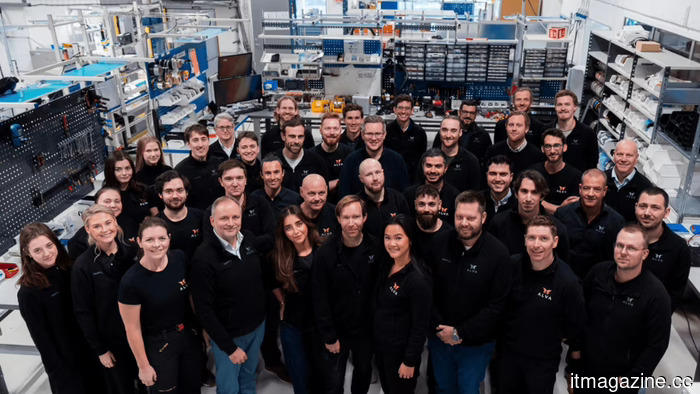 Alva Industries secures €16 million to expand its ultra-compact electric motor production.
Alva Industries in Trondheim has secured €16 million in funding, with Nysnø, Sandwater, and Emerald Technology Ventures leading the investment to enhance its FiberPrinting motor technology.
Alva Industries secures €16 million to expand its ultra-compact electric motor production.
Alva Industries in Trondheim has secured €16 million in funding, with Nysnø, Sandwater, and Emerald Technology Ventures leading the investment to enhance its FiberPrinting motor technology.
 India requests WhatsApp to halt its usernames feature while discussions are ongoing.
India's IT ministry has instructed WhatsApp to pause its usernames feature and to provide an explanation within three days regarding how it will prevent fraud, as indicated in a letter.
India requests WhatsApp to halt its usernames feature while discussions are ongoing.
India's IT ministry has instructed WhatsApp to pause its usernames feature and to provide an explanation within three days regarding how it will prevent fraud, as indicated in a letter.
Raja Koduri's Oxmiq secures $35 million to lease AI chip designs rather than selling the chips.
Oxmiq Labs has secured $35 million in a Series A funding round to expand OxCore, a licensable GPU architecture designed to reduce the expenses associated with creating custom AI silicon.