

Microsoft teams up with a consortium led by Lightstorm to establish a subsea cable connecting India and Southeast Asia.
Microsoft has partnered with Singapore-based Lightstorm in a consortium to develop a new subsea cable that will connect India with Singapore and Malaysia, as announced by the companies on Thursday. The I-2SEA system will span 3,600 kilometers and is designed to support the AI, cloud, and hyperscale workloads that have turned India into one of the most competitive data center markets globally.
In addition to Microsoft and Lightstorm, the consortium comprises Tata Communications, Singapore’s Singtel, ASEAN Cableship, and Japan’s NEC Corporation, which is typically responsible for the manufacturing and installation of subsea cables for projects of this magnitude. The cable is projected to be operational by the fourth quarter of 2029, giving the consortium approximately three years to survey routes, obtain permits, and lay the cable across open waters.
One landing station will be located in Machilipatnam, on the coast of Andhra Pradesh in southern India, selected for its direct subsea connectivity to data center clusters located inland around Hyderabad. Both Meta and Alphabet have announced separate data center projects in the area, and a dedicated high-capacity route from the coast is typically an infrastructure development that follows rather than precedes such commitments from hyperscalers.
This initiative aligns with a wider trend observed over the past year, in which Microsoft has increasingly engaged in sovereign and regional infrastructure projects instead of solely relying on its own funding. The company has already invested over $1 billion in Thailand and $3.2 billion in Sweden for cloud and AI infrastructure, in addition to a reported $17.5 billion earmarked for expanding its presence in India.
India is particularly significant to this cable project, as the country generates and consumes approximately one-fifth of the world’s data while only accounting for around 3% of the global data center capacity. This discrepancy has prompted a surge of investments from hyperscalers and domestic firms into the market. Google has committed $15 billion toward a data center hub in southern India, and Jio Platforms, part of Reliance, has been building its own infrastructure capabilities. Jio recently filed for what would be India's largest IPO to address debt and create capacity for its AI and cloud initiatives.
Lightstorm is relatively new to the scene, already operating about 50,000 kilometers of fiber, divided into 30,000 kilometers within India and 21,000 kilometers along subsea Pacific routes. The company has indicated it is considering an initial public offering as it expands throughout the Asia Pacific region.
A subsea cable of this magnitude does not independently resolve capacity issues. While it facilitates faster and more reliable data transfer between coasts—critical for AI workloads that depend on large volumes of training and inference data being moved across borders—the underlying compute power still needs to be developed, fueled, and cooled on land. The I-2SEA project alleviates one of the foreseeable bottlenecks between now and 2029, especially as other components such as power, chips, and land are already in short supply. Other hyperscalers are making similar investments in Indian infrastructure at an accelerated pace.
Amazon has also committed billions to its initiatives in India, while the Adani Group is pursuing a substantial ten-year, $100 billion expansion of its infrastructure, indicating that closing the country’s capacity gap will require several years of parallel construction rather than relying on a single project.
NEC's involvement is noteworthy due to the company’s extensive history of laying and maintaining transpacific and Asian subsea routes. The consortium members did not disclose the project's cost or specify how construction and operational costs will be divided among the six partners. This information, along with the permitting timelines in each of the three landing countries, is likely to emerge as the project progresses from the announcement phase to actual construction.
Other articles
 SoftBank reintroduces its $10 billion loan supported by OpenAI, offering new incentives to lenders.
SoftBank has resumed discussions for a $10 billion loan secured by its stake in OpenAI, providing banks with a corporate guarantee following the halt of a previous arrangement.
SoftBank reintroduces its $10 billion loan supported by OpenAI, offering new incentives to lenders.
SoftBank has resumed discussions for a $10 billion loan secured by its stake in OpenAI, providing banks with a corporate guarantee following the halt of a previous arrangement.
 India requests WhatsApp to halt its usernames feature while discussions are ongoing.
India's IT ministry has instructed WhatsApp to pause its usernames feature and to provide an explanation within three days regarding how it will prevent fraud, as indicated in a letter.
India requests WhatsApp to halt its usernames feature while discussions are ongoing.
India's IT ministry has instructed WhatsApp to pause its usernames feature and to provide an explanation within three days regarding how it will prevent fraud, as indicated in a letter.
 Nothing's upcoming budget earbuds will be a refreshing alternative to the typical AirPods replicas.
There is no confirmation that the Ear (3a), its upcoming budget-friendly wireless earbuds, will be released on July 7 in White, Black, Yellow, and Pink color variants.
Nothing's upcoming budget earbuds will be a refreshing alternative to the typical AirPods replicas.
There is no confirmation that the Ear (3a), its upcoming budget-friendly wireless earbuds, will be released on July 7 in White, Black, Yellow, and Pink color variants.
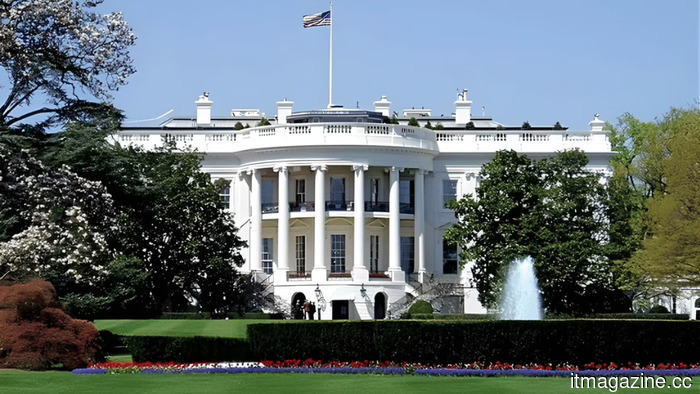 The United States is in discussions with artificial intelligence companies regarding voluntary standards for new models.
According to the Financial Times, the US is in discussions about voluntary guidelines for the release of advanced AI models, following Trump's executive order from June.
The United States is in discussions with artificial intelligence companies regarding voluntary standards for new models.
According to the Financial Times, the US is in discussions about voluntary guidelines for the release of advanced AI models, following Trump's executive order from June.
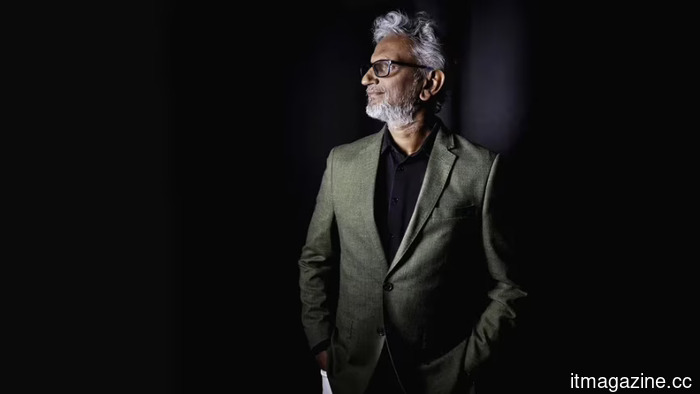 Raja Koduri's Oxmiq secures $35 million to lease AI chip designs rather than selling the chips.
Oxmiq Labs has secured $35 million in a Series A funding round to expand OxCore, a licensable GPU architecture designed to reduce the expenses associated with creating custom AI silicon.
Raja Koduri's Oxmiq secures $35 million to lease AI chip designs rather than selling the chips.
Oxmiq Labs has secured $35 million in a Series A funding round to expand OxCore, a licensable GPU architecture designed to reduce the expenses associated with creating custom AI silicon.
 UNICEF reports that children are embracing AI at a rate three times quicker than that of adults.
UNICEF reports that 20 million children in 10 countries have utilized AI, embracing it at more than triple the speed of adults, and cautions that regulations for child safety are lagging behind.
UNICEF reports that children are embracing AI at a rate three times quicker than that of adults.
UNICEF reports that 20 million children in 10 countries have utilized AI, embracing it at more than triple the speed of adults, and cautions that regulations for child safety are lagging behind.
Microsoft teams up with a consortium led by Lightstorm to establish a subsea cable connecting India and Southeast Asia.
Microsoft has partnered with Lightstorm, Tata, Singtel, and NEC to develop the 3,600km I-2SEA subsea cable, which will connect India to Singapore and Malaysia by 2029.