
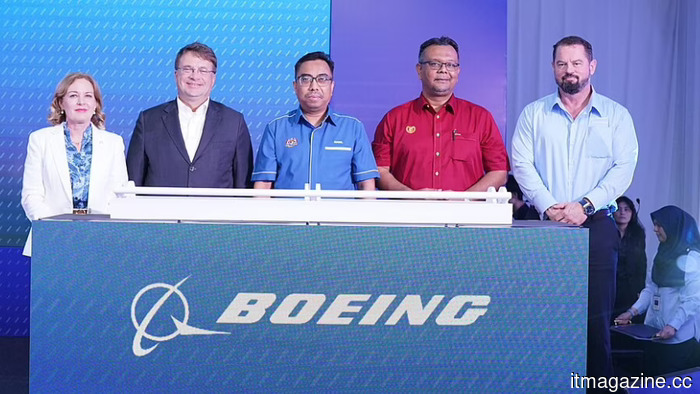
Boeing's subsidiary that develops autonomous air taxis is facing a whistleblower lawsuit regarding expedited software testing.
A former software manager at Wisk Aero, which is a subsidiary of Boeing that focuses on autonomous air taxis, is suing the company, claiming she was dismissed for raising concerns about the reduction of FAA-mandated software testing. Briahna O’Neill has filed a lawsuit in Santa Clara Superior Court, alleging wrongful termination and discrimination. The complaint states that O’Neill submitted two internal safety reports indicating that company executives pressured engineers to reduce FAA-required software testing to meet a 2025 deadline for test flights.
O’Neill asserts that she was terminated in March 2025, just weeks after submitting her second internal report. Wisk has indicated that it cannot comment on ongoing lawsuits, while Boeing has also refrained from commenting on the issue. The allegations have not yet been proven in court, and the case is still in its preliminary stages.
Wisk was established in 2019 through a partnership between Boeing and Kitty Hawk, the air taxi firm supported by Google co-founder Larry Page, and is now fully owned by Boeing. The company is developing a completely autonomous electric air taxi intended to operate without a pilot onboard, managed remotely by a single operator who can oversee up to three aircraft simultaneously. This strategy differentiates Wisk from competitors like Joby Aviation, which employs a piloted model and is further along in the FAA certification process.
Wisk’s Generation 6 aircraft successfully completed its inaugural flight in December 2025, followed by a second prototype flight in May 2026, effectively doubling its testing fleet. Wisk is one of eight companies chosen for the FAA’s eVTOL Integration Pilot Program, initiated in March 2026, which facilitates supervised commercial testing across 26 states over a three-year duration. The company is gearing up for operations in Texas as part of this programme.
The lawsuit surfaces at a challenging time for Boeing’s overall safety reputation. Since 2020, the company has faced 32 whistleblower complaints reported to OSHA, according to federal records, and a Senate subcommittee has conducted hearings regarding what it labeled as Boeing’s "broken safety culture." There has been a growing trend of corporate retaliation against employees who voice concerns within the tech and aerospace sectors, resulting in a rise in legal actions in recent years.
While it remains to be seen whether O’Neill's claims will be substantiated in court, the timing is particularly sensitive for Wisk. The company is seeking FAA certification for the first fully autonomous passenger aircraft in the United States, a process that hinges on regulators' assurance that its software systems adhere to the highest safety standards. A lawsuit claiming that those essential software testing requirements were intentionally compromised to meet an internal deadline raises significant questions that the FAA will need to address before any certification can be granted.
Other articles
 Anthropic is negotiating with Samsung to produce a specialized AI chip.
Anthropic is in talks with Samsung regarding a partnership for a custom chip, although the project is still in its early stages and the company has not yet made a commitment to a specific design.
Anthropic is negotiating with Samsung to produce a specialized AI chip.
Anthropic is in talks with Samsung regarding a partnership for a custom chip, although the project is still in its early stages and the company has not yet made a commitment to a specific design.
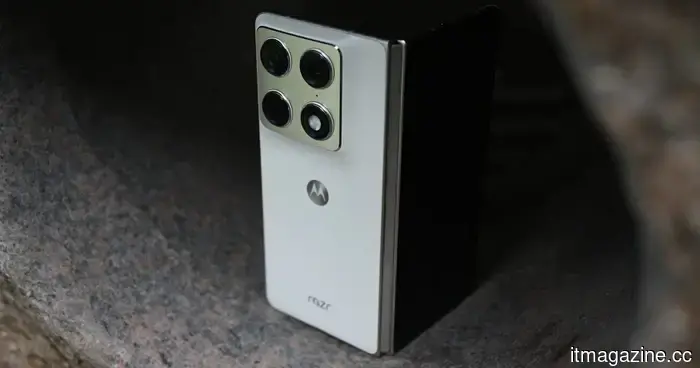 The Razr Fold now has improved compatibility with iPhones due to AirDrop.
The Motorola Razr Fold is now the first Motorola smartphone to enable AirDrop-like file sharing with Apple devices via Google’s Quick Share.
The Razr Fold now has improved compatibility with iPhones due to AirDrop.
The Motorola Razr Fold is now the first Motorola smartphone to enable AirDrop-like file sharing with Apple devices via Google’s Quick Share.
 A stolen Kia exposes the concealed limitations of connected vehicle technology.
Ian Fogg had a doorbell camera, an AirTag, and accessibility to Kia Connect when his vehicle was taken. Despite eight location requests, the car remains missing.
A stolen Kia exposes the concealed limitations of connected vehicle technology.
Ian Fogg had a doorbell camera, an AirTag, and accessibility to Kia Connect when his vehicle was taken. Despite eight location requests, the car remains missing.
 Kling AI secures two billion dollars as Kuaishou separates its video AI division.
Kuaishou has confirmed a two billion dollar funding round for Kling AI, with additional investors possibly increasing the total to three billion dollars.
Kling AI secures two billion dollars as Kuaishou separates its video AI division.
Kuaishou has confirmed a two billion dollar funding round for Kling AI, with additional investors possibly increasing the total to three billion dollars.
 AI aims to condense everything. TripAdvisor's deceptive reviews indicate that AI could also spoil your travel arrangements.
TripAdvisor's AI-generated review summaries are describing unsafe hotels as "spotless" and "friendly." Here’s why you should be cautious about relying on that AI summary before making a reservation.
AI aims to condense everything. TripAdvisor's deceptive reviews indicate that AI could also spoil your travel arrangements.
TripAdvisor's AI-generated review summaries are describing unsafe hotels as "spotless" and "friendly." Here’s why you should be cautious about relying on that AI summary before making a reservation.
 Kling AI secures two billion dollars as Kuaishou separates its video AI division.
Kuaishou has confirmed a $2 billion investment in Kling AI, with additional investors possibly bringing the total to $3 billion.
Kling AI secures two billion dollars as Kuaishou separates its video AI division.
Kuaishou has confirmed a $2 billion investment in Kling AI, with additional investors possibly bringing the total to $3 billion.
Boeing's subsidiary that develops autonomous air taxis is facing a whistleblower lawsuit regarding expedited software testing.
A lawsuit claims that Wisk Aero shortened the necessary software testing mandated by the FAA to meet a deadline, and subsequently dismissed the manager who raised the issue internally.