
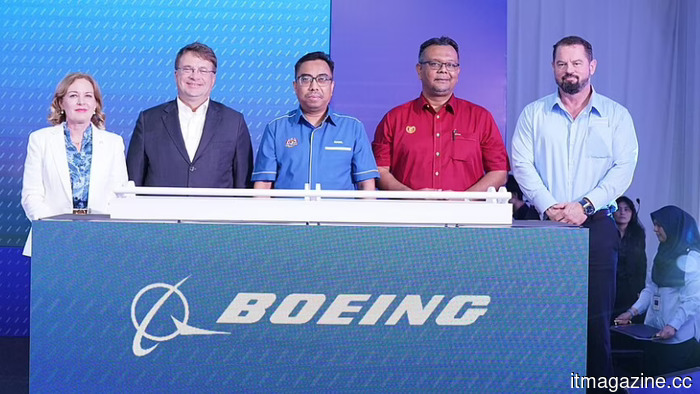
Boeing's autonomous air taxi division is confronting a whistleblower lawsuit regarding expedited software testing.
A former software manager at Wisk Aero, which is Boeing’s autonomous air taxi division, has initiated a lawsuit claiming she was terminated for raising concerns about reduced testing required by the FAA. As first reported by the Seattle Times, Briahna O’Neill filed her suit in Santa Clara Superior Court, alleging wrongful termination and discrimination. The complaint states that O'Neill filed two internal safety reports indicating that company executives pressured engineers to reduce FAA-mandated software testing to meet a 2025 test flight goal.
O'Neill asserts she was let go in March 2025, shortly after submitting her second internal report. Wisk has stated it cannot comment on ongoing legal matters, and Boeing has chosen not to comment as well. The claims remain unproven in court, and the case is still in its early stages.
Founded in 2019 as a collaboration between Boeing and Kitty Hawk, the air taxi venture backed by Google co-founder Larry Page, Wisk is now fully owned by Boeing. The company is developing an entirely autonomous electric air taxi that operates without a pilot onboard, with a remote operator managing up to three aircraft simultaneously. This strategy distinguishes it from competitors such as Joby Aviation, which uses piloted models and is the furthest along in the FAA certification process.
Wisk’s Generation 6 aircraft conducted its first flight in December 2025, followed by a second prototype flight in May 2026, expanding its test fleet. The company is among eight selected for the FAA’s eVTOL Integration Pilot Program, which began in March 2026 and permits supervised commercial testing across 26 states over three years. Wisk is gearing up for operations in Texas as part of this program.
The timing of the lawsuit is particularly challenging for Boeing’s overall safety reputation, as the company has faced 32 whistleblower complaints lodged with OSHA since 2020, according to federal data. Additionally, a Senate subcommittee has convened hearings addressing what it calls Boeing’s “broken safety culture.” Corporate retaliation against employees voicing concerns has become a recurring issue in both the tech and aerospace sectors, with legal actions increasing in recent years.
Whether O’Neill’s claims will stand up in court remains to be determined, but for Wisk, the timing is extremely delicate. The company is seeking FAA certification for the first fully autonomous passenger aircraft in the U.S., a process that heavily relies on regulators' assurance that its software systems meet the highest safety standards. A lawsuit suggesting that these software testing requirements were intentionally weakened to meet an internal timeline poses significant questions that the FAA will need to address before any certification can be approved.
Other articles
 Anthropic is in discussions with Samsung regarding the production of a tailor-made AI chip.
Anthropic is in talks with Samsung regarding a partnership for a custom chip, but the project is still in its early stages and the company has yet to finalize a design.
Anthropic is in discussions with Samsung regarding the production of a tailor-made AI chip.
Anthropic is in talks with Samsung regarding a partnership for a custom chip, but the project is still in its early stages and the company has yet to finalize a design.
 Kling AI secures two billion dollars as Kuaishou separates its video AI division.
Kuaishou has confirmed a $2 billion investment in Kling AI, with additional investors possibly bringing the total to $3 billion.
Kling AI secures two billion dollars as Kuaishou separates its video AI division.
Kuaishou has confirmed a $2 billion investment in Kling AI, with additional investors possibly bringing the total to $3 billion.
 The Razr Fold now has improved compatibility with iPhones due to AirDrop.
The Motorola Razr Fold is now the first Motorola smartphone to enable AirDrop-like file sharing with Apple devices via Google’s Quick Share.
The Razr Fold now has improved compatibility with iPhones due to AirDrop.
The Motorola Razr Fold is now the first Motorola smartphone to enable AirDrop-like file sharing with Apple devices via Google’s Quick Share.
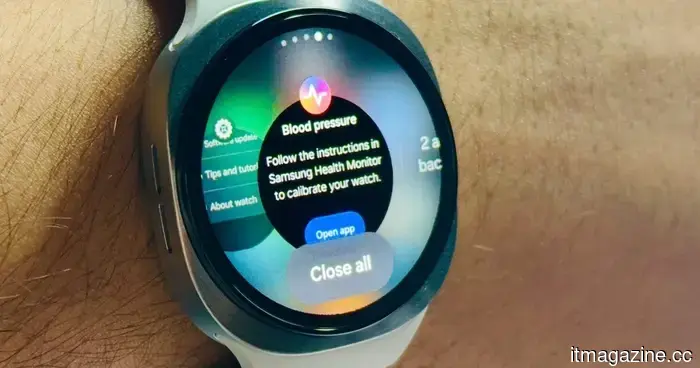 Your Galaxy Watch is losing a health function, and the alternative requires an additional device.
Samsung Health is informing US Galaxy Watch users that Vascular Load will be removed in late July, with Blood Pressure Trend taking its place in Samsung Health 7.0 and One UI Watch 9.
Your Galaxy Watch is losing a health function, and the alternative requires an additional device.
Samsung Health is informing US Galaxy Watch users that Vascular Load will be removed in late July, with Blood Pressure Trend taking its place in Samsung Health 7.0 and One UI Watch 9.
 Anthropic is negotiating with Samsung to produce a specialized AI chip.
Anthropic is in talks with Samsung regarding a partnership for a custom chip, although the project is still in its early stages and the company has not yet made a commitment to a specific design.
Anthropic is negotiating with Samsung to produce a specialized AI chip.
Anthropic is in talks with Samsung regarding a partnership for a custom chip, although the project is still in its early stages and the company has not yet made a commitment to a specific design.
 Kling AI secures two billion dollars as Kuaishou separates its video AI division.
Kuaishou has confirmed a two billion dollar funding round for Kling AI, with additional investors possibly increasing the total to three billion dollars.
Kling AI secures two billion dollars as Kuaishou separates its video AI division.
Kuaishou has confirmed a two billion dollar funding round for Kling AI, with additional investors possibly increasing the total to three billion dollars.
Boeing's autonomous air taxi division is confronting a whistleblower lawsuit regarding expedited software testing.
A lawsuit claims that Wisk Aero reduced the necessary software testing mandated by the FAA in order to meet a deadline, and subsequently terminated the manager who raised the issue internally.