

Pie has secured $19.5 million to enhance the visibility of small businesses in AI search.
For three decades, small businesses have competed to rank on Google, but now their customers are turning to ChatGPT for recommendations instead. A startup from New York aims to ensure that local salons still appear in these queries.
The startup, named Pie, has recently emerged from stealth mode with substantial backing, having secured a $19.5 million Series A round led by Lightspeed Venture Partners. This brings its total funding to $23.7 million, as stated by the company. Other participants in this funding round included Capital One Ventures, SciFi VC, F-Prime, and others.
Pie provides growth tools targeted at what it refers to as Main Street businesses, such as nail salons, auto-repair shops, and local gyms. The company's premise is straightforward: customer discovery is rapidly evolving from Google's traditional blue links to answers generated by AI. Many small businesses are unprepared for this shift.
Focusing on chatbot optimization instead of just Google, Pie’s platform consists of three components. AI Search aims to position businesses when people ask ChatGPT, Claude, or Perplexity for recommendations. Growth targets customers through high-intent platforms like Google Maps, Yelp, and Nextdoor.
The new feature, Front Desk, launched recently, acts as an AI receptionist, available 24/7 to manage phone calls, book appointments, and respond to inquiries.
The core emphasis is on generating demand rather than merely handling administration. While many tools exist to assist shops in managing current customers, Pie asserts it is designed to attract new clientele. This distinction is crucial as traditional search methods become less reliable. Google's transition to AI-generated responses has decreased the traffic that used to be directed to smaller websites.
Consumers are shifting away from the standard ten blue links, with some now allowing chatbots to make purchasing decisions directly.
One of Pie's main advantages is its cost. Traditionally, enterprise marketing software has been too pricey for smaller shops, with agencies charging between $2,500 and $5,000 monthly under long-term contracts often yielding limited results. Pie offers a more affordable alternative, with one salon owner from Los Angeles reporting a payment of just $359 per month. This led to a corresponding increase in monthly sales by $10,000 to $12,000, allowing the business to expand staff and nail stations.
"Small business owners have been stuck with costly and opaque agency models for years," stated co-founder and CEO Syed Ali. He noted that each owner conveyed a common need for more customers without the means to hire an agency.
Ali and co-founder Akhil Mantripragada, both having experience with Square and Toast, identified this gap while developing an AI solution for restaurants.
Pie claims it already serves thousands of businesses, having grown quietly through referrals and partnerships, and it has facilitated over 100,000 phone calls to its clients. According to the company, these clients typically experience a sales increase of 15 to 20 percent year-over-year. Pie also integrates with specialized software platforms, such as the auto-repair management system Tekmetric, to connect with merchants through tools they already utilize.
As others pursue the same transition, a small industry is developing to ensure brands get mentioned by AI—a field sometimes referred to as generative engine optimization. Competitors like Peec AI are quickly securing funding.
The lingering question is whether the ability to "show up in ChatGPT" can sustain itself as a viable business model or if major platforms will incorporate it as a feature. For the time being, Pie is betting that Main Street requires assistance and that it can provide that support at a price significantly lower than traditional agencies.
Other articles
 UiPath's stock prices recover as Wall Street shows optimism towards its shift towards AI agents.
UiPath's stock has recovered from a sharp decline in 2026 following the automation company reporting its first GAAP profit and realigning its focus towards AI agents.
UiPath's stock prices recover as Wall Street shows optimism towards its shift towards AI agents.
UiPath's stock has recovered from a sharp decline in 2026 following the automation company reporting its first GAAP profit and realigning its focus towards AI agents.
 Meta aims to lease its excess AI computing capacity, and Wall Street is supportive of this concept.
According to Bloomberg, Meta is developing a cloud business aimed at selling surplus AI computing power, which would place it in competition with AWS, Google, and Azure.
Meta aims to lease its excess AI computing capacity, and Wall Street is supportive of this concept.
According to Bloomberg, Meta is developing a cloud business aimed at selling surplus AI computing power, which would place it in competition with AWS, Google, and Azure.
 Microsoft seems to have moved on from the appeal of small Windows tablets. Long live the Surface Go!
Microsoft has allegedly ceased the production of Surface Go and Surface Laptop Go devices, with only Surface Pro and Surface Laptop remaining as the company's active Surface PC lines.
Microsoft seems to have moved on from the appeal of small Windows tablets. Long live the Surface Go!
Microsoft has allegedly ceased the production of Surface Go and Surface Laptop Go devices, with only Surface Pro and Surface Laptop remaining as the company's active Surface PC lines.
 Meta's Brain2Qwerty translates typed sentences directly from brain activity.
Meta's Brain2Qwerty v2 translates typed sentences from brain scans with a 61% accuracy rate without the need for implants. However, it's important to note that the setup is room-sized, does not operate in real-time, and is confined to laboratory settings.
Meta's Brain2Qwerty translates typed sentences directly from brain activity.
Meta's Brain2Qwerty v2 translates typed sentences from brain scans with a 61% accuracy rate without the need for implants. However, it's important to note that the setup is room-sized, does not operate in real-time, and is confined to laboratory settings.
 A Swedish court has mandated that Google pay Klarna nearly $2 billion in damages related to antitrust violations.
A court in Stockholm granted Klarna's PriceRunner over 14 billion kronor in antitrust damages due to Google's unlawful self-preferencing in search results.
A Swedish court has mandated that Google pay Klarna nearly $2 billion in damages related to antitrust violations.
A court in Stockholm granted Klarna's PriceRunner over 14 billion kronor in antitrust damages due to Google's unlawful self-preferencing in search results.
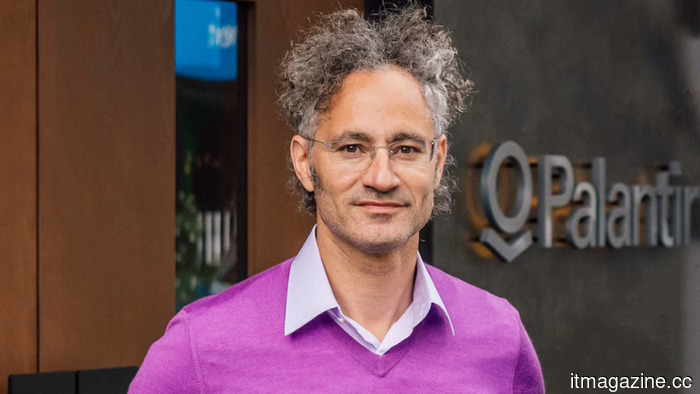 Palantir's manifesto on 'AI sovereignty' targets the laboratories.
Palantir's 9-point 'AI sovereignty' message advises institutions to take control of their data and weights while discouraging 'tokenmaxxing' — a concept that effectively promotes Palantir.
Palantir's manifesto on 'AI sovereignty' targets the laboratories.
Palantir's 9-point 'AI sovereignty' message advises institutions to take control of their data and weights while discouraging 'tokenmaxxing' — a concept that effectively promotes Palantir.
Pie has secured $19.5 million to enhance the visibility of small businesses in AI search.
Pie has secured $19.5 million in funding, led by Lightspeed, to assist small businesses in being discovered on ChatGPT, Google Maps, and Yelp, as well as to manage their phone calls using AI.