
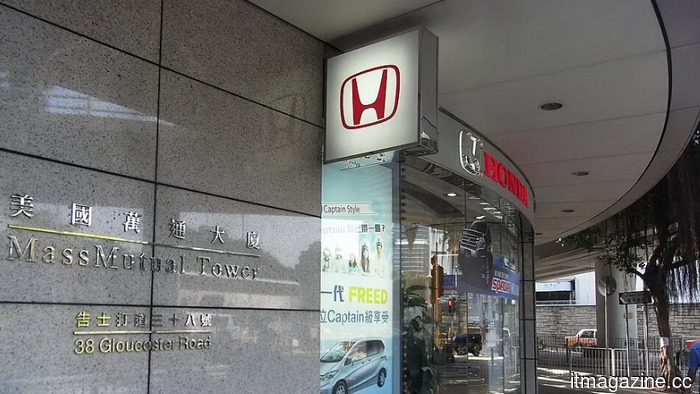
Honda begins producing batteries for data centers at a factory initially intended for electric vehicles that it decided to cancel.
Honda has started manufacturing energy storage batteries at its Ohio facility, shifting focus from the canceled EV program that resulted in a $16 billion write-down. According to a report from Nikkei Asia, the plant was initially established to produce cells for electric vehicles, which were scrapped three months ago; now, those batteries are being sent to data centers instead of consumers’ homes.
This change follows Honda's March decision to cancel three EV models intended for the U.S. market, leading to substantial financial losses and the company’s first annual deficit since going public. Honda operates the Ohio plant through a joint venture with LG Energy Solution, although it bought LG’s stake in the factory for nearly $3 billion late last year.
The shift comes amid sluggish demand for electric vehicles in the United States. The expiration of the federal tax credit for new EVs last September, following its elimination by Congress, has contributed to declining sales as consumers who rushed to purchase vehicles to take advantage of the credit created a void in demand.
Honda is not alone in redirecting battery production towards stationary storage. In May, Ford launched a $2 billion subsidiary, Ford Energy, to create grid-scale storage systems at a repurposed plant in Kentucky, while General Motors announced three partnerships in energy storage this month, including a sodium-ion battery development collaboration with Peak Energy. Tesla, which introduced the Megapack, reportedly makes about 30% gross margins on energy storage—double that of its vehicle sales.
The market for stationary storage is rapidly expanding. U.S. installations of such systems reached a record nearly 10 gigawatt-hours in the first quarter of 2026, marking a 32% increase from the previous year, according to SEIA and Benchmark Minerals. This amount of battery capacity could produce approximately 120,000 electric vehicles.
Further growth is anticipated, with SEIA predicting that annual installations could hit 110 gigawatt-hours by the decade's end—almost triple the current rate. Much of this demand is driven by data centers, along with a significant portion from grid operators leveraging batteries to stabilize power supplies and support wind and solar energy sources.
For Honda, the rationale behind this strategy seems clear: the company invested heavily in battery production capacity for a non-existent EV program, and shifting to stationary storage allows it to utilize those production lines while the American EV market stabilizes. However, whether Honda can compete in a space where Tesla, Ford, and GM already hold an advantage remains uncertain.
Other articles
 A Brazilian banking trojan is aiming at customers of Santander and BBVA by using deceptive PDF bait.
Fortinet reports that the Ousaban trojan employs geofenced phishing PDFs and steganography to capture banking credentials from individuals in Spain and Portugal.
A Brazilian banking trojan is aiming at customers of Santander and BBVA by using deceptive PDF bait.
Fortinet reports that the Ousaban trojan employs geofenced phishing PDFs and steganography to capture banking credentials from individuals in Spain and Portugal.
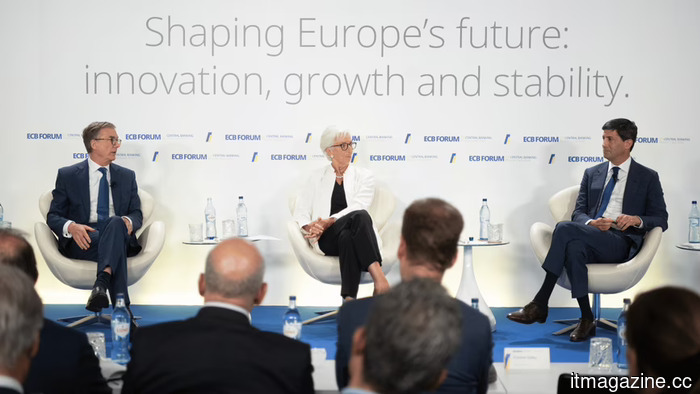 AI's aspirations and concerns dominate the major central bank conference worldwide.
During the ECB's Sintra forum, central bankers evaluated the potential of AI to enhance productivity in relation to an investment surge that fuels inflation.
AI's aspirations and concerns dominate the major central bank conference worldwide.
During the ECB's Sintra forum, central bankers evaluated the potential of AI to enhance productivity in relation to an investment surge that fuels inflation.
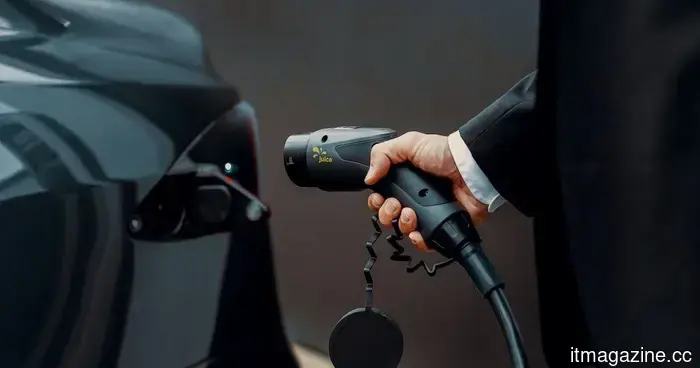 Cambridge experts have discovered a remarkably straightforward solution for prolonging the lifespan of EV batteries: just apply some pressure.
Researchers from Cambridge discovered that by applying the appropriate constant pressure to lithium-ion battery cells, their lifespan could be doubled without altering the chemistry.
Cambridge experts have discovered a remarkably straightforward solution for prolonging the lifespan of EV batteries: just apply some pressure.
Researchers from Cambridge discovered that by applying the appropriate constant pressure to lithium-ion battery cells, their lifespan could be doubled without altering the chemistry.
 Together AI secures 800 million dollars in a Series C funding round spearheaded by Aramco Ventures.
Together AI has secured 800 million dollars in a Series C funding round, achieving an eight billion dollar valuation, with Aramco Ventures leading the investment, amid a growing demand for open-source AI computing.
Together AI secures 800 million dollars in a Series C funding round spearheaded by Aramco Ventures.
Together AI has secured 800 million dollars in a Series C funding round, achieving an eight billion dollar valuation, with Aramco Ventures leading the investment, amid a growing demand for open-source AI computing.
 Sony's WH-1000XM6 headphones have become more appealing for gamers who dislike traditional gaming headsets.
The update for Sony's WH-1000XM6 introduces Bluetooth GMAP support, which enhances lower-latency audio for gaming. However, this feature is only beneficial if the connected device—be it a phone, PC, tablet, or handheld—also supports the same standard.
Sony's WH-1000XM6 headphones have become more appealing for gamers who dislike traditional gaming headsets.
The update for Sony's WH-1000XM6 introduces Bluetooth GMAP support, which enhances lower-latency audio for gaming. However, this feature is only beneficial if the connected device—be it a phone, PC, tablet, or handheld—also supports the same standard.
 Multiplier employer of record: recruit in over 150 countries.
Multiplier serves as your employer of record in over 150 countries, starting at $400 per month. There is no need for entity establishment or a minimum number of employees.
Multiplier employer of record: recruit in over 150 countries.
Multiplier serves as your employer of record in over 150 countries, starting at $400 per month. There is no need for entity establishment or a minimum number of employees.
Honda begins producing batteries for data centers at a factory initially intended for electric vehicles that it decided to cancel.
Honda has started manufacturing energy storage batteries at an Ohio facility that was initially constructed for electric vehicles, which the company discontinued three months ago following a $16 billion loss.