
Honda is now producing batteries for data centers at a factory originally intended for electric vehicles that was later canceled.
Honda has started manufacturing energy storage batteries at its Ohio facility, shifting focus from its cancelled electric vehicle (EV) program that resulted in a $16 billion write-down. According to Nikkei Asia, the plant, initially designed to produce cells for EVs that were axed three months ago, will now supply batteries to data centers instead of consumer vehicles.
This change follows Honda’s March decision to discontinue three electric vehicles intended for the U.S. market, leading to significant financial losses, including the company’s first annual loss since going public. Honda operates the Ohio factory through a joint venture with LG Energy Solution, although it acquired LG’s stake in the plant for approximately $3 billion late last year.
The transition occurs amid declining demand for EVs in the U.S. after the federal tax credit for new electric vehicles expired last September, resulting in decreased sales as consumers who expedited purchases to benefit from the credit have created a demand gap.
Honda is not alone in repurposing battery production for stationary storage. Ford launched a $2 billion subsidiary, Ford Energy, in May to develop grid-scale storage systems at a repurposed facility in Kentucky. General Motors also announced three partnerships in the energy storage sector this month, including a sodium-ion battery collaboration with Peak Energy. Tesla, the trailblazer in this market with its Megapack, achieves around 30% gross margins on energy storage, roughly double what it earns from car sales.
The market for stationary battery storage is expanding rapidly. U.S. installations reached a record nearly 10 gigawatt-hours in the first quarter of 2026, marking a 32% year-over-year increase, according to SEIA and Benchmark Minerals. This amount of battery capacity could produce around 120,000 electric vehicles.
Growth in this sector is anticipated to continue. SEIA forecasts that annual installations will reach 110 gigawatt-hours by the end of the decade, nearly tripling the current rate of production. Much of this demand is driven by data centers, but a significant portion also comes from grid operators utilizing batteries to stabilize power supplies and support wind and solar energy installations.
For Honda, the reasoning behind this pivot is clear: the company invested heavily in battery manufacturing capabilities for an EV initiative it has now abandoned. Transitioning to stationary storage allows Honda to keep its production lines operational while the U.S. EV market stabilizes. Nonetheless, whether Honda can compete against established players like Tesla, Ford, and GM remains to be seen.
Published July 1, 2026 - 6:35 pm UTC
Other articles
 Honda begins production of batteries for data centers at a factory initially constructed for electric vehicles that was later scrapped.
Honda has started manufacturing energy storage batteries at an Ohio facility that was initially constructed for electric vehicles, which the company abandoned three months ago after incurring a $16 billion loss.
Honda begins production of batteries for data centers at a factory initially constructed for electric vehicles that was later scrapped.
Honda has started manufacturing energy storage batteries at an Ohio facility that was initially constructed for electric vehicles, which the company abandoned three months ago after incurring a $16 billion loss.
 Acer's 1,000Hz gaming monitor exists, comes with a high price tag, and is currently awaiting a release date.
Acer's 1,000Hz gaming monitor is available on Amazon for $699.99, but it is currently out of stock, and using its fastest mode necessitates a significant reduction in resolution from QHD to 720p.
Acer's 1,000Hz gaming monitor exists, comes with a high price tag, and is currently awaiting a release date.
Acer's 1,000Hz gaming monitor is available on Amazon for $699.99, but it is currently out of stock, and using its fastest mode necessitates a significant reduction in resolution from QHD to 720p.
 Acer's 1,000Hz gaming monitor is available, costly, and currently pending a release date.
Acer’s 1,000Hz gaming monitor is available on Amazon for $699.99, but it is currently out of stock, and utilizing its fastest mode necessitates a significant reduction from QHD to 720p.
Acer's 1,000Hz gaming monitor is available, costly, and currently pending a release date.
Acer’s 1,000Hz gaming monitor is available on Amazon for $699.99, but it is currently out of stock, and utilizing its fastest mode necessitates a significant reduction from QHD to 720p.
 A Brazilian banking trojan is aiming at Santander and BBVA clients using counterfeit PDF bait.
Fortinet reports that the Ousaban trojan employs geofenced phishing PDFs and steganography to capture banking credentials from individuals in Spain and Portugal.
A Brazilian banking trojan is aiming at Santander and BBVA clients using counterfeit PDF bait.
Fortinet reports that the Ousaban trojan employs geofenced phishing PDFs and steganography to capture banking credentials from individuals in Spain and Portugal.
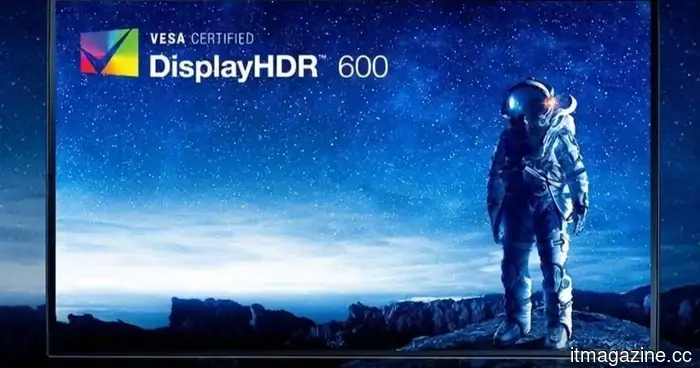 Acer's 1,000Hz gaming monitor is a reality, costly, and currently awaiting a release date.
Acer’s 1,000Hz gaming monitor is available on Amazon for $699.99; however, it is currently out of stock, and achieving its fastest mode necessitates a significant reduction from QHD to 720p.
Acer's 1,000Hz gaming monitor is a reality, costly, and currently awaiting a release date.
Acer’s 1,000Hz gaming monitor is available on Amazon for $699.99; however, it is currently out of stock, and achieving its fastest mode necessitates a significant reduction from QHD to 720p.
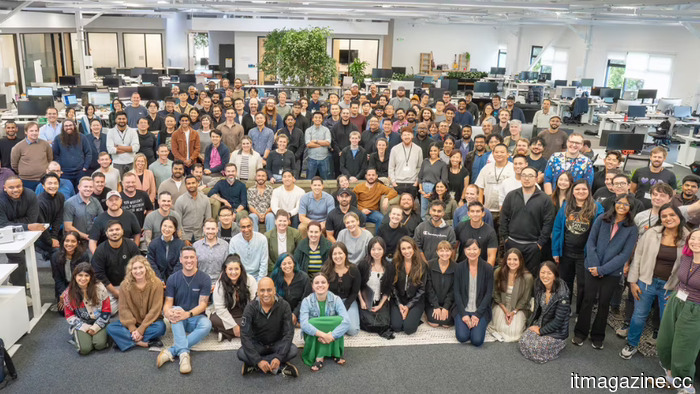 Together AI secures 800 million dollars in a Series C funding round spearheaded by Aramco Ventures.
Together AI has secured 800 million dollars in a Series C funding round, achieving an eight billion dollar valuation, with Aramco Ventures leading the investment, amid a growing demand for open-source AI computing.
Together AI secures 800 million dollars in a Series C funding round spearheaded by Aramco Ventures.
Together AI has secured 800 million dollars in a Series C funding round, achieving an eight billion dollar valuation, with Aramco Ventures leading the investment, amid a growing demand for open-source AI computing.
Honda is now producing batteries for data centers at a factory originally intended for electric vehicles that was later canceled.
Honda has started manufacturing energy storage batteries at an Ohio facility that was initially constructed for electric vehicles, which the company abandoned three months ago following a $16 billion loss.