
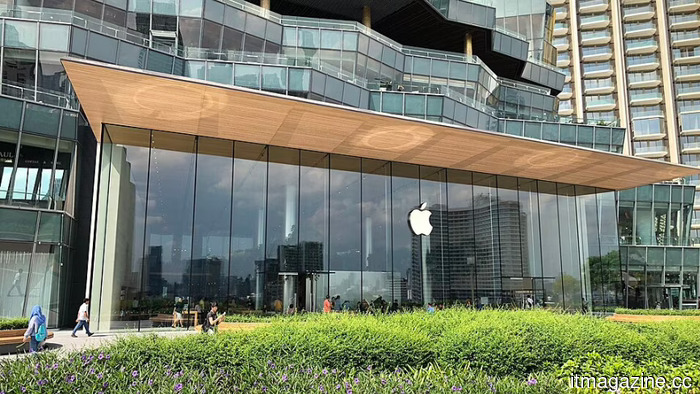
The Supreme Court is set to hear Apple's appeal regarding the contempt ruling related to the App Store in the Epic case.
**TL;DR** The U.S. Supreme Court has decided to hear Apple's appeal regarding the contempt finding in its ongoing legal dispute with Epic Games over App Store fees.
On Tuesday, the U.S. Supreme Court announced it will review Apple’s appeal concerning the contempt ruling linked to its prolonged legal conflict with Epic Games over App Store fees. The justices will examine lower court rulings that determined Apple willfully ignored a 2021 order mandating it to allow developers to direct users to more affordable payment options outside the App Store. This case, Apple v. Epic (No. 25-1311), will be heard in the court’s upcoming term starting in October.
The conflict originated in 2020 when Epic filed a lawsuit against Apple following the removal of its popular game Fortnite from the App Store. U.S. District Judge Yvonne Gonzalez Rogers primarily sided with Apple on federal antitrust issues but ruled that the company violated California law by prohibiting developers from directing users to alternative payment solutions. She mandated that Apple permit those links, a requirement that was upheld by both the Ninth Circuit and the Supreme Court.
Apple complied by permitting external payment links but instituted a 27 percent commission on earnings generated through these links within seven days of a user’s click. Epic contended that this new fee effectively rendered the court order void. In April 2025, Rogers agreed and found Apple in contempt, instructing the company to cease charging commissions on purchases made through external links.
The Ninth Circuit confirmed the contempt finding in December 2025 but stated that prohibiting Apple from charging any commission at all was excessive. The appeals court ruled that Apple could impose a fee that reflects “genuinely and reasonably necessary” costs associated with managing external link purchases, and remanded the case back to Rogers to determine the appropriate rate. Apple has not charged commissions on external link payments for nearly a year.
The Supreme Court declined in May to suspend the contempt order while Apple’s appeal is ongoing, with Justice Elena Kagan rejecting the emergency stay request without it going to the full bench. This denial has maintained financial pressure on Apple, which argues that the order forces it to forfeit billions in commission revenue.
The justices will not address Apple’s separate challenge concerning the scope of the original injunction, which affects all developers worldwide rather than being limited to Epic. This so-called universal injunction issue was a secondary concern in Apple’s petition.
This case is being closely monitored, as it has the potential to alter how Apple oversees App Store fees globally. Regulators in the EU, Brazil, India, and the UK have all called into question Apple’s dominance over iOS app distribution and payment systems, and a Supreme Court decision regarding the commission issue could set a significant precedent for these regulatory battles.
A ruling is anticipated by June 2027. What began as a compliance dispute over a single Fortnite update in August 2020 is now approaching its seventh year of litigation, with no resolution in sight regarding the principal issue of what Apple can charge developers who lead users outside the App Store.
Published June 30, 2026 - 5:17 pm UTC
Other articles
 The captive portal economy: how hotel WiFi login pages transformed into both a security risk and an unnoticed advertising platform.
KeepSolid CEO Vasyl Ivanov discusses the evolution of hotel WiFi captive portals into security weaknesses and programmatic advertising channels, as well as the necessary actions VPN clients should take in response.
The captive portal economy: how hotel WiFi login pages transformed into both a security risk and an unnoticed advertising platform.
KeepSolid CEO Vasyl Ivanov discusses the evolution of hotel WiFi captive portals into security weaknesses and programmatic advertising channels, as well as the necessary actions VPN clients should take in response.
 AI shopping outperformed search results on Prime Day, shaking things up for Amazon.
For the first time during Prime Day, AI shopping recommendations outperformed search, email, and social media in conversions, indicating a potential challenge to Amazon's dominance in product discovery.
AI shopping outperformed search results on Prime Day, shaking things up for Amazon.
For the first time during Prime Day, AI shopping recommendations outperformed search, email, and social media in conversions, indicating a potential challenge to Amazon's dominance in product discovery.
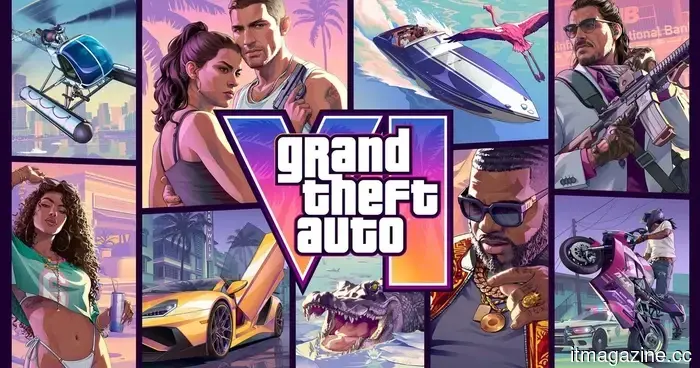 The disc-free release of GTA 6 might be concealing a more significant issue, which makes me feel somewhat uneasy.
The absence of a disc release for GTA 6 is disappointing for gamers, but the most plausible reason could be that Rockstar is still in the process of completing the game.
The disc-free release of GTA 6 might be concealing a more significant issue, which makes me feel somewhat uneasy.
The absence of a disc release for GTA 6 is disappointing for gamers, but the most plausible reason could be that Rockstar is still in the process of completing the game.
 BMW unveils the revamped X5 featuring petrol, hybrid, electric, and hydrogen variants.
BMW has unveiled the completely redesigned X5, featuring petrol, diesel, plug-in hybrid, electric, and upcoming hydrogen powertrains, signifying the most significant update in the SUV's history.
BMW unveils the revamped X5 featuring petrol, hybrid, electric, and hydrogen variants.
BMW has unveiled the completely redesigned X5, featuring petrol, diesel, plug-in hybrid, electric, and upcoming hydrogen powertrains, signifying the most significant update in the SUV's history.
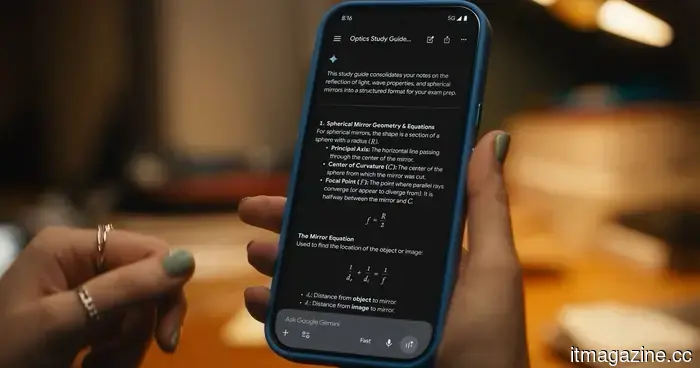 You can now create images using Gemini's memory at no cost.
Gemini's most personal image generator is now available without a subscription. If you're in the U.S., you can now create AI art much more easily and at no cost.
You can now create images using Gemini's memory at no cost.
Gemini's most personal image generator is now available without a subscription. If you're in the U.S., you can now create AI art much more easily and at no cost.
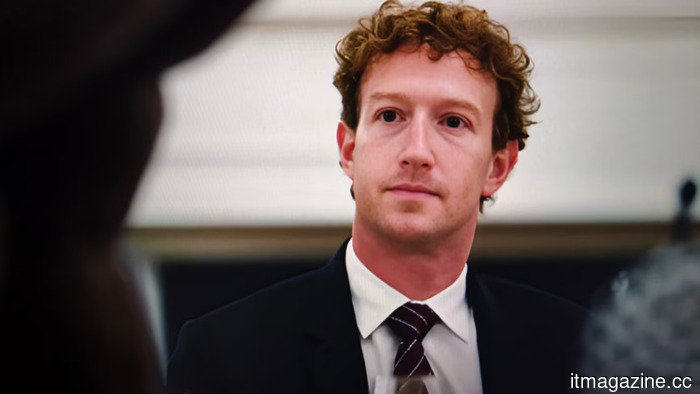 Meta pretended to be teenagers to evaluate competing AI chatbots.
According to WIRED, numerous contractors working on a Meta project pretended to be teenagers in order to evaluate how ChatGPT, Gemini, and Character.AI respond to topics like suicide, drugs, and sex.
Meta pretended to be teenagers to evaluate competing AI chatbots.
According to WIRED, numerous contractors working on a Meta project pretended to be teenagers in order to evaluate how ChatGPT, Gemini, and Character.AI respond to topics like suicide, drugs, and sex.
The Supreme Court is set to hear Apple's appeal regarding the contempt ruling related to the App Store in the Epic case.
The Supreme Court has decided to examine lower court decisions that determined Apple intentionally violated a 2021 ruling regarding App Store fees in its dispute with Epic Games.