
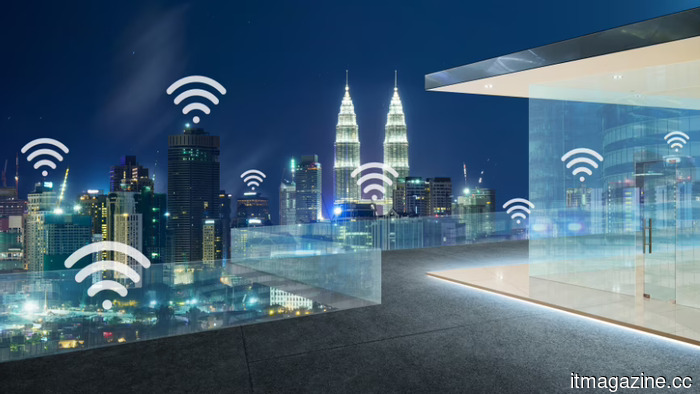
The captive portal economy: how hotel WiFi login pages transformed into both a security risk and an unnoticed advertising platform.
**TL;DR** Captive portals for hotel WiFi have unintentionally become a security concern (due to HTTP-only pages, DNS hijacking, and rogue networks) while also serving as a platform for programmatic advertising that gathers first-party data. Most VPN services struggle with the transition. KeepSolid has incorporated a Captive Portal Network Checker in VPN Unlimited to automatically recognize and reconnect.
Last month, I checked into a hotel for a conference and opened my laptop. I clicked on the WiFi option and connected to the hotel network. The usual splash screen appeared: input your room number, your last name, and agree to the terms. Pretty standard.
However, what's happening behind that splash screen is no longer typical.
The captive portal, the initial login page you encounter before using a hotel or airport WiFi, has discreetly transformed into two simultaneous industries: one focused on security vulnerabilities and the other as a lucrative advertising channel. They share the same underlying infrastructure, yet most travelers—and VPN providers—are unaware of both aspects.
**The technical reality**
A captive portal functions by intercepting HTTP requests from your device before you access the network. You can’t bypass it; the network compels every request through a redirect until you fulfill the portal's requirements. You might need to enter your room number, accept terms, sometimes pay, or watch a brief ad before you can proceed.
This system is effective because your device initially sends an unencrypted HTTP request to a known URL to check for internet accessibility—Apple uses captive.apple.com, Microsoft uses www.msftconnecttest.com, and Google uses connectivitycheck.gstatic.com. The operating system essentially asks the network, "Am I online?" The captive portal intercepts that request and redirects it to its login page—this design is intended, not a flaw.
This is also why your VPN struggles here. As soon as you start the VPN client, the OS-level connectivity test has already revealed your device and triggered the portal redirect. The VPN cannot connect because the network blocks it until you authenticate through the portal. Consequently, you disable the VPN, click through the splash screen, and often forget to turn the VPN back on, leaving yourself exposed for the remainder of your trip.
This gap is what we aimed to address with our captive portal functionality in VPN Unlimited. Many VPN services still fail to address it properly.
**What’s operating on that captive portal might surprise you.**
Most major hotel chains do not manage their own WiFi setups; they collaborate with companies such as Boingo, Aptilo Networks, or Cloud4Wi. These are legitimate businesses with viable products and reasonable security practices. However, the quality of rollout varies significantly across different locations, and a brand standard doesn't always apply to the captive portal implementation at specific franchised sites.
Security issues typically fall into several categories. The most prevalent is HTTP-only portals, where the splash page itself doesn’t enforce TLS, allowing the credentials you enter (such as room number or last name, and sometimes credit card information for premium access) to transmit across the local network unencrypted. Another issue is DNS hijacking; the captive portal forces all your DNS requests through their resolver, enabling the operator to monitor each domain you access during your session, regardless of your device's DNS settings. Lastly, there’s the less common but notable threat of malicious portals, where a rogue device mimics the hotel network, presents its own splash page, and captures any credentials users enter before connecting them to the legitimate network.
You don't have to be in a high-risk area for these issues to arise; being in a hotel is sufficient.
**The advertising side**
What many travelers overlook is that the splash page is also a premium advertising space.
The market for "WiFi marketing platforms" is a real and expanding sector. Companies such as Cloud4Wi actively market their solutions to hotels, airports, retailers, and stadiums as a way to monetize the time guests spend on the captive portal. The general sales pitch usually states that each guest connecting to your WiFi becomes a captive audience suitable for fifteen-second video ads, quick surveys, email captures, or sponsored promotions. The venue gains first-party data, which can often be shared with marketing networks or utilized for retargeting after the guest leaves, depending on the platform's configuration and partner agreements.
This model is economically beneficial for the venue, as WiFi typically incurs costs without generating revenue. Adding ad capabilities transforms it into a potential income source, especially in high-traffic areas. It's also favorable for advertisers due to the unusually targeted audience—they know the guest's location (at this airport, hotel, or other venue) and that they are likely to pay attention (since they cannot do anything else online until they accept the portal).
None of this is illegal, and it is often not disclosed in ways that the average traveler may notice. The "accept terms" button clicked hastily generally encompasses consent for marketing communications, data sharing with the WiFi operator’s partner networks
Other articles
 Samsung is set to release a new Galaxy Ring that may feature some innovative health functionalities.
Samsung is developing a new Galaxy Ring, and the key improvement might stem from the processes that follow the ring’s collection of health signals in the background. Hon Pak, the head of Samsung’s digital health team, mentioned to Forbes that a next-generation ring is currently in the works. However, Samsung has not revealed the name, expected launch date, pricing, regions, or […]
Samsung is set to release a new Galaxy Ring that may feature some innovative health functionalities.
Samsung is developing a new Galaxy Ring, and the key improvement might stem from the processes that follow the ring’s collection of health signals in the background. Hon Pak, the head of Samsung’s digital health team, mentioned to Forbes that a next-generation ring is currently in the works. However, Samsung has not revealed the name, expected launch date, pricing, regions, or […]
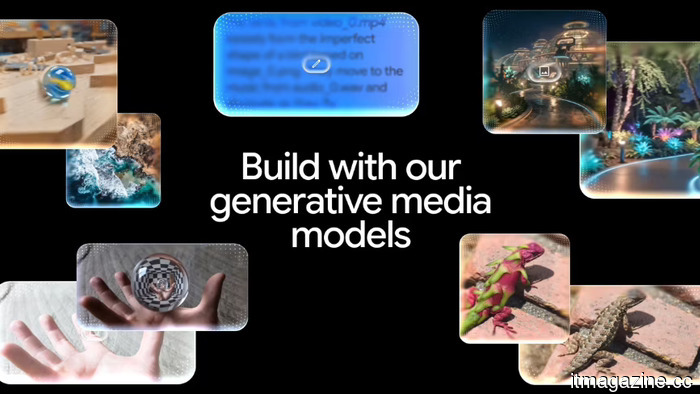 Google has launched Nano Banana 2 Lite, its most affordable and quickest AI image generator to date.
Nano Banana 2 Lite creates images in four seconds at a cost of less than four cents per thousand and is launched alongside a broader release of Gemini Omni Flash for video.
Google has launched Nano Banana 2 Lite, its most affordable and quickest AI image generator to date.
Nano Banana 2 Lite creates images in four seconds at a cost of less than four cents per thousand and is launched alongside a broader release of Gemini Omni Flash for video.
 Apple's Creator Studio incorporates AI features into Final Cut Pro, Logic Pro, and Pixelmator Pro.
Apple Creator Studio has been significantly updated with AI features, including automatic captions, edit detection, Auto Mask, image generation, and more streamlined workflows among Apple’s creative applications.
Apple's Creator Studio incorporates AI features into Final Cut Pro, Logic Pro, and Pixelmator Pro.
Apple Creator Studio has been significantly updated with AI features, including automatic captions, edit detection, Auto Mask, image generation, and more streamlined workflows among Apple’s creative applications.
 Meta pretended to be teenagers to evaluate competing AI chatbots.
According to WIRED, numerous contractors working on a Meta project pretended to be teenagers in order to evaluate how ChatGPT, Gemini, and Character.AI respond to topics like suicide, drugs, and sex.
Meta pretended to be teenagers to evaluate competing AI chatbots.
According to WIRED, numerous contractors working on a Meta project pretended to be teenagers in order to evaluate how ChatGPT, Gemini, and Character.AI respond to topics like suicide, drugs, and sex.
 The captive portal economy: how hotel WiFi login pages turned into both a security risk and a discreet advertising medium.
KeepSolid CEO Vasyl Ivanov describes how hotel WiFi captive portals have changed into a security risk as well as a programmatic advertising channel, and what actions VPN clients should take in response.
The captive portal economy: how hotel WiFi login pages turned into both a security risk and a discreet advertising medium.
KeepSolid CEO Vasyl Ivanov describes how hotel WiFi captive portals have changed into a security risk as well as a programmatic advertising channel, and what actions VPN clients should take in response.
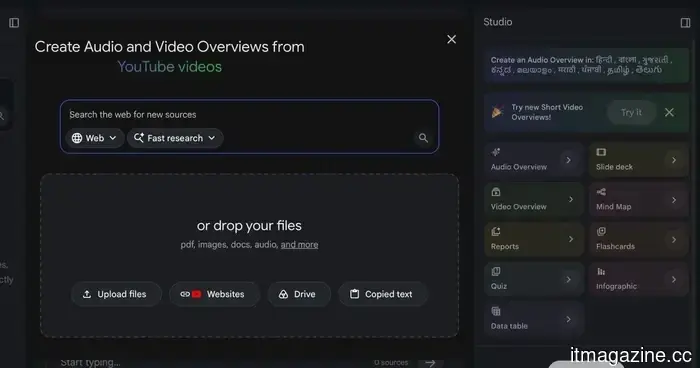 NotebookLM’s one-minute videos transformed my doomscrolling habit into something productive.
What if the 60 seconds you spend doomscrolling could instead help you excel on a test? NotebookLM's latest feature presents a compelling argument for this.
NotebookLM’s one-minute videos transformed my doomscrolling habit into something productive.
What if the 60 seconds you spend doomscrolling could instead help you excel on a test? NotebookLM's latest feature presents a compelling argument for this.
The captive portal economy: how hotel WiFi login pages transformed into both a security risk and an unnoticed advertising platform.
KeepSolid CEO Vasyl Ivanov discusses the evolution of hotel WiFi captive portals into security weaknesses and programmatic advertising channels, as well as the necessary actions VPN clients should take in response.