
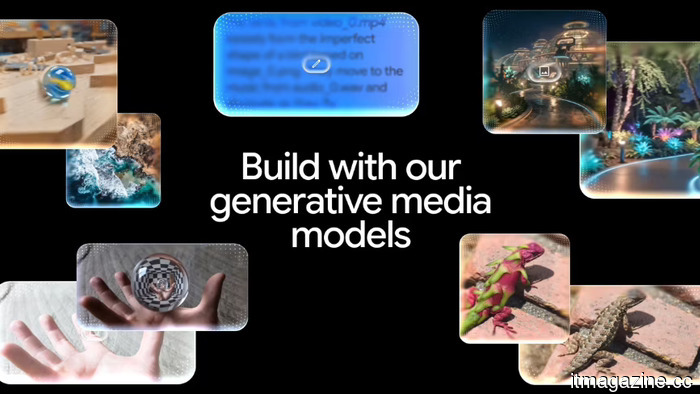
Google has launched Nano Banana 2 Lite, its most affordable and quickest AI image generator to date.
TL;DR Google has launched Nano Banana 2 Lite, an image generation model that produces images in four seconds for less than four cents per thousand images.
On Tuesday, Google introduced Nano Banana 2 Lite, the quickest and most affordable model from its Nano Banana line of AI image generators. This model generates images in four seconds and costs under four cents per thousand images, marking Google's boldest effort to cater to developers needing large-scale visual content. It is now available in Google AI Studio, the Gemini API, and the Gemini Enterprise Agent Platform.
Designed for speed rather than quality, Google promotes this model as ideal for "rapid ideation and high-velocity developer pipelines," prioritizing latency and cost over fine detail. The existing Nano Banana 2, launched in February, continues to be suggested for projects requiring higher fidelity, while Nano Banana Pro is suited for complex professional applications.
The new model replaces the original Nano Banana, which Google now calls its “legacy model.” Although the focus is on speed, Nano Banana 2 Lite maintains what Google describes as reliable prompt adherence, strong character consistency, and clear text rendering within images. It is being rolled out to consumer platforms, including AI Mode in Search, the Gemini app, NotebookLM, Google Photos, Stitch, Google Flow, and Google Ads.
In addition to the image model, Google has expanded the release of Gemini Omni Flash, its video-generation model first unveiled at Google I/O in May. Omni Flash is now accessible to developers via the Gemini API and Google AI Studio, priced at ten cents per second of video. Clips are limited to ten seconds, with the possibility of extending durations in the future.
Google is promoting the two models as complementary. Developers can quickly create and refine images with Nano Banana 2 Lite and then use those images in Omni Flash to produce animated videos. A new demo app called Omni Product Studio transforms static images into what Google terms “cinematic e-commerce videos,” while two additional demos allow users to insert themselves into landmark photos or redesign room interiors.
These releases come at a time when AI-generated images evoke mixed reactions. A recent study indicated that 60 percent of TikTok videos are classified as AI-generated content, with the term “AI slop” gaining traction to describe the low-quality media produced by machines that inundate social platforms. Google has focused its marketing of these image tools on advertising and business applications rather than consumer creativity, a strategy that circumvents some backlash, though not entirely.
The company's collaboration with Hollywood is also facing scrutiny. Last week, Google DeepMind entered into a $75 million agreement with indie studio A24 to develop AI filmmaking tools, which drew criticism from fans and creative communities who accused A24 of compromising the artists it historically supported. A24 has defended the arrangement, stating its intent to “determine what tools get built for artists” rather than leaving those decisions solely to tech companies.
Nano Banana 2 Lite and Omni Flash are the latest components of a generative-media suite that Google has been aggressively developing since last year. The strategic goal is to make image and video generation fast and affordable enough to integrate these tools into everyday developer workflows before the discussions surrounding their social impacts are resolved.
Other articles
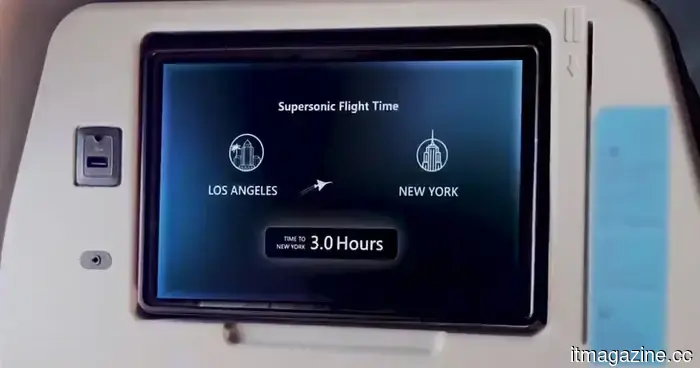 The FAA has approved Mach flights, which have the potential to reduce travel times by nearly 50%.
The FAA has proposed new regulations to allow supersonic passenger flights in the U.S., creating opportunities for aircraft that could significantly reduce travel durations.
The FAA has approved Mach flights, which have the potential to reduce travel times by nearly 50%.
The FAA has proposed new regulations to allow supersonic passenger flights in the U.S., creating opportunities for aircraft that could significantly reduce travel durations.
 Blue Origin is still uncertain about the cause of the New Glenn explosion but intends to launch again this year.
According to Blue Origin CEO Dave Limp, the underlying cause of the explosion in May is still undetermined, although initial analysis suggests it may be related to the aft section of the first stage.
Blue Origin is still uncertain about the cause of the New Glenn explosion but intends to launch again this year.
According to Blue Origin CEO Dave Limp, the underlying cause of the explosion in May is still undetermined, although initial analysis suggests it may be related to the aft section of the first stage.
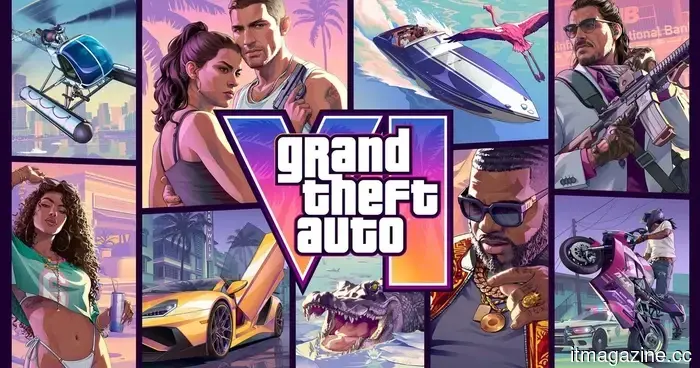 The disc-free release of GTA 6 might be concealing a more significant issue, which makes me feel somewhat uneasy.
The absence of a disc release for GTA 6 is disappointing for gamers, but the most plausible reason could be that Rockstar is still in the process of completing the game.
The disc-free release of GTA 6 might be concealing a more significant issue, which makes me feel somewhat uneasy.
The absence of a disc release for GTA 6 is disappointing for gamers, but the most plausible reason could be that Rockstar is still in the process of completing the game.
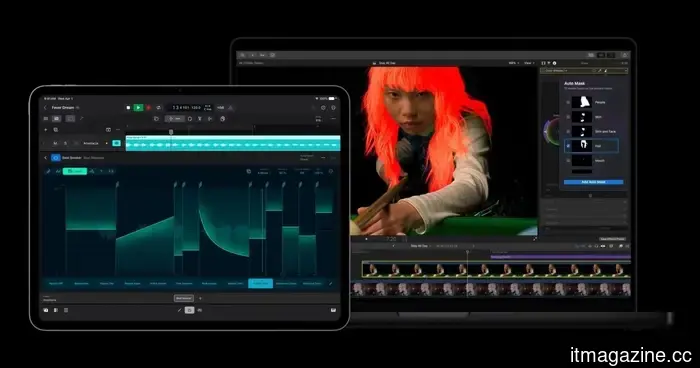 Apple's Creator Studio incorporates AI features into Final Cut Pro, Logic Pro, and Pixelmator Pro.
Apple Creator Studio has been significantly updated with AI features, including automatic captions, edit detection, Auto Mask, image generation, and more streamlined workflows among Apple’s creative applications.
Apple's Creator Studio incorporates AI features into Final Cut Pro, Logic Pro, and Pixelmator Pro.
Apple Creator Studio has been significantly updated with AI features, including automatic captions, edit detection, Auto Mask, image generation, and more streamlined workflows among Apple’s creative applications.
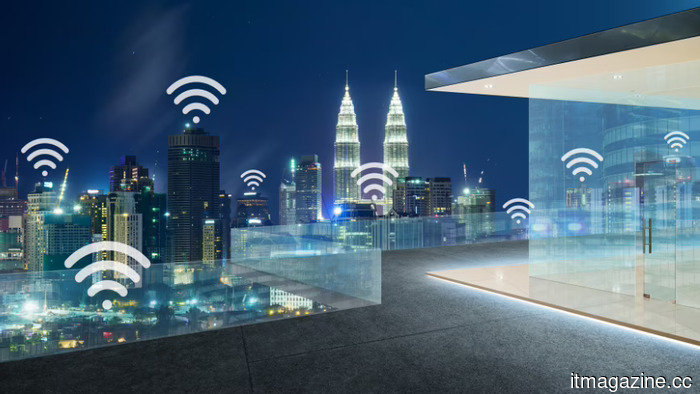 The captive portal economy: how hotel WiFi login pages turned into both a security risk and a discreet advertising medium.
KeepSolid CEO Vasyl Ivanov describes how hotel WiFi captive portals have changed into a security risk as well as a programmatic advertising channel, and what actions VPN clients should take in response.
The captive portal economy: how hotel WiFi login pages turned into both a security risk and a discreet advertising medium.
KeepSolid CEO Vasyl Ivanov describes how hotel WiFi captive portals have changed into a security risk as well as a programmatic advertising channel, and what actions VPN clients should take in response.
 Claude's Sonnet 5 is designed to accomplish more independently while being more affordable for you.
Claude Sonnet 5 reduces the difference with Anthropic's leading Opus 4.8, achieving similar results on essential benchmarks while being notably cheaper per token.
Claude's Sonnet 5 is designed to accomplish more independently while being more affordable for you.
Claude Sonnet 5 reduces the difference with Anthropic's leading Opus 4.8, achieving similar results on essential benchmarks while being notably cheaper per token.
Google has launched Nano Banana 2 Lite, its most affordable and quickest AI image generator to date.
Nano Banana 2 Lite creates images in four seconds at a cost of less than four cents per thousand and is launched alongside a broader release of Gemini Omni Flash for video.