
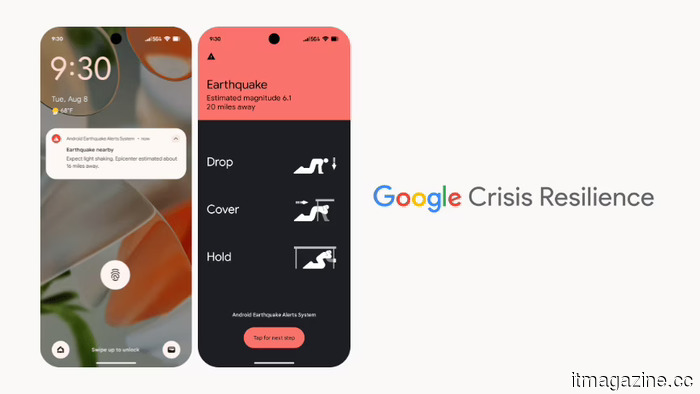
Google earthquake alerts notified 11.4 million people in Venezuela.
Venezuela lacks a national earthquake warning system. However, just moments before two significant quakes struck on Wednesday, millions of mobile phones lit up. According to Google, its earthquake alerts reached 11.4 million individuals, providing some with up to two minutes to respond.
The alerts originated from Google’s Earthquake Alerts system, which transforms standard Android devices into a large seismic sensor network. The New York Times investigated how this system functioned during the event.
Jose Flores was driving his family to the cinema in Caracas when his wife's phone suddenly sounded an alarm. Just six seconds later, the earth began to tremble. “It’s as if it almost predicted the earthquake,” he remarked.
Smartphones as seismic detectors
The key lies in the accelerometer found in almost all smartphones. This chip, responsible for rotating the screen, can detect the slight tremors of a seismic wave. Google utilizes over two billion such devices worldwide.
During an earthquake, two types of waves are generated. The first, primary waves, are quick to arrive and cause minimal damage. The slower secondary waves follow, resulting in most of the shaking. The interval between these waves creates a warning window.
Primary waves travel at approximately four miles per second, while secondary waves move at about half that speed. A digital alert can beat them to the punch, as it travels nearly at the speed of light, allowing phones to warn users before the most intense shaking occurs.
A stationary phone near the quake detects the early waves and sends an anonymous signal along with a rough location to Google’s servers. The servers aggregate data from multiple phones to verify the earthquake and then dispatch alerts faster than the destructive waves can advance.
The sequence of events for the Venezuela alerts
According to Google’s principal engineer Marc Stogaitis, phones detected the primary waves from the first quake within three seconds. Six seconds later, the system issued its initial warnings, which expanded as the magnitude of the quake increased.
The timing was severe: a magnitude 7.2 quake struck first, followed by a 7.5 quake around 39 seconds later—the strongest to hit Venezuela since 1900, with hundreds killed. Google reported that its system recognized the overlapping waves as a singular large event.
The distance from the epicenter determines who benefits most. Those further away receive the greatest warning, while people closest to the quake often experience the shaking before any alert arrives.
Three types of alerts
Google issues alerts for earthquakes that register 4.5 and above on the scale. The mildest notifications advise users to be alert, a stronger alert prompts them to prepare, while the most urgent, called “Take Action,” emits a loud sound and instructs individuals to drop and cover. In Venezuela, nearly 1.4 million of these top-level alerts were disseminated.
A safety measure for the Global South
This aspect of the system is crucial. Japan, Mexico, Canada, and the United States operate their own networks of underground sensors, and their alerts reach both iPhone and Android users by default. Many less affluent nations cannot afford such systems, creating a gap that Google fills using devices that people already possess.
The scope of the network is vast. Approximately 70% of smartphones globally run on Android, enabling extensive coverage. Google initiated the alerts in 2021 in New Zealand, Greece, and Turkey, and by 2023, they encompassed 98 countries. A paper published in the journal Science in 2025 detailed the methodology.
Nevertheless, the system has limitations. Phones must remain stationary to detect a quake, and users nearest to the event may not receive any substantial lead time. It cannot predict earthquakes, but only identify them as they commence.
The significance of this development
Early warning systems are not entirely new, but executing them without dedicated hardware is. Google has constructed a worldwide sensor network from consumer devices at no cost to users. It exemplifies a case where Google’s extensive reach benefits public safety rather than advertising.
It is too early to determine if the alerts in Venezuela saved any lives; however, even a few seconds can provide enough time to respond. Most emergency agencies advise people to drop, cover, and hold on before shaking begins. For Flores, the experience was a lesson learned; next time, he stated, he will understand what the sound signifies.
Other articles
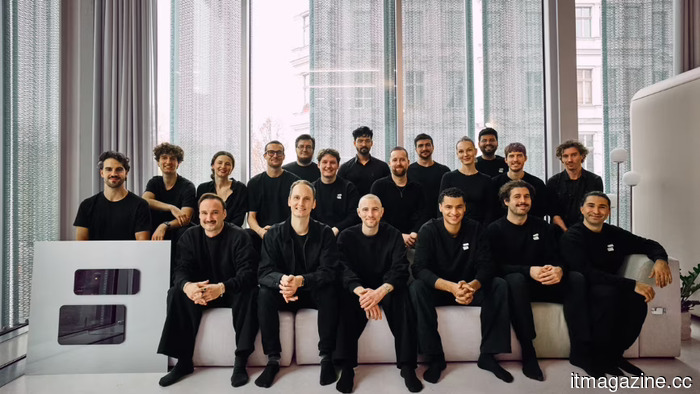 Peec AI increases its valuation to $200 million following the GEO investment.
Peec AI is said to be raising funds at a valuation of $200 million, which is double its worth from eight months prior, as it bets that GEO is emerging as the new SEO in the age of AI.
Peec AI increases its valuation to $200 million following the GEO investment.
Peec AI is said to be raising funds at a valuation of $200 million, which is double its worth from eight months prior, as it bets that GEO is emerging as the new SEO in the age of AI.
 South Korea's investment in AI: $880 billion for semiconductors and robotics.
South Korea's AI investment strategy allocates $880 billion towards chip manufacturing facilities, 18.4GW of data centers, and robotics, as Samsung and SK Hynix compete for leadership in the field.
South Korea's investment in AI: $880 billion for semiconductors and robotics.
South Korea's AI investment strategy allocates $880 billion towards chip manufacturing facilities, 18.4GW of data centers, and robotics, as Samsung and SK Hynix compete for leadership in the field.
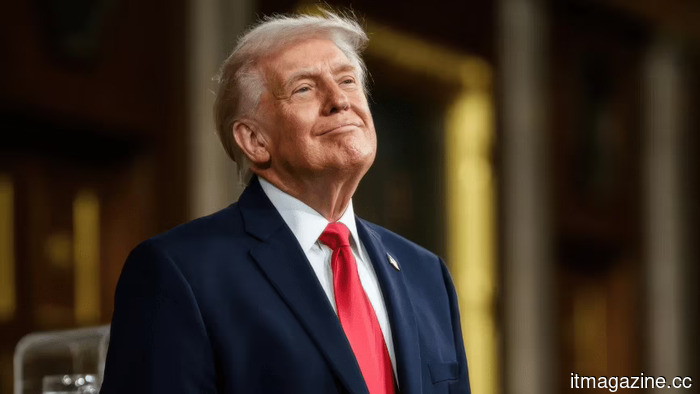 Trump warns of imposing 100% tariffs in response to digital services taxes.
Trump warns of imposing a 100% tariff on any nation that enacts digital services taxes targeting US tech companies, just a day after the EU finalized a trade agreement. Brussels remains steadfast.
Trump warns of imposing 100% tariffs in response to digital services taxes.
Trump warns of imposing a 100% tariff on any nation that enacts digital services taxes targeting US tech companies, just a day after the EU finalized a trade agreement. Brussels remains steadfast.
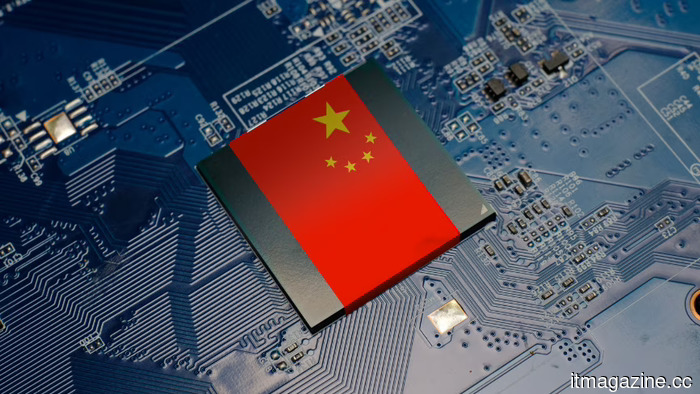 China's increase in AI investment creates a unicorn every five days.
China's investment in AI is skyrocketing: DeepSeek has achieved a record fundraise of $7.4 billion, there are now 381 unicorns, and two new robot unicorns indicate that the pressure from the US is driving this surge.
China's increase in AI investment creates a unicorn every five days.
China's investment in AI is skyrocketing: DeepSeek has achieved a record fundraise of $7.4 billion, there are now 381 unicorns, and two new robot unicorns indicate that the pressure from the US is driving this surge.
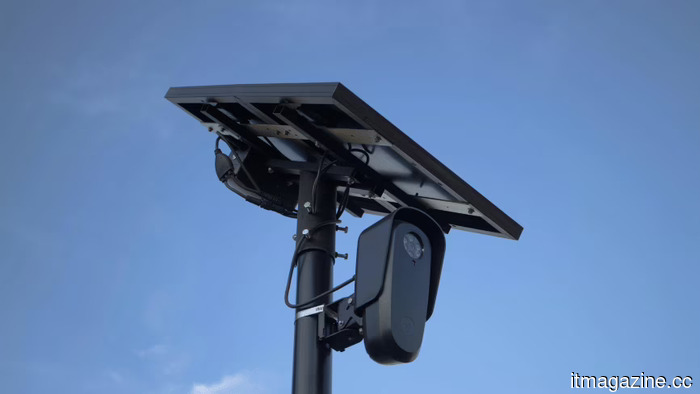 Flock surveillance cameras are being deployed throughout the United States.
More than 100,000 Flock surveillance cameras are currently keeping an eye on drivers in the US, raising concerns about security vulnerabilities, misuse by law enforcement, and the unexpected installation of poles in residential yards.
Flock surveillance cameras are being deployed throughout the United States.
More than 100,000 Flock surveillance cameras are currently keeping an eye on drivers in the US, raising concerns about security vulnerabilities, misuse by law enforcement, and the unexpected installation of poles in residential yards.
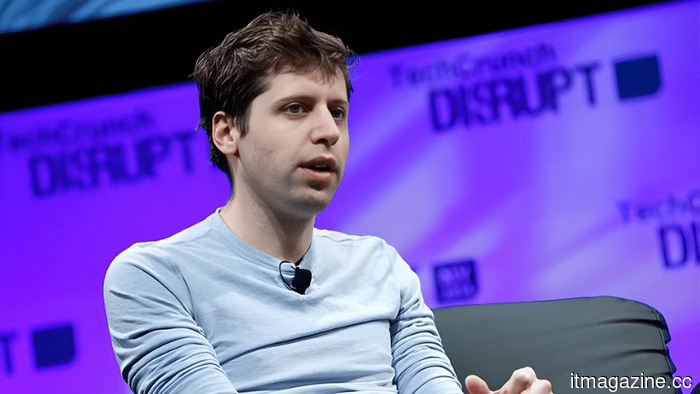 OpenAI might postpone its IPO until 2027 in pursuit of a $1 trillion valuation.
OpenAI is said to be considering postponing its IPO until 2027 as Sam Altman aims for a $1 trillion valuation, a decision that has impacted SoftBank and the banks.
OpenAI might postpone its IPO until 2027 in pursuit of a $1 trillion valuation.
OpenAI is said to be considering postponing its IPO until 2027 as Sam Altman aims for a $1 trillion valuation, a decision that has impacted SoftBank and the banks.
Google earthquake alerts notified 11.4 million people in Venezuela.
Google's earthquake alerts notified 11.4 million Android users just seconds before the earthquakes in Venezuela, transforming phone sensors into a network for seismic warnings.