
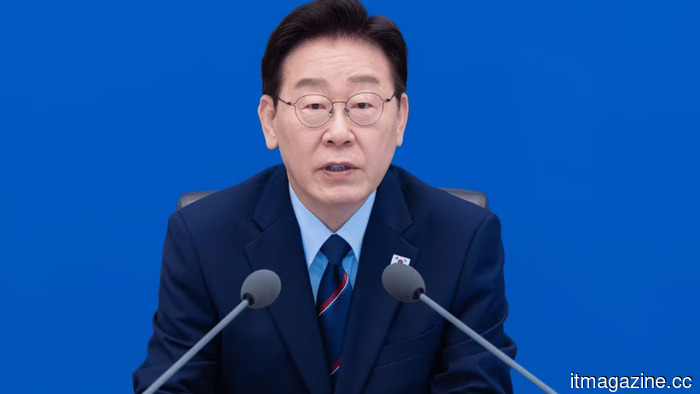
South Korea's investment in AI: $880 billion for semiconductors and robotics.
South Korea has made its largest commitment to the AI era, allocating at least $880 billion over the next decade for chips, data centers, and robots. This marks the most ambitious AI investment by South Korea to date, with the government asserting that speed is essential for survival.
On Monday, President Lee Jae Myung announced this initiative in Seoul, joined by the leaders of Samsung and SK Hynix. He referred to these two business executives as "national heroes" and positioned the spending as crucial for the country's survival. Bloomberg estimates the total investment at 1,350 trillion won, or approximately $880 billion.
Lee named this initiative the "Three Mega Projects," emphasizing the three key areas: semiconductors, AI data centers, and physical AI, which he described as the "triple axis for a great leap forward.” He asserted, "Speed is the only way to survive."
**Four New Chip Factories**
Both Samsung and SK Hynix plan to invest 800 trillion won, roughly $518 billion, in memory chips. Each company will construct two factories in the southwestern region, according to Yonhap news. This will establish the Gwangju and Jeolla area as South Korea's second chip cluster, complementing the existing hub in Seoul and marking the first significant diversification away from the capital region in years.
Industry Minister Kim Jung-kwan stated that the previous model had exhausted its capacity. "Relying solely on a production base in the Seoul metropolitan area is no longer sufficient," he explained, highlighting power and water constraints. The government is set to accelerate the construction timeline for the new factories by up to 12 years, moving the timeline from the late 2040s to the mid-2030s, with expedited permits and enhanced power and water supply.
Seoul aims to achieve more than just new facilities; the plan includes doubling memory production near the capital within five years and adding 30 trillion won over 15 years to enhance the entire chip value chain. Samsung will locate its advanced packaging operations in the central region where the high-bandwidth memory necessary for AI servers is produced.
The distribution of the initiatives is organized regionally. The Chungcheong region is designated as a packaging hub, receiving 81 trillion won for advanced lines. The focus for Daegu and North Gyeongsang will be on materials, components, and equipment. Lee positioned this regional distribution as a means to correct years of growth concentrated around Seoul.
**An Expanded AI Infrastructure**
The second element focuses on computing. SK Group, GS Group, and leading internet company Naver will invest 550 trillion won in AI data centers. Their goal is to establish 8.4 gigawatts of capacity by 2029 and add another 10 gigawatts by 2035. Science Minister Bae Kyung-hoon referred to the coming three years as the "golden time" to advance physical AI and announced that Seoul would designate it as a national strategic industry.
Once the infrastructure is established, the science ministry plans to create a general-purpose "world model" for physical AI that comprehends real-world behavior. SK chairman Chey Tae-won has made a personal pledge of 1,000 trillion won for data centers and 1,100 trillion won for chips by 2035, totaling approximately 2,100 trillion won from his group, although he did not provide a specific timeframe.
**Robots as the Final Pillar**
The third cornerstone of the initiative is the robots themselves. South Korea intends to increase its share of the global humanoid market from 1% last year to 20% in due course. Kim cautioned that China has already begun mass producing humanoids through regional hubs.
"We need to accelerate the foundation for mass production," Kim stated. To stimulate demand, the government plans to procure humanoids for purposes such as education, defense, and disaster management. Samsung is set to establish its robotic operations, including humanoids and its own data centers, in Gumi.
**The Rationale Behind Seoul’s Timing**
The timing of this announcement is strategic. The surge in AI-driven memory demand has altered the economics for both chip manufacturers. Orders are increasing so rapidly that production capacity, originally expected for the 2040s, might now be realized a decade earlier.
This same strain is affecting consumers as well. A global memory shortage has resulted in increased component prices, prompting Apple and Microsoft to raise the costs of some devices last week. Chey has warned that this pressure could last for several more years.
Additionally, there is a national dimension to this plan. Lee aims to redirect investment from Seoul to less affluent regions, framing the initiative as a remedy for historical inequality rather than just an industrial strategy. While South Korea has gained significantly from AI, the benefits have not been evenly distributed, and Lee's approval ratings have declined.
**The Risks of the Initiative**
The financial figures are staggering. At around $880 billion, this initiative
Other articles
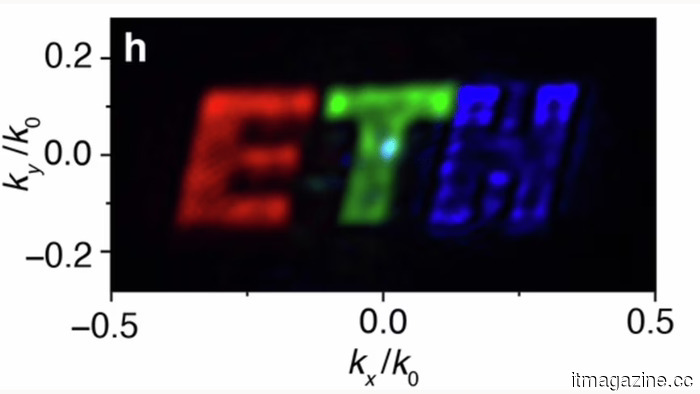 A bidirectional pixel that combines both screen and camera functionalities.
ETH Zurich's bidirectional pixel is capable of both emitting and detecting light, suggesting the potential for screens that function as cameras, in addition to applications in holography and optical computing.
A bidirectional pixel that combines both screen and camera functionalities.
ETH Zurich's bidirectional pixel is capable of both emitting and detecting light, suggesting the potential for screens that function as cameras, in addition to applications in holography and optical computing.
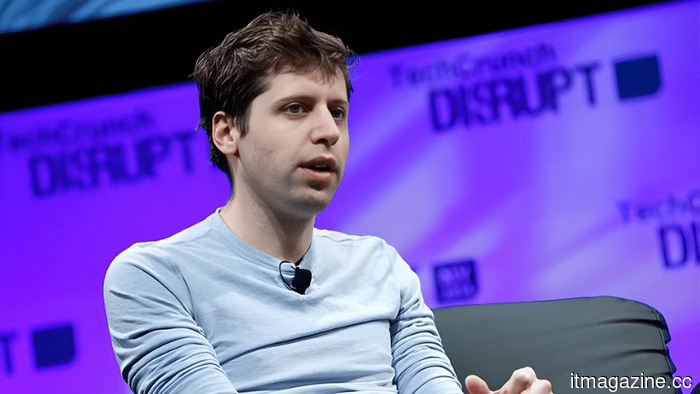 OpenAI might postpone its IPO until 2027 in pursuit of a $1 trillion valuation.
OpenAI is said to be considering postponing its IPO until 2027 as Sam Altman aims for a $1 trillion valuation, a decision that has impacted SoftBank and the banks.
OpenAI might postpone its IPO until 2027 in pursuit of a $1 trillion valuation.
OpenAI is said to be considering postponing its IPO until 2027 as Sam Altman aims for a $1 trillion valuation, a decision that has impacted SoftBank and the banks.
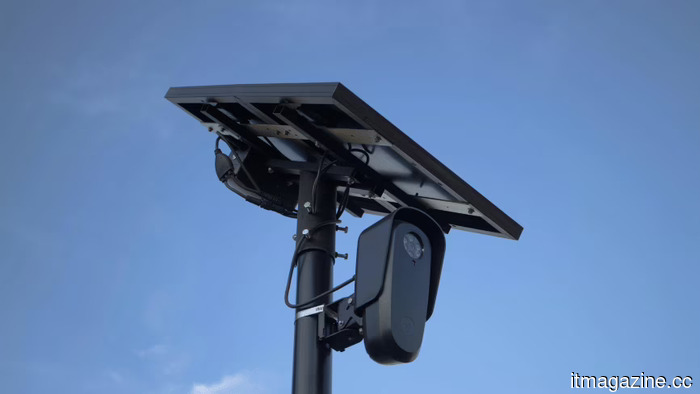 Flock surveillance cameras are being deployed throughout the United States.
More than 100,000 Flock surveillance cameras are currently keeping an eye on drivers in the US, raising concerns about security vulnerabilities, misuse by law enforcement, and the unexpected installation of poles in residential yards.
Flock surveillance cameras are being deployed throughout the United States.
More than 100,000 Flock surveillance cameras are currently keeping an eye on drivers in the US, raising concerns about security vulnerabilities, misuse by law enforcement, and the unexpected installation of poles in residential yards.
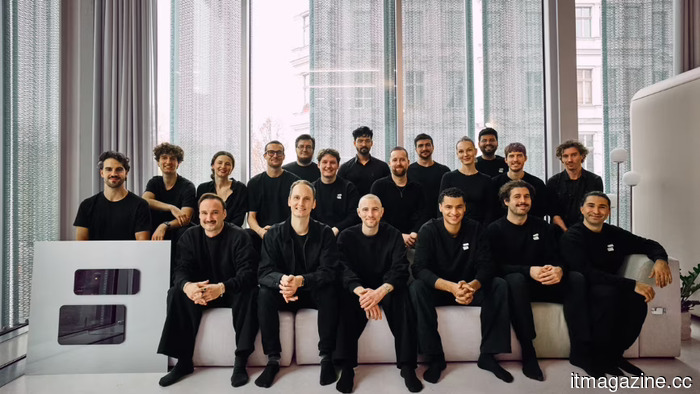 Peec AI increases its valuation to $200 million following the GEO investment.
Peec AI is said to be raising funds at a valuation of $200 million, which is double its worth from eight months prior, as it bets that GEO is emerging as the new SEO in the age of AI.
Peec AI increases its valuation to $200 million following the GEO investment.
Peec AI is said to be raising funds at a valuation of $200 million, which is double its worth from eight months prior, as it bets that GEO is emerging as the new SEO in the age of AI.
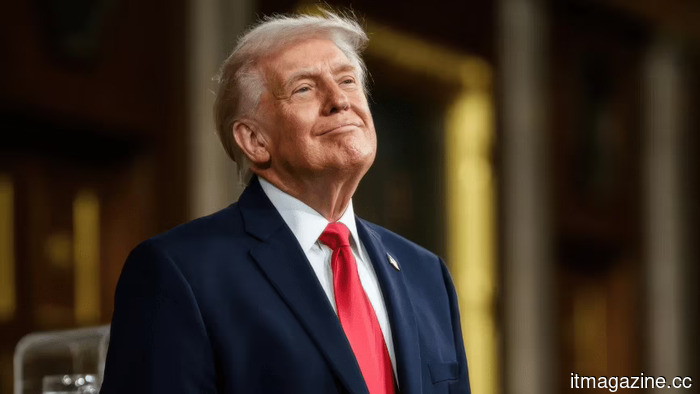 Trump warns of imposing 100% tariffs in response to digital services taxes.
Trump warns of imposing a 100% tariff on any nation that enacts digital services taxes targeting US tech companies, just a day after the EU finalized a trade agreement. Brussels remains steadfast.
Trump warns of imposing 100% tariffs in response to digital services taxes.
Trump warns of imposing a 100% tariff on any nation that enacts digital services taxes targeting US tech companies, just a day after the EU finalized a trade agreement. Brussels remains steadfast.
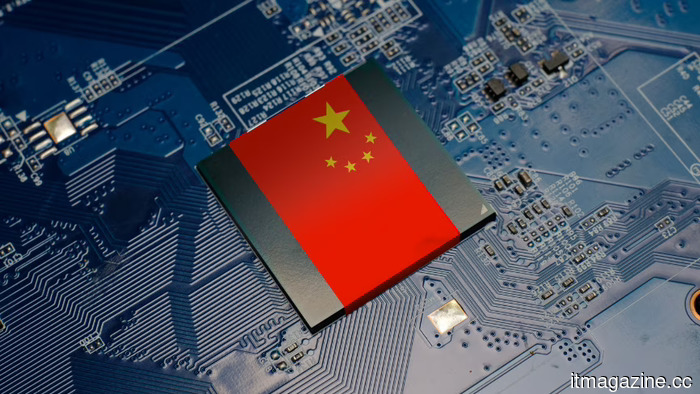 China's increase in AI investment creates a unicorn every five days.
China's investment in AI is skyrocketing: DeepSeek has achieved a record fundraise of $7.4 billion, there are now 381 unicorns, and two new robot unicorns indicate that the pressure from the US is driving this surge.
China's increase in AI investment creates a unicorn every five days.
China's investment in AI is skyrocketing: DeepSeek has achieved a record fundraise of $7.4 billion, there are now 381 unicorns, and two new robot unicorns indicate that the pressure from the US is driving this surge.
South Korea's investment in AI: $880 billion for semiconductors and robotics.
South Korea's AI investment strategy allocates $880 billion towards chip manufacturing facilities, 18.4GW of data centers, and robotics, as Samsung and SK Hynix compete for leadership in the field.