
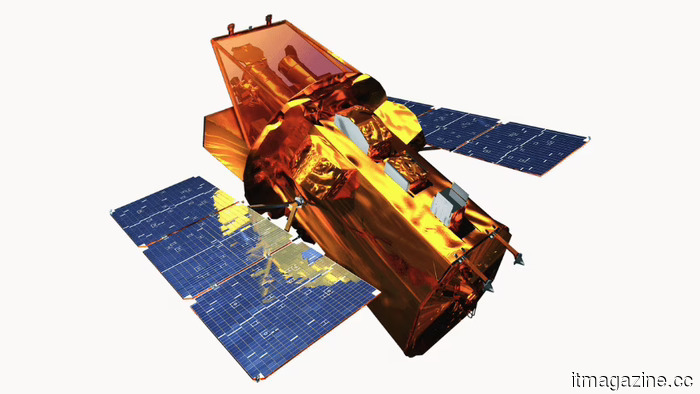
NASA Swift telescope saves the day: a bold first in orbit
Swift has been observing the sky since 2004, documenting some of the universe's most significant explosions. Now, it is in decline, and time is running out. According to the Associated Press, NASA is contracting Katalyst Space Technologies for around $30 million to rescue it, with liftoff potentially as soon as Tuesday.
The strategy seems straightforward but is quite complex: capture a satellite that wasn't designed for retrieval, secure it, and raise its altitude.
Why Swift is descending
Every satellite in low Earth orbit battles a gradual drag from the sparse atmosphere. Solar activity exacerbates this issue. Intense solar events have expanded the atmosphere, increasing drag and causing Swift to descend more rapidly than NASA anticipated.
Currently, the telescope orbits at approximately 360 km. If left unattended, it would fall below 300 km by October, reaching a point where rescue efforts would be ineffective. Following that, re-entry would lead to a fiery end for a functioning observatory. NASA has already disabled Swift’s instruments to slow its descent, and scientific observations ceased in February.
This outcome would be a significant loss. Swift is one of the fastest observers of the sky, quickly pivoting to gamma-ray bursts, the brief, violent outbursts associated with dying stars and colliding neutron stars. "If we allow Swift to re-enter, we would lose that telescope," NASA science chief Nicky Fox told the AP. "We currently lack the budget to build another replacement."
The retrieval
Katalyst's solution is Link, an autonomous spacecraft roughly the size of a small refrigerator, with a solar wingspan of 12 meters. It is equipped with three arms, each fitted with two gripping pincers. Link will be launched using a Pegasus rocket that is air-launched from a plane over the Marshall Islands in the Pacific.
From there, it must pursue its target. NASA anticipates that Link will take about a month to reach the 1.4-tonne observatory and secure it, followed by a few additional months to elevate its orbit from around 360 km to approximately 600 km. If successful, Swift could be operational again by September.
The challenge lies in the retrieval. Swift lacks a docking port and grip points since it was never designed for servicing. In contrast, astronauts manually repaired the Hubble telescope, requiring a space shuttle and a crew. This mission, however, relies on a robot acting independently.
A new type of mission
The speed of this undertaking is notable. NASA finalized the contract just last September with two main directives: act quickly and ensure nothing deteriorates further. Now, nine months later, Katalyst is prepared for launch.
This mission also represents a first for the United States. In 2022, China nudged a defunct satellite into a higher graveyard orbit, but retrieving an operational telescope that wasn't designed for capture presents a greater challenge. "No one thought it could be done," remarked Shawn Domagal-Goldman, NASA’s astrophysics director.
This mission holds significance beyond Swift. A burgeoning industry aims to service, refuel, and reposition satellites in orbit rather than allow them to become obsolete. This genuine rescue mission, facing a real deadline, demonstrates the feasibility these companies have been seeking.
Why it matters
The financial aspect is part of the attraction. Thirty million dollars is a mere fraction of the expense involved in constructing and launching a new space telescope. If a tug can extend the lifespan of a healthy instrument, the argument for preserving hardware instead of discarding it becomes stronger.
Hubble may be next in line. Katalyst anticipates that a larger robot, scheduled for launch next year, could access satellites positioned much higher and provide the aging Hubble with a boost around 2028. Looking further ahead, the company envisions fleets of robots in orbit carrying out repairs, fueling, and even constructing in space.
This also suggests a more organized future. Currently, most spacecraft simply fall and incinerate when they reach the end of their operational lives. A functioning fleet of tugs could elevate valuable satellites, purposefully deorbit defunct ones, and help clear space debris cluttering low Earth orbit.
For now, everything hinges on a single launch and a delicate retrieval operation. In a few months, NASA and Katalyst will determine whether Swift continues to observe the universe or becomes a cautionary story. The countdown has already begun.
Other articles
 Alibaba and Tencent part ways with their lobbyists in Washington as a Pentagon regulation comes into force.
Washington lobbying firms are terminating their relationships with Alibaba and Tencent in anticipation of a Pentagon regulation that prohibits defense contracts for firms that also represent Chinese companies.
Alibaba and Tencent part ways with their lobbyists in Washington as a Pentagon regulation comes into force.
Washington lobbying firms are terminating their relationships with Alibaba and Tencent in anticipation of a Pentagon regulation that prohibits defense contracts for firms that also represent Chinese companies.
 It seems that Samsung is developing a rollable phone. Let's hope it doesn't end up the same way as LG.
The speculated rollable Galaxy from Samsung may reach 10 inches by 2028. However, LG's withdrawal, Oppo's prototype, and the challenging engineering requirements illustrate why this phone design still requires validation prior to its release.
It seems that Samsung is developing a rollable phone. Let's hope it doesn't end up the same way as LG.
The speculated rollable Galaxy from Samsung may reach 10 inches by 2028. However, LG's withdrawal, Oppo's prototype, and the challenging engineering requirements illustrate why this phone design still requires validation prior to its release.
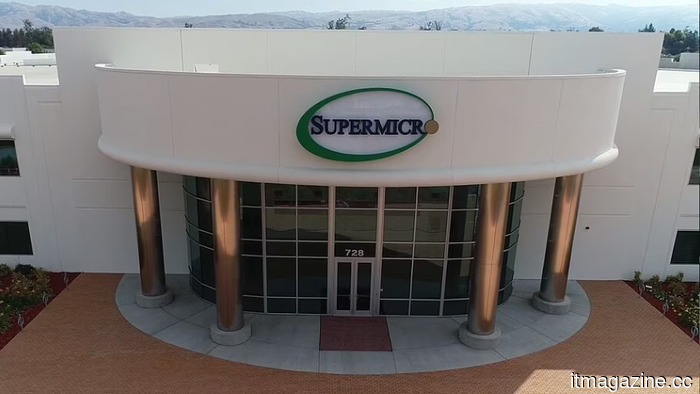 Taiwan conducts a raid on the Super Micro office as the investigation into Nvidia chip smuggling expands.
Prosecutors in Taiwan conducted raids on Super Micro's office as well as two associated firms, broadening the island's initial operation against AI chip smuggling.
TIDAL will stop paying royalties for music created by AI and will label every track it identifies as such.
TIDAL will label completely AI-generated songs with an AI badge and prevent them from generating royalties, as part of an increasing crackdown in the music streaming industry.
Taiwan conducts a raid on the Super Micro office as the investigation into Nvidia chip smuggling expands.
Prosecutors in Taiwan conducted raids on Super Micro's office as well as two associated firms, broadening the island's initial operation against AI chip smuggling.
TIDAL will stop paying royalties for music created by AI and will label every track it identifies as such.
TIDAL will label completely AI-generated songs with an AI badge and prevent them from generating royalties, as part of an increasing crackdown in the music streaming industry.
 The annoyingly loud streaming ads that disrupt your show are finally being reduced.
A new law in California prohibits streaming services from airing advertisements that are louder than the shows they disrupt, effective July 1.
The annoyingly loud streaming ads that disrupt your show are finally being reduced.
A new law in California prohibits streaming services from airing advertisements that are louder than the shows they disrupt, effective July 1.
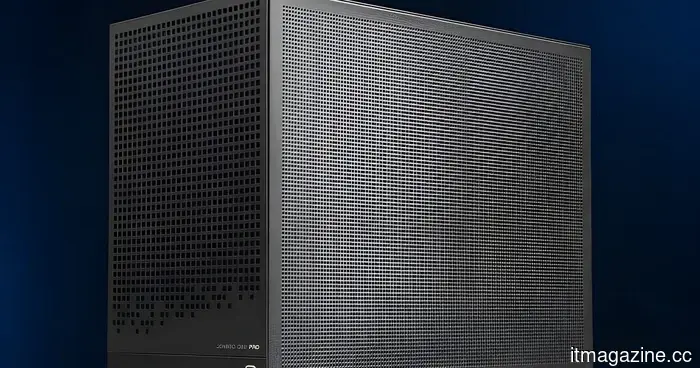 This $1,299 gaming PC aims to become a Steam Machine without having to wait for Valve.
MetaPCs has begun taking preorders for Steamroller, a $1,299 gaming desktop running SteamOS, constructed using standard PC components rather than a custom console-like design.
This $1,299 gaming PC aims to become a Steam Machine without having to wait for Valve.
MetaPCs has begun taking preorders for Steamroller, a $1,299 gaming desktop running SteamOS, constructed using standard PC components rather than a custom console-like design.
NASA Swift telescope saves the day: a bold first in orbit
NASA's Swift telescope rescue involves a robotic spacecraft that will retrieve the descending observatory and elevate its orbit, marking a unique $30 million mission.