
Alibaba and Tencent part ways with their lobbyists in Washington as a Pentagon regulation comes into force.
TL;DR: Alibaba has lost five lobbying firms and Tencent four as a new Pentagon rule prohibits defense contracts for firms that also lobby for blacklisted Chinese companies.
Washington lobbying firms have been discreetly letting go of Alibaba and Tencent as clients in anticipation of a Pentagon rule set to take effect Tuesday. As reported by Bloomberg, since the Defense Department expanded its list of Chinese military firms earlier this month, Alibaba has lost five lobbying firms and Tencent has lost four, leaving these major Chinese tech companies without their primary advocates in Washington amid increasing pressure.
This rule is articulated in Section 851 of the fiscal 2025 National Defense Authorization Act, which prevents the Defense Department from contracting with any company that employs a registered lobbyist for any entity on the Pentagon's 1260H Chinese military companies list. This regulation compels lobbying firms to decide between representing defense clients or their Chinese clients. For many firms, the choice is clear: defense work is more lucrative and comes with less political risk.
According to Bloomberg, both Brownstein Hyatt Farber Schreck and Mercury Public Affairs have ended their relationships with Alibaba, and MO Strategies has also ceased working with the company. Rob Kelner, a partner at Covington & Burling, indicated that some firms had already ended ties with Chinese clients before the law was enacted as a precaution. Kit Conklin, a former aide in the Trump White House now with a lobbying firm, noted that the exodus accelerated after the Pentagon added 65 new companies to the 1260H list on June 8.
The updated list now identifies 188 firms that the Pentagon claims support China’s military, including Alibaba, Tencent, Baidu, BYD, and the robotics manufacturer Unitree. In response, Alibaba has filed a lawsuit against the Defense Department in federal court in San Jose seeking removal from the list, arguing that the designation is unfounded and inhibits its ability to retain certain lobbyists it requires to contest the military-support designation, an issue that is now underscored by the loss of lobbying firms.
This lobbying freeze adds to a series of difficulties for both companies in Washington. Recently, Anthropic accused Alibaba’s Qwen AI lab of using nearly 25,000 fake accounts to replicate Claude’s capabilities, marking a significant distillation effort against a U.S. AI company. In retaliation for the Pentagon's designation, China has imposed trade restrictions on 56 American companies, including rare-earth miners and drone manufacturers, further intensifying congressional animosity toward Chinese technology.
For Tencent, which was added to the 1260H list in January 2025 and called the designation an error, the loss of four lobbying firms has severely reduced its ability to influence U.S. policy through standard channels. According to federal disclosure filings, Alibaba has spent hundreds of thousands of dollars on lobbying in Washington in recent years. Both organizations now navigate a regulatory environment where major lobbying firms cannot afford to represent them without endangering their defense contracts.
The broader impact is akin to a political quarantine. By linking lobbying relationships to defense contracting eligibility, Section 851 achieve an effect that sanctions and blacklists alone have not: it disrupts the informal networks through which Chinese firms have historically maneuvered in Washington. The law takes effect on Tuesday, and for Alibaba and Tencent, lobbying firms have already made their decision.
Published June 29, 2026 - 6:47 pm UTC
Other articles
 WhatsApp now allows you to secure a username, eliminating the need to share your phone number anymore.
For the first time, WhatsApp is allowing its three billion users to reserve usernames, enabling them to connect without the need to share their phone numbers.
WhatsApp now allows you to secure a username, eliminating the need to share your phone number anymore.
For the first time, WhatsApp is allowing its three billion users to reserve usernames, enabling them to connect without the need to share their phone numbers.
 Comcast's separation serves as the clearest indication that the cable bundle is losing its hold.
The separation of Comcast from NBCUniversal is unlikely to immediately affect Peacock or Xfinity, but it indicates a growing separation between internet services and streaming benefits as the traditional cable bundle diminishes in influence.
Comcast's separation serves as the clearest indication that the cable bundle is losing its hold.
The separation of Comcast from NBCUniversal is unlikely to immediately affect Peacock or Xfinity, but it indicates a growing separation between internet services and streaming benefits as the traditional cable bundle diminishes in influence.
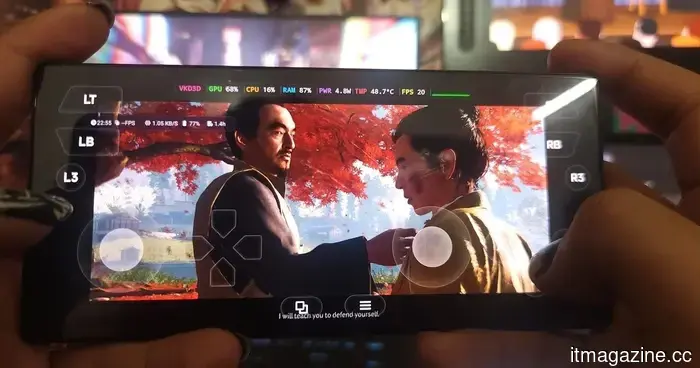 I just played Ghost of Tsushima on my phone. I never imagined this day would come, and I'm not regretting this unexpected experience.
By utilizing GameHub on the RedMagic 11S Pro, I was able to play Ghost of Tsushima Director’s Cut on a phone with surprisingly good results after making some adjustments.
I just played Ghost of Tsushima on my phone. I never imagined this day would come, and I'm not regretting this unexpected experience.
By utilizing GameHub on the RedMagic 11S Pro, I was able to play Ghost of Tsushima Director’s Cut on a phone with surprisingly good results after making some adjustments.
 Taiwan conducts a raid on the Super Micro office as the investigation into Nvidia chip smuggling expands.
Prosecutors in Taiwan conducted raids on Super Micro's office as well as two associated firms, broadening the island's initial operation against AI chip smuggling.
Taiwan conducts a raid on the Super Micro office as the investigation into Nvidia chip smuggling expands.
Prosecutors in Taiwan conducted raids on Super Micro's office as well as two associated firms, broadening the island's initial operation against AI chip smuggling.
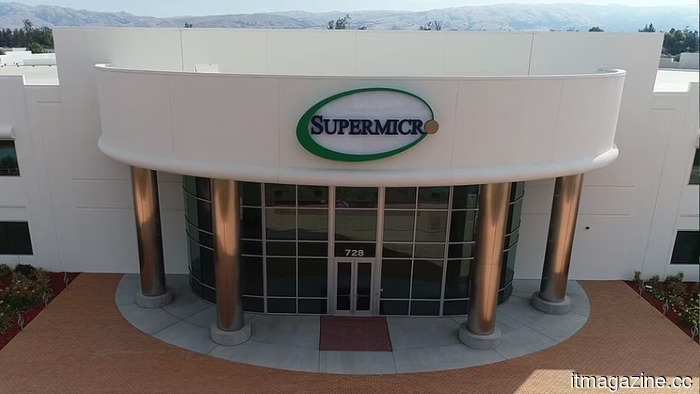 Taiwan conducts a raid on the Super Micro office as the investigation into Nvidia chip smuggling expands.
Prosecutors in Taiwan conducted a raid on Super Micro's office along with two associated companies, extending the island's initial crackdown on AI chip smuggling.
Taiwan conducts a raid on the Super Micro office as the investigation into Nvidia chip smuggling expands.
Prosecutors in Taiwan conducted a raid on Super Micro's office along with two associated companies, extending the island's initial crackdown on AI chip smuggling.
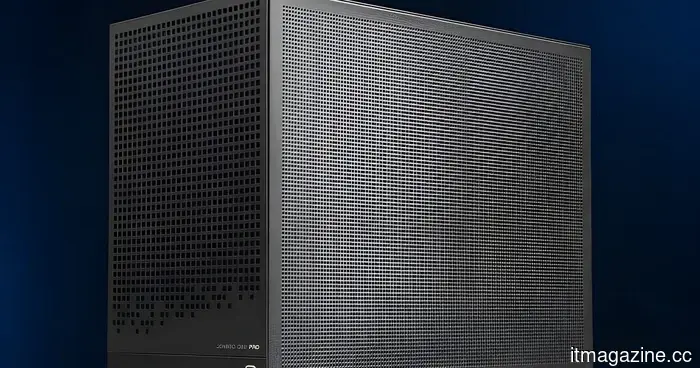 This $1,299 gaming PC aims to become a Steam Machine without having to wait for Valve.
MetaPCs has begun taking preorders for Steamroller, a $1,299 gaming desktop running SteamOS, constructed using standard PC components rather than a custom console-like design.
This $1,299 gaming PC aims to become a Steam Machine without having to wait for Valve.
MetaPCs has begun taking preorders for Steamroller, a $1,299 gaming desktop running SteamOS, constructed using standard PC components rather than a custom console-like design.
Alibaba and Tencent part ways with their lobbyists in Washington as a Pentagon regulation comes into force.
Washington lobbying firms are terminating their relationships with Alibaba and Tencent in anticipation of a Pentagon regulation that prohibits defense contracts for firms that also represent Chinese companies.