
TIDAL will stop paying royalties for music created by AI and will label every track it identifies as such.
TL;DR: TIDAL will label fully AI-generated music with an AI badge, prevent it from earning royalties and direct-to-fan sales, and remove AI tracks that mimic artists.
TIDAL is cutting off funding for AI-generated music. The streaming service has introduced a new policy that prohibits entirely AI-created tracks from earning royalties, collecting revenue from direct sales, or being monetized on its platform. Additionally, TIDAL will employ automated tools to identify and eliminate AI-generated music that impersonates an artist or group.
According to the new regulations, tracks deemed fully AI-generated by TIDAL will feature a prominent "AI" badge to inform listeners about the nature of the music. The company anticipates that distributors will flag AI-generated content before it reaches their platform. This policy will take effect on July 15.
Tony Gervino, TIDAL’s EVP and Editor-in-Chief, stated in the announcement that the company aims to safeguard and reward genuine creativity to maintain artists' ability to engage with and develop their fanbase from TIDAL subscribers. He noted that many subscribers "do not wish to be exposed to, or encouraged to listen to, completely AI-generated music." Gervino emphasized that the policy is not intended to challenge technological advancements but to protect the revenue of human artists.
This policy aligns TIDAL with Deezer, which has adopted a strong stance against AI-generated tracks in the streaming industry. In April, Deezer revealed that 44 percent of daily new music uploaded to its platform, approximately 75,000 tracks, is fully AI-generated. The service actively removes these tracks from recommendations, omits them from editorial playlists, and provides its detection technology to competing platforms.
Spotify revised its own AI policies last September to label tracks with AI-generated elements and filter out spam while still permitting AI tools in music production. Apple Music introduced transparency tags in March, allowing labels and distributors to disclose when AI contributed to a track's creation. Qobuz has adopted a stricter policy by removing AI-generated content from recommendations and committing to never generate music for its catalog.
TIDAL's approach differs mainly in its use of demonetization as the primary enforcement method. Instead of just labeling or hiding AI tracks, TIDAL targets the financial incentive that fuels the influx of synthetic uploads. Whether eliminating royalties effectively reduces the amount of AI music on streaming platforms is a question this policy aims to address.
Gervino countered the notion that AI’s dominance in music is inevitable. "Regardless of what you are reading elsewhere, AI’s takeover of the music industry isn’t inevitable if we take even greater steps now to monitor and control it," he wrote. The company referred to the policy as a "living document," suggesting that the rules will adapt as AI music generation tools and detection technologies evolve.
While TIDAL is smaller than Spotify, Apple Music, or Deezer, it has established itself as an artist-centric platform since its inception, appealing to listeners who prioritize audio quality and artist compensation. If demonetization effectively curbs the number of AI-generated tracks that go unnoticed, larger platforms may adopt similar measures. If it fails, the industry will need alternative solutions to an escalating problem that no single platform can resolve alone.
Other articles
 Comcast's separation serves as the clearest indication that the cable bundle is losing its hold.
The separation of Comcast from NBCUniversal is unlikely to immediately affect Peacock or Xfinity, but it indicates a growing separation between internet services and streaming benefits as the traditional cable bundle diminishes in influence.
Comcast's separation serves as the clearest indication that the cable bundle is losing its hold.
The separation of Comcast from NBCUniversal is unlikely to immediately affect Peacock or Xfinity, but it indicates a growing separation between internet services and streaming benefits as the traditional cable bundle diminishes in influence.
 Arena, the AI leaderboard utilized by everyone, has now reached a valuation of 100 million dollars.
Arena, the crowdsourced AI leaderboard utilized by all leading labs, has attained an annualized revenue of 100 million dollars from its paid evaluation service.
Arena, the AI leaderboard utilized by everyone, has now reached a valuation of 100 million dollars.
Arena, the crowdsourced AI leaderboard utilized by all leading labs, has attained an annualized revenue of 100 million dollars from its paid evaluation service.
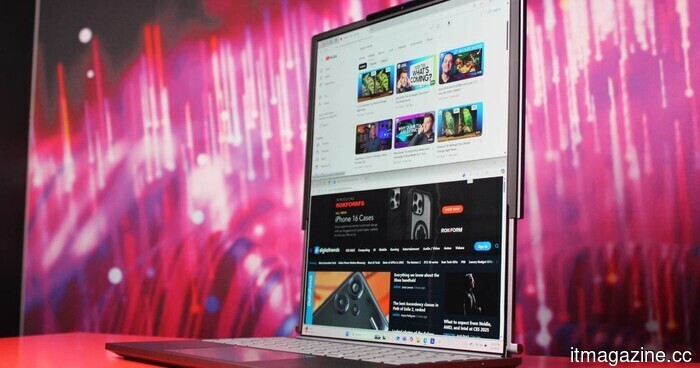 It seems that Samsung is developing a rollable phone. Let's hope it doesn't end up the same way as LG.
The speculated rollable Galaxy from Samsung may reach 10 inches by 2028. However, LG's withdrawal, Oppo's prototype, and the challenging engineering requirements illustrate why this phone design still requires validation prior to its release.
It seems that Samsung is developing a rollable phone. Let's hope it doesn't end up the same way as LG.
The speculated rollable Galaxy from Samsung may reach 10 inches by 2028. However, LG's withdrawal, Oppo's prototype, and the challenging engineering requirements illustrate why this phone design still requires validation prior to its release.
 The forthcoming Galaxy Watch Ultra 2 from Samsung may feature an exceptionally bright display, but I have concerns regarding the tax implications.
The Galaxy Watch Ultra 2 might feature a display that is much more visible in sunlight, as well as a significantly larger battery. However, if these enhancements prove to be true, I am already curious about how they will affect the price.
The forthcoming Galaxy Watch Ultra 2 from Samsung may feature an exceptionally bright display, but I have concerns regarding the tax implications.
The Galaxy Watch Ultra 2 might feature a display that is much more visible in sunlight, as well as a significantly larger battery. However, if these enhancements prove to be true, I am already curious about how they will affect the price.
 NASA's Swift telescope salvaged: a bold inaugural mission in orbit.
The NASA Swift telescope rescue involves a robotic spacecraft that will retrieve the descending observatory and elevate its orbit, marking a unique $30 million mission.
NASA's Swift telescope salvaged: a bold inaugural mission in orbit.
The NASA Swift telescope rescue involves a robotic spacecraft that will retrieve the descending observatory and elevate its orbit, marking a unique $30 million mission.
 AI has enhanced individual capabilities while causing teams to become more fragmented. Yimao Zhou is developing the operating system aimed at reversing this trend.
Yimao Zhou, the founder of Emagen AI, contends that the AI agent industry is focusing on the incorrect unit of optimization. His solution is Cagen, an organizational operating system that utilizes AI to manage tasks while reaching out to humans when necessary.
AI has enhanced individual capabilities while causing teams to become more fragmented. Yimao Zhou is developing the operating system aimed at reversing this trend.
Yimao Zhou, the founder of Emagen AI, contends that the AI agent industry is focusing on the incorrect unit of optimization. His solution is Cagen, an organizational operating system that utilizes AI to manage tasks while reaching out to humans when necessary.
TIDAL will stop paying royalties for music created by AI and will label every track it identifies as such.
TIDAL will label completely AI-generated songs with an AI badge and prevent them from generating royalties, as part of an increasing crackdown in the music streaming industry.