

Have you lost access to your crypto wallet? Avoid searching for solutions online.
Security researchers are warning that counterfeit recovery tools are emerging as a new threat for cryptocurrency holders.
Forgetting the recovery phrase for a crypto wallet can be quite alarming. Unfortunately, this is the exact scenario that scammers anticipate. A recent warning showcases an escalating scam where cybercriminals mask malware as cryptocurrency recovery software, deceiving anxious users into divulging much more than mere access to their wallets.
The counterfeit recovery tool that is, in reality, malware
As reported by The Guardian, the scam initiates when users look online for ways to retrieve a forgotten 12- or 24-word seed phrase, which serves as the recovery key for a cryptocurrency wallet. Fraudulent websites then advertise seemingly trustworthy recovery tools with comforting names like “Lost Crypto Wallets Finder,” claiming to assist in recovering lost wallets. Although the site hosting the malicious software has been taken down, security experts caution that similar scams are likely to resurface under different identities.
Instead of actually recovering anything, the downloaded software secretly installs malware. Researchers from HP Security Lab indicate that this malware can capture browser passwords, personal documents, photos, and other sensitive information before compiling everything into an archive sent back to the perpetrators. Even though this specific site is no longer operational, experts warn that cybercriminals often create nearly identical sites quickly, meaning that the scam is far from over.
Security professionals advise taking a pause before downloading any recovery software. While legitimate recovery services do exist, users should conduct thorough research, scrutinize independent reviews, and steer clear of downloading tools from unknown websites. If malware has already been installed, experts recommend using reliable security software for removal and immediately changing passwords, starting with banking and email accounts.
The target isn’t cryptocurrency; it’s your anxiety.
Interestingly, this scam does not depend on advanced hacking techniques. Instead, it exploits human psychology. The anxiety of losing access to a wallet that may hold thousands of dollars can compel almost anyone to download the first “solution” they encounter. This is the response that scammers aim to provoke.
This also fits into a broader trend. From fraudulent Ledger notifications and QR code scams to AI-driven phishing schemes, cybercriminals increasingly employ social engineering tactics to target crypto users rather than trying to break through encryption. The takeaway is quite straightforward: if someone claims they can magically retrieve a lost seed phrase with a complimentary download, they are likely after something else—specifically, your personal data.


Other articles
 A Chinese AI lab claims it can compete with Anthropic’s extremely powerful Claude Mythos in identifying security vulnerabilities.
The Wall Street Journal has reported that China's GLM-5.2 AI model is capable of competing with Anthropic's Mythos in cybersecurity functions, indicating a swiftly decreasing disparity in AI technology.
A Chinese AI lab claims it can compete with Anthropic’s extremely powerful Claude Mythos in identifying security vulnerabilities.
The Wall Street Journal has reported that China's GLM-5.2 AI model is capable of competing with Anthropic's Mythos in cybersecurity functions, indicating a swiftly decreasing disparity in AI technology.
 Trump warns of imposing 100% tariffs in response to digital services taxes.
Trump warns of imposing a 100% tariff on any nation that enacts digital services taxes targeting US tech companies, just a day after the EU finalized a trade agreement. Brussels remains steadfast.
Trump warns of imposing 100% tariffs in response to digital services taxes.
Trump warns of imposing a 100% tariff on any nation that enacts digital services taxes targeting US tech companies, just a day after the EU finalized a trade agreement. Brussels remains steadfast.
 Germany is promoting its AI implementation as a solution to its labor shortages.
Germany is presenting the rapid adoption of AI as a partial solution to its shortage of skilled workers, which amounts to hundreds of thousands annually.
Germany is promoting its AI implementation as a solution to its labor shortages.
Germany is presenting the rapid adoption of AI as a partial solution to its shortage of skilled workers, which amounts to hundreds of thousands annually.
 SpaceX's Starpipe: a gas pipeline designed for Starship.
SpaceX is developing Starpipe, an 8-mile natural gas pipeline to Starbase, in order to increase the frequency of Starship launches and gain greater control over its supply chain.
SpaceX's Starpipe: a gas pipeline designed for Starship.
SpaceX is developing Starpipe, an 8-mile natural gas pipeline to Starbase, in order to increase the frequency of Starship launches and gain greater control over its supply chain.
 SpaceX's Starpipe: a natural gas pipeline for Starship
SpaceX is proposing Starpipe, an 8-mile natural gas pipeline to Starbase, to facilitate a quicker Starship launch rate and gain greater control over its supply chain.
SpaceX's Starpipe: a natural gas pipeline for Starship
SpaceX is proposing Starpipe, an 8-mile natural gas pipeline to Starbase, to facilitate a quicker Starship launch rate and gain greater control over its supply chain.
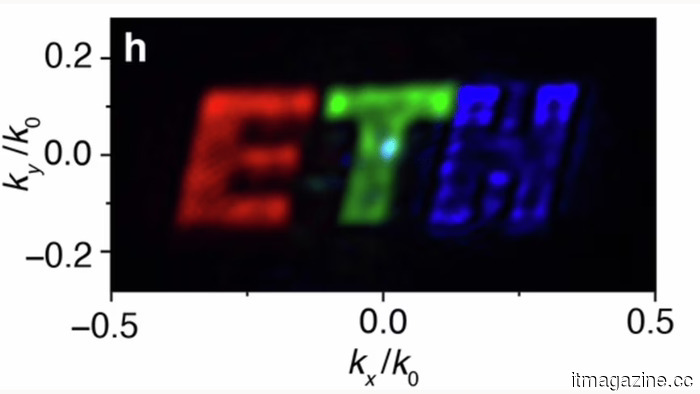 A bidirectional pixel that combines both screen and camera functionalities.
ETH Zurich's bidirectional pixel is capable of both emitting and detecting light, suggesting the potential for screens that function as cameras, in addition to applications in holography and optical computing.
A bidirectional pixel that combines both screen and camera functionalities.
ETH Zurich's bidirectional pixel is capable of both emitting and detecting light, suggesting the potential for screens that function as cameras, in addition to applications in holography and optical computing.
Have you lost access to your crypto wallet? Avoid searching for solutions online.
A fresh scam is aiming at cryptocurrency holders by posing malware as wallet recovery tools for lost seed phrases.