
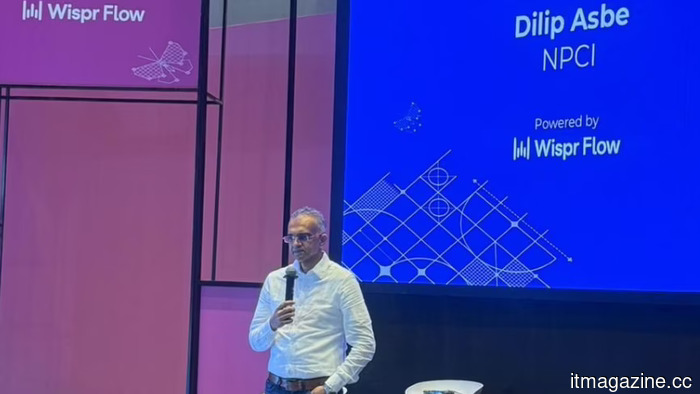
India's payments leader claims that AI will propel UPI from 750 million to one billion transactions per day.
**TL;DR** NPCI's CEO states that AI will propel UPI to a billion daily transactions through fraud detection, credit distribution, and voice onboarding. PhonePe and Google Pay dominate with over 80% market share.
India's Unified Payment Interface has surpassed 750 million daily transactions. Dilip Asbe, the Managing Director and CEO of the National Payments Corporation of India, informed TechCrunch during Mumbai Tech Week that AI is crucial for achieving a billion transactions. He emphasized that AI could help attract the next half billion users by preventing fraud, distributing credit, and facilitating multilingual voice onboarding.
"AI will play a significant role in the next phase of UPI, particularly in engaging new users," stated Asbe. "We need to effectively use AI to safeguard our current users, detect fraud, and identify mules. Additionally, AI should assist in providing credit to users and merchants with digital footprints."
NPCI introduced a voice assistant-based payment system in 2023, but Asbe conceded that adoption has not yet gained momentum. He noted that voice models must improve in accuracy before they can become essential to the payment framework. Discussions about AI sovereignty in India have intensified lately, with suggestions for a $5 billion yearly sovereign AI fund and initiatives to create small language models suited to local languages and applications.
Asbe recognizes a significant opportunity in this area: "Our ecosystem has a rich data set," he remarked. "There is substantial potential for Indian companies, banks, fintechs, and the ecosystem to develop small language models that are precise, targeted, and as deterministic as possible." NPCI has already implemented a model called FIMI to address user disputes, which now assists over a million users in canceling mandates and resolving issues.
Regarding regulation, Asbe mentioned that India can integrate AI-powered finance with appropriate safeguards. He advocates for systems that can trace user instructions and consent given to AI agents in case of errors. NPCI showcased agentic commerce and payments with Razorpay last year, but a broader implementation has yet to materialize.
The UPI landscape is largely dominated by PhonePe and Google Pay, which together hold more than 80% of the transaction market. A regulatory limit is set to cap any single app's share to 30%, effective December 31, 2026, unless NPCI extends this deadline. Asbe remarked that switching between apps incurs low costs, indicating that the concentration results from the lack of a viable commercial model for new entrants. "When we see a feasible commercial model emerge for the ecosystem, I believe new players will begin to invest significantly," he noted.
NPCI's own app, BHIM, claims around 1% market share even as transaction volumes increase. Asbe mentioned there isn't a specific market share target for BHIM, but amidst India's burgeoning digital economy, with its largest tech IPOs and $110 billion AI infrastructure plans, NPCI aspires for BHIM to be a sovereign and secure option.
Other articles
 Google is limiting access to Gemini for Meta due to insufficient computing resources.
Google has imposed restrictions on Meta's usage of Gemini AI models due to demand surpassing the available capacity. According to the Financial Times, Meta has advised its employees to conserve AI tokens.
Google is limiting access to Gemini for Meta due to insufficient computing resources.
Google has imposed restrictions on Meta's usage of Gemini AI models due to demand surpassing the available capacity. According to the Financial Times, Meta has advised its employees to conserve AI tokens.
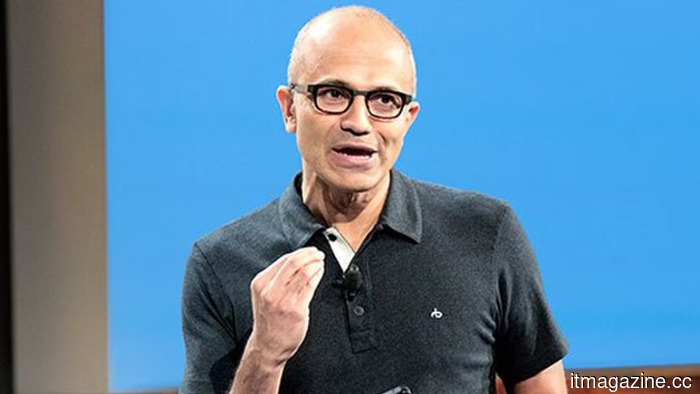 The 33-year-old former Snap executive, Nadella, is now in charge of fixing Copilot and manages a team of 11,000 individuals.
Jacob Andreou has been elevated to EVP of Copilot following a year at Microsoft. He is integrating consumer and enterprise teams while developing a super app in conjunction with Autopilot.
The 33-year-old former Snap executive, Nadella, is now in charge of fixing Copilot and manages a team of 11,000 individuals.
Jacob Andreou has been elevated to EVP of Copilot following a year at Microsoft. He is integrating consumer and enterprise teams while developing a super app in conjunction with Autopilot.
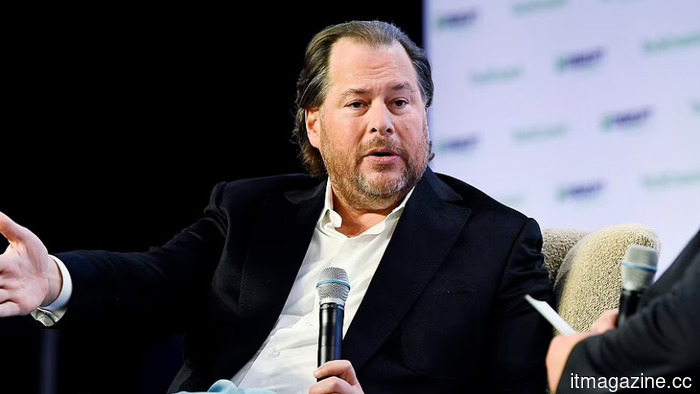 Salesforce staff are puzzled as to why the company is endorsing a rival within Slack.
Claude Tag from Anthropic has been introduced as an AI collaborator within Slack. However, certain employees at Salesforce are concerned that it directly competes with both Slackbot and Agentforce.
Salesforce staff are puzzled as to why the company is endorsing a rival within Slack.
Claude Tag from Anthropic has been introduced as an AI collaborator within Slack. However, certain employees at Salesforce are concerned that it directly competes with both Slackbot and Agentforce.
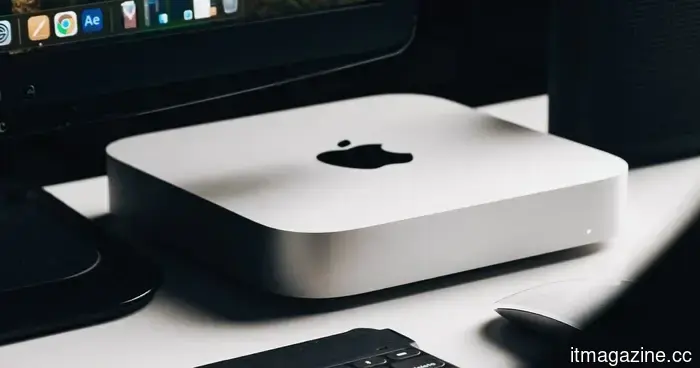 Apple is considering a politically sensitive solution for the memory crisis, and the US government is not pleased with it.
Apple is seeking to purchase memory from CXMT, a Chinese firm that is on the Pentagon's blacklist, and is advocating to the Trump administration for approval to proceed with this acquisition.
Apple is considering a politically sensitive solution for the memory crisis, and the US government is not pleased with it.
Apple is seeking to purchase memory from CXMT, a Chinese firm that is on the Pentagon's blacklist, and is advocating to the Trump administration for approval to proceed with this acquisition.
India's payments leader claims that AI will propel UPI from 750 million to one billion transactions per day.
Dilip Asbe, the CEO of NPCI, states that artificial intelligence will drive the upcoming surge in UPI expansion by enhancing fraud detection, facilitating credit distribution, and enabling multilingual voice onboarding.