
Auto repair is among the least digitized sectors in America. AI is transforming the economic reasons behind this.
Summary: Over 280,000 auto repair shops in the US remain largely undigitized. The convergence of AI receptionists, predictive scheduling, and rollups from private equity is targeting a $3.4 billion software market.
There are more than 280,000 independent auto repair shops across North America. Many of these businesses operate with outdated methods recognizable to a 1990s small business owner, relying on phone-based scheduling, paper repair orders, and manual parts ordering. The global market for auto repair software is expected to grow from $3.4 billion in 2026 to $8.6 billion by 2033, representing a 14.2% compound annual growth rate (CAGR), according to Persistence Market Research. Software advancements are outpacing the automotive aftermarket growth by two to three times.
The industry has resisted digitization for the last two decades, and the reasons were understandable. Past shop management software required owners to input data, and in return, the system would provide reports, a trade that many owners were reluctant to accept. AI changes this dynamic; it can transcribe calls, categorize inspections from images, generate estimates through VIN lookups, and automate follow-ups.
The most immediate application of AI is in reception services. Independent shops miss a significant number of incoming calls, with industry surveys indicating a missed-call rate over 40%. Each missed call equates to lost revenue. Voice AI solutions designed for this sector can operate 24/7, book appointments directly into the shop calendar, direct urgent calls to humans, and send text confirmations automatically. AI-driven rollups of less glamorous vertical software businesses are attracting substantial venture capital, with auto repair being one of the largest unaddressed markets.
Predictive scheduling and automated customer follow-ups may lack dramatic appeal but improve lifetime-value economics. Capacity planning is transitioning from relying on the owner's knowledge to a data-driven forecast. Customer retention is becoming an automated routine rather than a neglected task. Both advancements can increase average contract values as shops enhance their operations from basic management to AI-supported processes.
The distribution challenge is significant. Independent shop owners are generally not active on LinkedIn, do not attend SaaS conferences, and tend to ignore inbound marketing strategies. Companies succeeding in this sector have adapted their go-to-market strategies to resemble industrial sales approaches, utilizing trade shows, partnerships with parts suppliers, content in aftermarket publications, and outbound sales teams sourced from the industry instead of the tech sector.
In the past 36 months, private equity rollups of independent repair shops have gained momentum. Companies such as Sun Auto Tire, Driven Brands, and Caliber Collision have scaled regional clusters to hundreds of locations. The playbook following acquisitions typically involves unifying the software platform of the acquired shops. This creates a dual investment strategy: the software companies facilitating digitization and the rollup firms consolidating the digitized shops. Spending on AI-native enterprises has surged by 94% year over year while traditional SaaS growth has stagnated. Auto repair exemplifies how vertical AI can yield significant returns on investment, not necessarily due to more advanced technology, but because the previous methods were so manual, making even modest AI integration impactful for operators.
Other articles
 Researchers developed an AI therapist that analyzes data from your smartwatch and earbuds to identify signs of distress before you seek assistance.
The UbiMyTherapist program at the University of Ottawa utilizes heart rate, speech tone, and text data from wearables to create a digital twin and provide proactive mental health assistance.
Researchers developed an AI therapist that analyzes data from your smartwatch and earbuds to identify signs of distress before you seek assistance.
The UbiMyTherapist program at the University of Ottawa utilizes heart rate, speech tone, and text data from wearables to create a digital twin and provide proactive mental health assistance.
 Google is limiting access to Gemini for Meta due to insufficient computing resources.
Google has imposed restrictions on Meta's usage of Gemini AI models due to demand surpassing the available capacity. According to the Financial Times, Meta has advised its employees to conserve AI tokens.
Google is limiting access to Gemini for Meta due to insufficient computing resources.
Google has imposed restrictions on Meta's usage of Gemini AI models due to demand surpassing the available capacity. According to the Financial Times, Meta has advised its employees to conserve AI tokens.
 OpenAI's poaching of talent from Apple suggests that ChatGPT-powered wearables may soon be designed for facial use.
The engineering leader of Apple's Vision Pro is departing for OpenAI, suggesting that the company's aspirations in AI hardware could reach far beyond just ChatGPT.
OpenAI's poaching of talent from Apple suggests that ChatGPT-powered wearables may soon be designed for facial use.
The engineering leader of Apple's Vision Pro is departing for OpenAI, suggesting that the company's aspirations in AI hardware could reach far beyond just ChatGPT.
 The BIS cautions that a collapse in AI could impact credit markets as severely as the financial crisis of 2008.
In its annual report, the Bank for International Settlements identified systemic risks related to AI capital expenditures, circular financing agreements, and inadequately disclosed asset pledging.
The BIS cautions that a collapse in AI could impact credit markets as severely as the financial crisis of 2008.
In its annual report, the Bank for International Settlements identified systemic risks related to AI capital expenditures, circular financing agreements, and inadequately disclosed asset pledging.
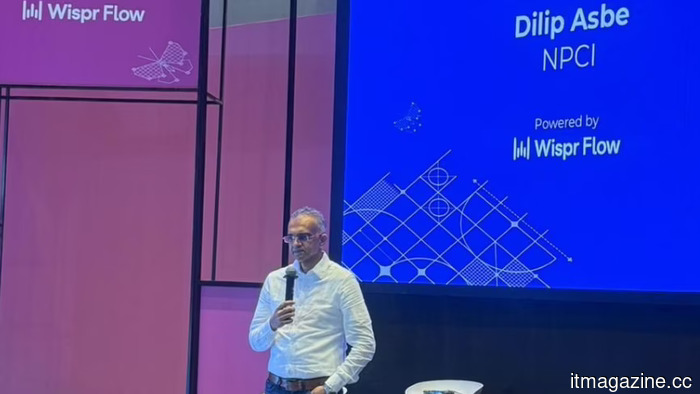 India's payments leader claims that AI will propel UPI from 750 million to one billion transactions per day.
Dilip Asbe, the CEO of NPCI, states that artificial intelligence will drive the upcoming surge in UPI expansion by enhancing fraud detection, facilitating credit distribution, and enabling multilingual voice onboarding.
India's payments leader claims that AI will propel UPI from 750 million to one billion transactions per day.
Dilip Asbe, the CEO of NPCI, states that artificial intelligence will drive the upcoming surge in UPI expansion by enhancing fraud detection, facilitating credit distribution, and enabling multilingual voice onboarding.
 California will impose a tax on downloaded software for the first time as a component of a $351.7 billion budget agreement.
California's revised budget expands sales tax to include downloads of prewritten software, projected to generate $900 million for the state. A proposed ballot measure aims to preserve the gains from AI IPOs.
California will impose a tax on downloaded software for the first time as a component of a $351.7 billion budget agreement.
California's revised budget expands sales tax to include downloads of prewritten software, projected to generate $900 million for the state. A proposed ballot measure aims to preserve the gains from AI IPOs.
Auto repair is among the least digitized sectors in America. AI is transforming the economic reasons behind this.
There are still 280,000 independent repair shops in the US that rely on phone scheduling and paper orders. AI receptionists, predictive scheduling, and PE rollups are coming together.