
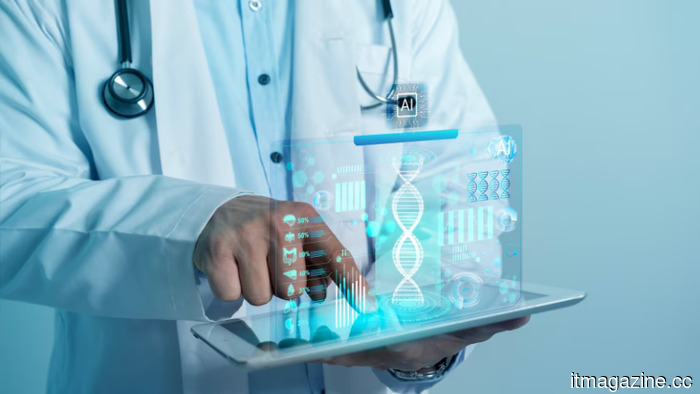
Researchers developed an AI therapist that analyzes data from your smartwatch and earbuds to identify signs of distress before you seek assistance.
Researchers at the University of Ottawa have developed an AI assistant called UbiMyTherapist, which utilizes signals from wearable devices to identify distress and provide support proactively, rather than waiting for users to reach out. A study involving 24 participants highlighted the challenges faced by mental health chatbots that depend on users to initiate contact, especially when individuals are stressed or anxious. UbiMyTherapist addresses this by analyzing emotional cues in real-time from devices such as smartwatches and smartphones, offering assistance before users make a request.
The system evaluates physiological signals like heart rate variability, speech tone changes, and written text to gauge users' emotional states. It creates a “digital twin,” incorporating a user’s medical and psychological history along with real-time emotional data, allowing for tailored responses instead of generic chatbot replies.
UbiMyTherapist functions in two modes: a reactive mode that engages when a user reaches out and a proactive mode that monitors emotional distress through live signals and intervenes before any user contact occurs. The reactive mode was tested with 24 participants and evaluated by licensed therapists for its therapeutic effectiveness, showing favorable results in empathy and personalization compared to standard large language models. As demand for mental health services grows globally, the need for digital psychotherapy tools has become increasingly important.
The researchers do not intend for UbiMyTherapist to replace human therapists but rather to enhance mental health support outside of clinical settings, especially for those facing barriers like cost or stigma. The team aims to refine the prototype to respond instantaneously to smartwatch signals and is collaborating with licensed therapists to ensure clinical precision.
This initiative lies at the convergence of two expanding domains: AI-driven health monitoring and wearable technology that interprets health states from basic biosignals. Both areas are attracting substantial investment, yet they share the challenge of validating that passive physiological data can reliably lead to clinical-grade interventions. Currently, UbiMyTherapist remains a research project rather than a consumer application, but it indicates the direction in which proactive AI health tools are evolving.
Other articles
 Forget about console wars. The Steam Machine could potentially put an end to lackluster PC gaming ports.
Although Valve’s Steam Machine might not be the most powerful gaming PC available, its set hardware specifications and the promotion of SteamOS could motivate developers to enhance the optimization of PC games.
Forget about console wars. The Steam Machine could potentially put an end to lackluster PC gaming ports.
Although Valve’s Steam Machine might not be the most powerful gaming PC available, its set hardware specifications and the promotion of SteamOS could motivate developers to enhance the optimization of PC games.
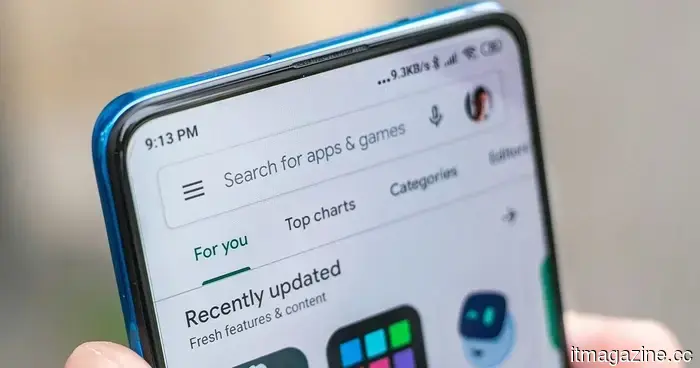 Locating Android apps on the Google Play Store has become significantly simpler with the introduction of Gemini.
Google has introduced the Google Play connected app for Gemini, enabling users to find apps, make specific purchases, and acquire Play gift cards through AI.
Locating Android apps on the Google Play Store has become significantly simpler with the introduction of Gemini.
Google has introduced the Google Play connected app for Gemini, enabling users to find apps, make specific purchases, and acquire Play gift cards through AI.
 California will impose a tax on downloaded software for the first time as a component of a $351.7 billion budget agreement.
California's revised budget expands sales tax to include downloads of prewritten software, projected to generate $900 million for the state. A proposed ballot measure aims to preserve the gains from AI IPOs.
California will impose a tax on downloaded software for the first time as a component of a $351.7 billion budget agreement.
California's revised budget expands sales tax to include downloads of prewritten software, projected to generate $900 million for the state. A proposed ballot measure aims to preserve the gains from AI IPOs.
 Auto repair is among the least digitized sectors in America. AI is transforming the economic reasons behind this.
There are still 280,000 independent repair shops in the US that rely on phone scheduling and paper orders. AI receptionists, predictive scheduling, and PE rollups are coming together.
Auto repair is among the least digitized sectors in America. AI is transforming the economic reasons behind this.
There are still 280,000 independent repair shops in the US that rely on phone scheduling and paper orders. AI receptionists, predictive scheduling, and PE rollups are coming together.
 It seems that Apple Books is facing a similar issue with knockoffs as Amazon does.
Joanna Stern notes that unauthorized AI-generated versions of her book continue to show up on Apple Books, which underscores an escalating issue with digital bookstores.
Firmus, supported by Nvidia, plans to construct a 360MW AI data centre in Indonesia and anticipates securing $30 billion in offtake agreements.
The Australian AI infrastructure company Firmus is set to construct a 360MW Nvidia DSX campus in Batam, Indonesia, securing access to 170,000 Nvidia chips until 2028.
It seems that Apple Books is facing a similar issue with knockoffs as Amazon does.
Joanna Stern notes that unauthorized AI-generated versions of her book continue to show up on Apple Books, which underscores an escalating issue with digital bookstores.
Firmus, supported by Nvidia, plans to construct a 360MW AI data centre in Indonesia and anticipates securing $30 billion in offtake agreements.
The Australian AI infrastructure company Firmus is set to construct a 360MW Nvidia DSX campus in Batam, Indonesia, securing access to 170,000 Nvidia chips until 2028.
Researchers developed an AI therapist that analyzes data from your smartwatch and earbuds to identify signs of distress before you seek assistance.
The UbiMyTherapist program at the University of Ottawa utilizes heart rate, speech tone, and text data from wearables to create a digital twin and provide proactive mental health assistance.