
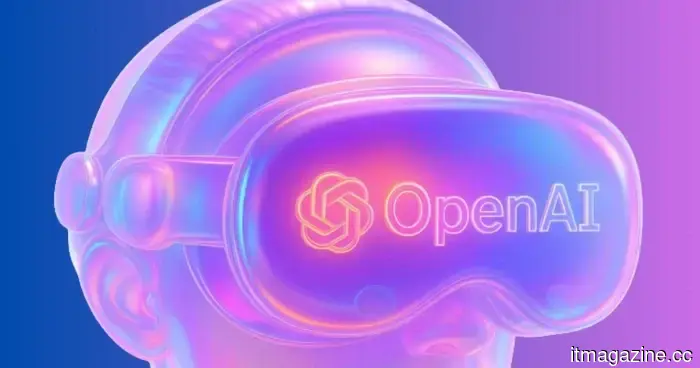
OpenAI's poaching of talent from Apple suggests that ChatGPT-powered wearables may soon be designed for facial use.
Digital Trends may receive a commission when purchases are made via links on our site. Why should you trust us?
Apple's Vision Pro hardware leader is heading to OpenAI, fueling further speculation that the company is serious about AI wearables.
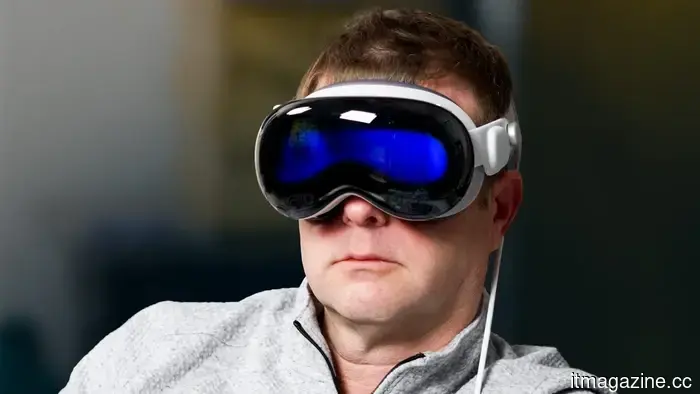
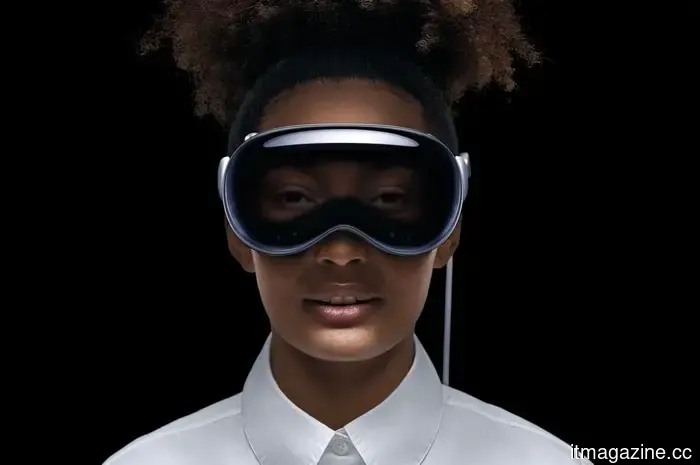
OpenAI’s hardware capabilities have just received a significant upgrade, hinting that the organization is looking to extend its AI solutions past mobile phones and laptops. Paul Meade, who played a key role at Apple in the engineering of the Vision Pro headset and upcoming smart glasses initiatives, is leaving his position in Cupertino to join OpenAI’s hardware team.
Another seasoned Apple hardware expert joins OpenAI
As reported by Bloomberg, Meade dedicated seven years to leading hardware engineering for the Vision Pro and contributed to Apple’s display-less smart glasses project, which is set to compete with Meta’s Ray-Ban smart glasses. His team also worked on future augmented reality glasses and various AI wearables, making him one of Apple’s foremost hardware executives in the developing wearables sector.
At OpenAI, Meade will be part of a growing group of former Apple executives. He will collaborate with renowned designer Jony Ive, former Apple design chief Evans Hankey, and ex-iPhone operations executive Tang Tan, all of whom are now contributing to the development of OpenAI’s next generation of AI hardware. This team emerged after OpenAI acquired Ive’s startup, io, for $6.5 billion, indicating that the company is making significant investments in dedicated AI devices instead of just treating ChatGPT as another application.
Neither Apple nor OpenAI have disclosed specific details about what these devices will entail. However, Bloomberg notes that OpenAI is currently focused on “several new devices” anticipated to be launched in the next few years, while Apple is also in the process of developing smart glasses, AI-enabled AirPods equipped with cameras, tabletop robots, and other AI-related hardware.
Is ChatGPT hardware on the horizon?
It’s important to note that Meade’s transition does not confirm that OpenAI is creating AI glasses, so it's prudent to approach the speculation with caution. However, recruiting the executive responsible for Apple’s Vision Pro and smart glasses hardware certainly supports the idea that OpenAI is gathering the necessary talent for wearable AI, especially following the addition of Jony Ive and other former Apple experts to its hardware group.
Interestingly, this situation seems to be shifting from a competition in AI chatbots to a race in wearables. Meta has already launched smart glasses, Apple is reportedly gearing up its own products, and OpenAI is discreetly assembling a top-tier hardware team. Whether this leads to AI glasses, a wearable pendant, or an OpenAI ear device remains unclear, but the company’s goals evidently go well beyond just ChatGPT on a screen.



Other articles
 Salesforce staff are puzzled as to why the company is endorsing a rival within Slack.
Claude Tag from Anthropic has been introduced as an AI collaborator within Slack. However, certain employees at Salesforce are concerned that it directly competes with both Slackbot and Agentforce.
Instagram aims to integrate algorithm customization as a fundamental aspect of the app rather than a hidden feature.
Adam Mosseri showcased new methods for accessing Your Algorithm, featuring pull-down menus and buttons specific to each Reel. The primary request from users continues to be: let us see whom we follow.
Salesforce staff are puzzled as to why the company is endorsing a rival within Slack.
Claude Tag from Anthropic has been introduced as an AI collaborator within Slack. However, certain employees at Salesforce are concerned that it directly competes with both Slackbot and Agentforce.
Instagram aims to integrate algorithm customization as a fundamental aspect of the app rather than a hidden feature.
Adam Mosseri showcased new methods for accessing Your Algorithm, featuring pull-down menus and buttons specific to each Reel. The primary request from users continues to be: let us see whom we follow.
 Apple is considering a politically sensitive solution for the memory crisis, and the US government is not pleased with it.
Apple is seeking to purchase memory from CXMT, a Chinese firm that is on the Pentagon's blacklist, and is advocating to the Trump administration for approval to proceed with this acquisition.
Apple is considering a politically sensitive solution for the memory crisis, and the US government is not pleased with it.
Apple is seeking to purchase memory from CXMT, a Chinese firm that is on the Pentagon's blacklist, and is advocating to the Trump administration for approval to proceed with this acquisition.
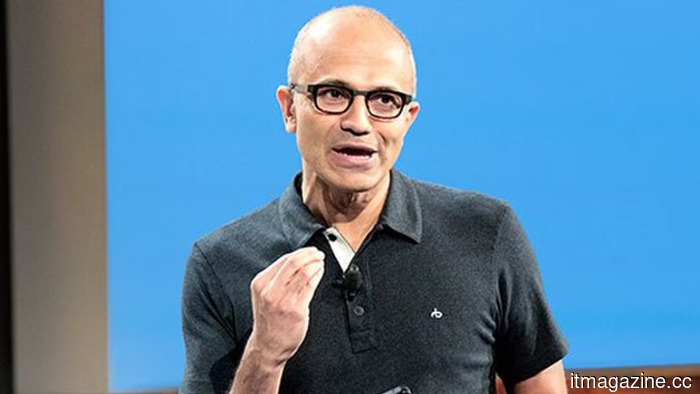 The 33-year-old former Snap executive, Nadella, is now in charge of fixing Copilot and manages a team of 11,000 individuals.
Jacob Andreou has been elevated to EVP of Copilot following a year at Microsoft. He is integrating consumer and enterprise teams while developing a super app in conjunction with Autopilot.
The 33-year-old former Snap executive, Nadella, is now in charge of fixing Copilot and manages a team of 11,000 individuals.
Jacob Andreou has been elevated to EVP of Copilot following a year at Microsoft. He is integrating consumer and enterprise teams while developing a super app in conjunction with Autopilot.
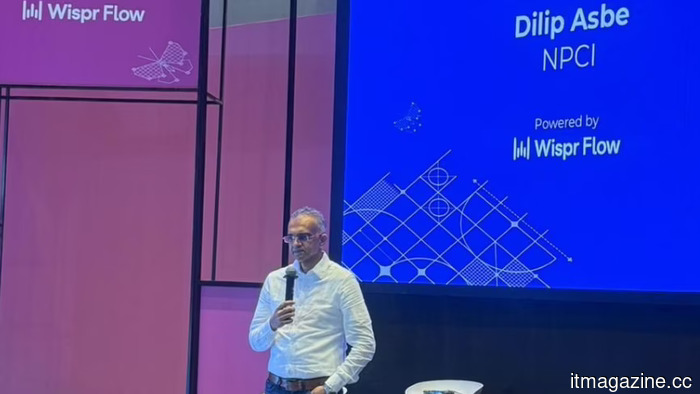 India's payments leader claims that AI will propel UPI from 750 million to one billion transactions per day.
Dilip Asbe, the CEO of NPCI, states that artificial intelligence will drive the upcoming surge in UPI expansion by enhancing fraud detection, facilitating credit distribution, and enabling multilingual voice onboarding.
India's payments leader claims that AI will propel UPI from 750 million to one billion transactions per day.
Dilip Asbe, the CEO of NPCI, states that artificial intelligence will drive the upcoming surge in UPI expansion by enhancing fraud detection, facilitating credit distribution, and enabling multilingual voice onboarding.
 Google is limiting access to Gemini for Meta due to insufficient computing resources.
Google has imposed restrictions on Meta's usage of Gemini AI models due to demand surpassing the available capacity. According to the Financial Times, Meta has advised its employees to conserve AI tokens.
Google is limiting access to Gemini for Meta due to insufficient computing resources.
Google has imposed restrictions on Meta's usage of Gemini AI models due to demand surpassing the available capacity. According to the Financial Times, Meta has advised its employees to conserve AI tokens.
OpenAI's poaching of talent from Apple suggests that ChatGPT-powered wearables may soon be designed for facial use.
The engineering leader of Apple's Vision Pro is departing for OpenAI, suggesting that the company's aspirations in AI hardware could reach far beyond just ChatGPT.