

Kobo turned down 45% of self-published books last year, largely due to issues related to AI.
A self-publishing platform is intended to be welcoming. However, last year, Kobo dedicated a significant portion of its resources to rejecting submissions.
In 2025, Rakuten Kobo declined 45% of the titles submitted to Kobo Writing Life, its self-publishing service. CEO Michael Tamblyn claims that over 80% of these rejections were due to books he deemed obviously AI-generated and of very low quality. According to him, hundreds of thousands of submissions were turned away.
Tamblyn revealed these figures during a keynote address at the CONTEC conference in Buenos Aires in April, later reiterating them in a post on Threads in early May. He described the influx of machine-written manuscripts as a deluge that barely registered as an issue a few years ago but now fills the rejection pile.
The statistics warrant careful consideration, and Tamblyn provided some clarity. The 45% represents the proportion of rejected submissions, not the percentage of those submissions that were AI-written; the 80%-plus figure refers only to the rejected titles. Kobo has not disclosed the overall number of files reviewed, the complete reasons for rejections, or the criteria used to determine if a manuscript is machine-generated.
This assertion highlights the platform's approach more than it quantifies the actual prevalence of AI in self-publishing. That caution is important because detection remains a challenge. Tamblyn acknowledged that the AI-detection software Kobo uses often confuses human writing with machine-generated content and vice versa. Consequently, the company has chosen to focus on quality as the primary reason for rejection rather than trying to verify the exact origin of each submission.
A manuscript that appears low-quality and mass-produced will be rejected, regardless of its source. This policy is outlined in Kobo’s guidelines. A help page updated in May details common rejection reasons, such as titles that are too short, contain AI-generated material, have poor translations, or are priced excessively. Kobo reserves the right to accept, decline, suspend, or remove any title, states that submitted works will not be used to train generative-AI systems, and retains the right to utilize AI to read and analyze texts for assessment purposes.
This approach represents a more restrained version compared to how the rest of the industry is handling the situation. Amazon’s Kindle Direct Publishing has taken a different approach by requiring authors to disclose AI-generated text, images, or translations at the time of upload since September 2023, while not requiring a declaration for AI-assisted content. In contrast, Kobo prefers to reject submissions rather than mandate disclosures.
Both platforms respond to the same challenge: the overwhelming influx of low-cost machine-generated text, a concern once considered theoretical but now faced on a large scale. What Kobo has not clarified is how many legitimate books were rejected in order to filter out the subpar ones. The burden of a market saturated with generative content is partially shouldered by those writers who find their works caught in the filtering process.
Other articles
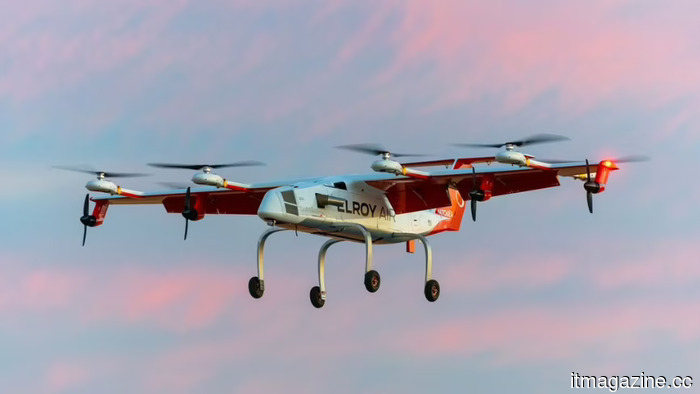 Cargo drone company Elroy Air is close to finalizing an $800 million SPAC agreement.
Elroy Air, the producer of the autonomous Chaparral cargo drone, is in deep discussions to become a public company through a SPAC merger, which would value the company at approximately $1 billion.
Cargo drone company Elroy Air is close to finalizing an $800 million SPAC agreement.
Elroy Air, the producer of the autonomous Chaparral cargo drone, is in deep discussions to become a public company through a SPAC merger, which would value the company at approximately $1 billion.
 Swatch is seeking $170 million from Samsung due to allegations of copied watch faces.
Swatch is demanding $170 million from Samsung for 26 smartwatch faces that a London court has previously determined infringed upon its trademarks. Samsung describes the amount as inflated.
Swatch is seeking $170 million from Samsung due to allegations of copied watch faces.
Swatch is demanding $170 million from Samsung for 26 smartwatch faces that a London court has previously determined infringed upon its trademarks. Samsung describes the amount as inflated.
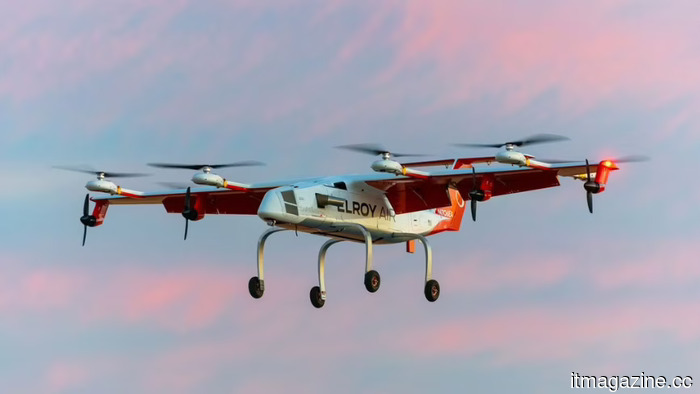 Cargo drone company Elroy Air is approaching an $800 million SPAC agreement.
Elroy Air, the producer of the autonomous Chaparral cargo drone, is engaged in advanced discussions to become a public company through a SPAC merger that would value it at approximately $1 billion.
Cargo drone company Elroy Air is approaching an $800 million SPAC agreement.
Elroy Air, the producer of the autonomous Chaparral cargo drone, is engaged in advanced discussions to become a public company through a SPAC merger that would value it at approximately $1 billion.
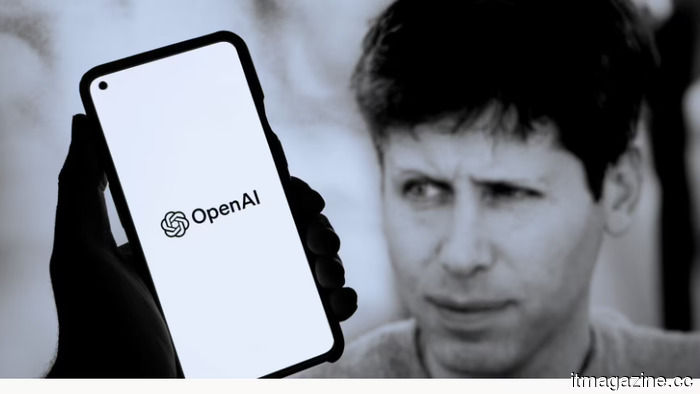 The US government has requested that OpenAI delay the launch of its upcoming model.
The Trump administration has requested that OpenAI gradually release GPT-5.6, granting access to each customer individually due to security issues.
The US government has requested that OpenAI delay the launch of its upcoming model.
The Trump administration has requested that OpenAI gradually release GPT-5.6, granting access to each customer individually due to security issues.
 TikTok and YouTube removed 4.7 million accounts belonging to users under 16 in Indonesia.
TikTok and YouTube have disabled approximately 4.7 million accounts belonging to users under 16 in Indonesia following a regulation on high-risk platforms issued in March.
TikTok and YouTube removed 4.7 million accounts belonging to users under 16 in Indonesia.
TikTok and YouTube have disabled approximately 4.7 million accounts belonging to users under 16 in Indonesia following a regulation on high-risk platforms issued in March.
 The US government requests that OpenAI delay the release of its upcoming model.
The Trump administration has requested that OpenAI phase the release of GPT-5.6, allowing access to customers one at a time due to security issues.
The US government requests that OpenAI delay the release of its upcoming model.
The Trump administration has requested that OpenAI phase the release of GPT-5.6, allowing access to customers one at a time due to security issues.
Kobo turned down 45% of self-published books last year, largely due to issues related to AI.
In 2025, Rakuten Kobo turned down 45% of the titles submitted to its self-publishing platform, primarily citing low-quality AI-generated writing as the reason for most rejections.