

The US government has requested that OpenAI delay the launch of its upcoming model.
Sam Altman informed employees that Washington wishes for GPT-5.6 to be initially released to a select group of trusted partners, with access granted on a customer-by-customer basis.
For many years, discussions surrounding the need to slow the development of powerful AI models were primarily addressed by safety teams within companies and external critics. Now, a government request has been added to the mix.
For the first time, the Trump administration has requested OpenAI to stagger the introduction of an upcoming model, marking the US government's proactive intervention with an American AI firm to limit a launch ahead of its occurrence.
This directive came from the highest levels. On Wednesday, OpenAI CEO Sam Altman communicated to staff that the government had asked the company to first release the model to a specific group of trusted partners before distributing it widely.
According to Altman, the government would be "approving access customer by customer during this preview period." This request did not originate from a single department, but rather from discussions involving two government entities: the Office of the National Cyber Director and the Office of Science and Technology Policy, which frame the issue as one related to cybersecurity instead of competition or content.
The concern articulated is what a sufficiently advanced model could enable in the wrong hands, and the controlled rollout aims to mitigate that risk during the initial phase.
The timing of this request aligns with a broader shift, occurring about two weeks after competitor Anthropic had its strongest products removed from the market due to a government order. This indicates that Washington is now actively influencing the release timelines of top labs rather than merely responding post-release.
The described method is significant in its own right. A customer-by-customer approval process during a preview phase would, if implemented as reported, allow a government agency to directly determine who has early access to a cutting-edge model.
This reflects the gated rollout approach OpenAI used for GPT-5.4-Cyber, which was provided to vetted security teams under a Trusted Access program. This represents a considerably more proactive stance compared to the voluntary commitments and retrospective assessments that have characterized US AI policy thus far, temporarily shifting control over the release from the company to the government.
For OpenAI, this arrangement has multiple implications. A staggered rollout slows the firm’s capacity to showcase its latest model to paying customers and developers, coming just months after the launch of GPT-5.5 in the enterprise sector, which presents a commercial disadvantage in a fast-moving market.
However, this also provides some political protection: a model released with the government's clear involvement is more challenging to fault the company for if issues arise.
The balance OpenAI strikes between these factors will become clearer once the preview period begins and subsequent developments unfold. Much of the specifics still depend on Altman’s account to staff and reports from sources rather than official government announcements, and OpenAI has yet to disclose the terms of the arrangement.
Details regarding the model name, the customer-by-customer approval system, and the involved agencies stem from these accounts.
What this situation establishes, if it remains consistent, is a new approach: a US administration viewing the release of a cutting-edge model as something to be gated, with a leading lab consentingly adhering to this framework.
The next question is whether this will serve as the standard for future releases.
Other articles
 The US government requests that OpenAI delay the release of its upcoming model.
The Trump administration has requested that OpenAI phase the release of GPT-5.6, allowing access to customers one at a time due to security issues.
The US government requests that OpenAI delay the release of its upcoming model.
The Trump administration has requested that OpenAI phase the release of GPT-5.6, allowing access to customers one at a time due to security issues.
 Samsung's $647 billion home investment is expected to focus on the chip-needy southwest region.
Samsung is anticipated to announce a decade-long investment of 1,000 trillion won ($647.5 billion) in South Korea, with plans for chip manufacturing facilities located outside of Seoul.
Samsung's $647 billion home investment is expected to focus on the chip-needy southwest region.
Samsung is anticipated to announce a decade-long investment of 1,000 trillion won ($647.5 billion) in South Korea, with plans for chip manufacturing facilities located outside of Seoul.
 Samsung's $647 billion home investment is set to move toward the chip-deficient southwest.
Samsung is anticipated to announce an investment of 1,000 trillion won ($647.5 billion) over the next decade in South Korea, with plans for chip manufacturing facilities located outside of Seoul.
Samsung's $647 billion home investment is set to move toward the chip-deficient southwest.
Samsung is anticipated to announce an investment of 1,000 trillion won ($647.5 billion) over the next decade in South Korea, with plans for chip manufacturing facilities located outside of Seoul.
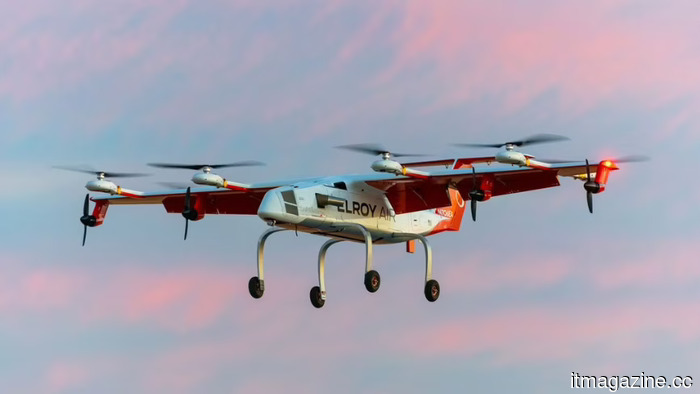 Cargo drone company Elroy Air is approaching an $800 million agreement with a SPAC.
Elroy Air, the company behind the autonomous Chaparral cargo drone, is in advanced discussions to become public through a SPAC merger, which would value the company at around $1 billion.
Cargo drone company Elroy Air is approaching an $800 million agreement with a SPAC.
Elroy Air, the company behind the autonomous Chaparral cargo drone, is in advanced discussions to become public through a SPAC merger, which would value the company at around $1 billion.
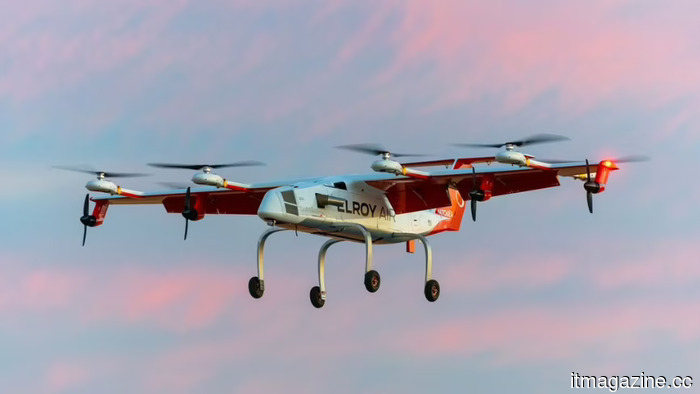 Cargo drone company Elroy Air is close to finalizing an $800 million SPAC agreement.
Elroy Air, the producer of the autonomous Chaparral cargo drone, is in deep discussions to become a public company through a SPAC merger, which would value the company at approximately $1 billion.
Cargo drone company Elroy Air is close to finalizing an $800 million SPAC agreement.
Elroy Air, the producer of the autonomous Chaparral cargo drone, is in deep discussions to become a public company through a SPAC merger, which would value the company at approximately $1 billion.
The US government has requested that OpenAI delay the launch of its upcoming model.
The Trump administration has requested that OpenAI gradually release GPT-5.6, granting access to each customer individually due to security issues.