
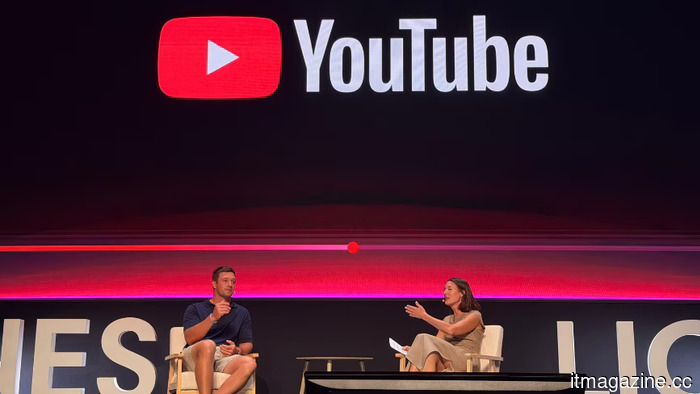
Cannes insights: What a two-time major winner understands about marketing that CMOs might miss.
Every June for one week, the advertising sector relocates to the French Riviera to evaluate its status. The Cannes Lions International Festival of Creativity, now entering its 72nd year, was held from June 16 to 20, 2025, attracting around 15,000 attendees from 90 nations—turning the seaside locale into a continuous dialogue about future attention trends.
This year, the focus was unmistakable. Creators were prevalent, especially following the festival's rebranding of its long-established Social and Influencer Lions to Social and Creator Lions, a subtle yet significant indication of whom the industry perceives as its audience.
As anticipated, AI was a prominent topic in discussions. Yet a more fascinating narrative was emerging on the beach, where content creators, rather than the agencies that traditionally mediated their work, took center stage. At Cannes Lions, Bryson DeChambeau advocated for athletes as creators, suggesting that the underlying strategy was more intriguing than the slogans themselves.
During the keynote, amidst applause regarding authenticity and obligatory references to data, DeChambeau conveyed an essential truth about contemporary sports. He noted that prior to YouTube, others constructed his public persona for him. The traditional media defined his identity, but he aspired to narrate his own story instead. This desire, more than any statistic projected on the screen, explains why a two-time major champion found himself on a marketing platform in the first place.
The moderator, Mary Ellen Coe, Chief Business Officer at YouTube, opened with a statistic frequently cited in the sports industry: 65% of viewers want to engage with sports through the creators they follow. This impressive figure, much like other striking statistics at advertising festivals, appears without sourcing. It should be seen as a foundational belief behind a YouTube sales pitch rather than an established fact, providing clarity to the ensuing discussion.
YouTube presents a thesis, with athletes serving as validation. DeChambeau is a compelling example because of his tangible achievements—having won the US Open twice, in 2020 and again in 2024, he has gained the credibility necessary for the marketing message. Yet, the more relevant figure for marketers is his YouTube channel's subscriber count, which now exceeds 2.6 million—an audience large enough to occasionally rival the official PGA Tour account.
His journey will resonate with anyone familiar with creators finding their audience. His initial videos, focused on technical aspects of swing mechanics and equipment, failed to attract viewers. Feedback through comments, likes, and analytics revealed that viewers desired something different, prompting him to pivot his content.
This fundamental principle of the creator economy was communicated clearly: viewers will express their preferences if you are open to listening. It turned out they wanted golf that was engaging to watch, as a full round lasts around four hours, making it difficult to maintain interest on a fast-paced platform.
As a result, DeChambeau collaborated with a production team to shorten the content to about an hour, managing to keep the essence of the game intact. This concept is most evident in his “Break 50” series, where he and a guest attempt to score under 50 in 18 holes. The format transforms a slow-paced sport into an engaging, high-stakes hour, attracting guests from outside golf, like actor Adam Sandler and basketball player Stephen Curry, whom DeChambeau referred to as the show’s most requested guest.
The audience that formed around his content was unexpected for golf. It initially skewed older but gradually became younger. DeChambeau expressed pride in attracting viewers who have never played golf but engage with his content nonetheless. For a sport concerned about its aging audience, capturing the interest of a young, non-golfer is significant and aligns with the overall goal.
Creating this content is neither inexpensive nor simple, and he candidly acknowledged the effort involved. Other professionals seek his advice on replicating his success, and he responds honestly: it requires a dedicated team along with considerable time and investment. His primary motivation wasn't solely financial, though this disclaimer subtly indicates the scale of his operation.
The scrappy, DIY spirit from the early days of content creation has evolved into something resembling a small media company. This maturity was evident in his discourse on effective strategies. He warned against chasing virality, emphasizing that the real rewards lie in consistency, episodic content, and building trust—slowly developing an audience that returns. He suggested that brands adopt this mindset too.
A YouTube video can remain online for a decade or more, accruing views and goodwill long after a TV ad has faded. For marketers accustomed to viewing campaigns as singular bursts, this perspective—seeing creator content as something that increases in value over time rather than diminishes—holds substantial utility.
For marketers, his advice distilled down to the oft-used word "authenticity," which he strengthened. Audiences can quickly detect insincerity, and brands that don't genuinely align with a creator’s
Other articles
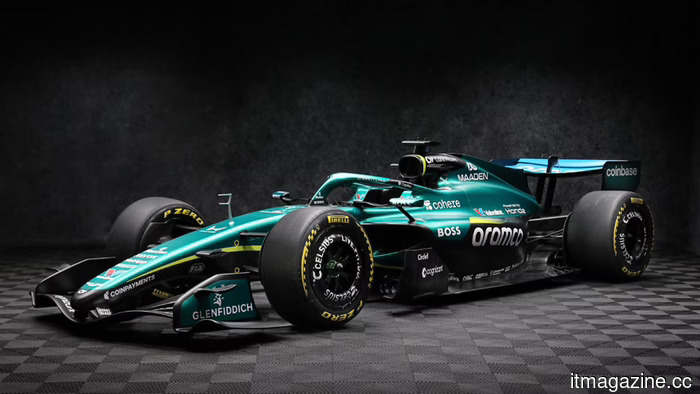 Aston Martin Aramco has appointed Zscaler as its global partner for cybersecurity.
The F1 team will utilize Zscaler’s Zero Trust Exchange to enhance the security of car design, race strategy, and trackside telemetry. The branding will be showcased on the AMR26 in Austria.
Aston Martin Aramco has appointed Zscaler as its global partner for cybersecurity.
The F1 team will utilize Zscaler’s Zero Trust Exchange to enhance the security of car design, race strategy, and trackside telemetry. The branding will be showcased on the AMR26 in Austria.
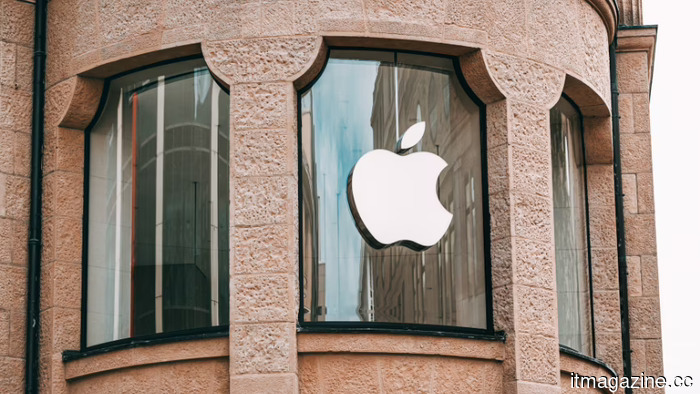 The Kremlin is seeking clarification from Apple following the removal of VK applications from the App Store.
Apple removed VK's applications in Russia, referencing sanctions. VK claims it has never been sanctioned. The Kremlin is seeking clarification and desires an alternative operating system.
The Kremlin is seeking clarification from Apple following the removal of VK applications from the App Store.
Apple removed VK's applications in Russia, referencing sanctions. VK claims it has never been sanctioned. The Kremlin is seeking clarification and desires an alternative operating system.
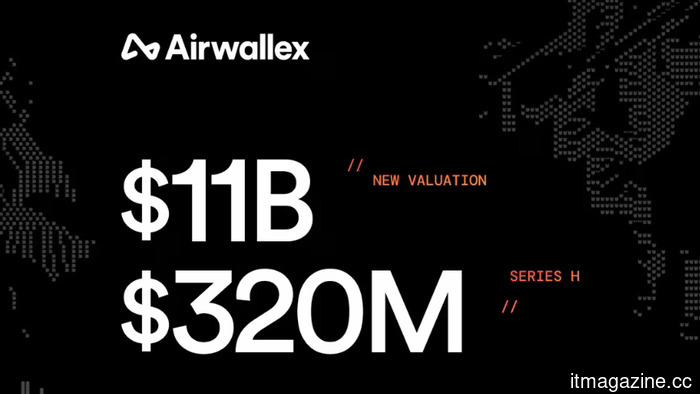 Airwallex secures $320 million at a valuation of $11 billion.
Airwallex has secured $320 million at an $11 billion valuation, an increase from its previous valuation of $8 billion, and is shifting its focus towards autonomous finance and AI agents that conduct transactions on your behalf.
Airwallex secures $320 million at a valuation of $11 billion.
Airwallex has secured $320 million at an $11 billion valuation, an increase from its previous valuation of $8 billion, and is shifting its focus towards autonomous finance and AI agents that conduct transactions on your behalf.
 At the core of the AI revolution lies a significant human issue.
Afrozy Ara, the founder of LuminaData, contends that the $675 billion surge in AI infrastructure won't yield benefits until companies cease automating flawed workflows and instead focus on reengineering the underlying processes, starting with financial operations.
At the core of the AI revolution lies a significant human issue.
Afrozy Ara, the founder of LuminaData, contends that the $675 billion surge in AI infrastructure won't yield benefits until companies cease automating flawed workflows and instead focus on reengineering the underlying processes, starting with financial operations.
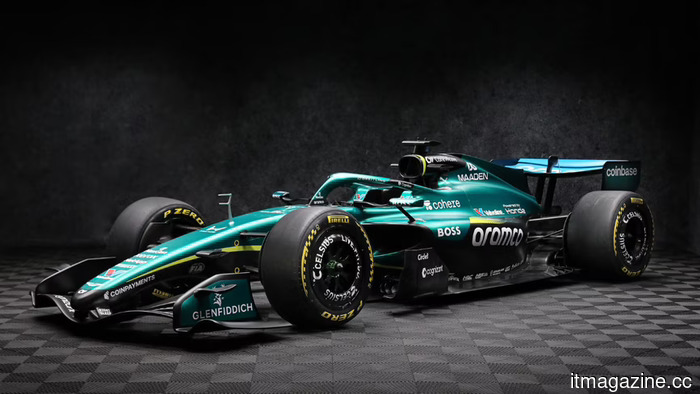 Aston Martin Aramco has appointed Zscaler as its worldwide cybersecurity partner.
The F1 team will implement Zscaler’s Zero Trust Exchange to protect car design, race strategy, and trackside telemetry. The branding will make its debut on the AMR26 in Austria.
Aston Martin Aramco has appointed Zscaler as its worldwide cybersecurity partner.
The F1 team will implement Zscaler’s Zero Trust Exchange to protect car design, race strategy, and trackside telemetry. The branding will make its debut on the AMR26 in Austria.
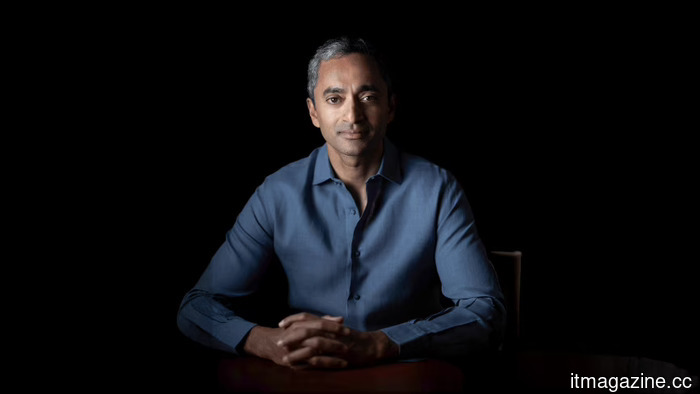 Chamath Palihapitiya: Meta mishandled its advantage in AI.
Chamath Palihapitiya mentioned on The Axios Show that Meta missed an opportunity with its AI leadership, the notion of a jobs apocalypse is a misconception, and that the incentives for his SPAC were not aligned properly.
Chamath Palihapitiya: Meta mishandled its advantage in AI.
Chamath Palihapitiya mentioned on The Axios Show that Meta missed an opportunity with its AI leadership, the notion of a jobs apocalypse is a misconception, and that the incentives for his SPAC were not aligned properly.
Cannes insights: What a two-time major winner understands about marketing that CMOs might miss.
At Cannes Lions, Bryson DeChambeau advocated for athletes as creators. The true narrative lies within the strategy behind the slogans.