
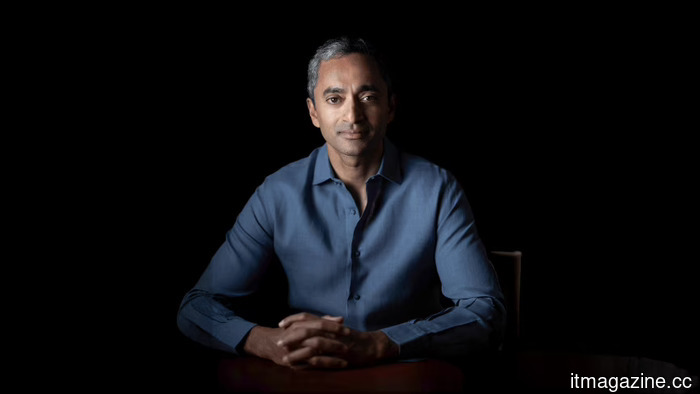
Chamath Palihapitiya: Meta mishandled its advantage in AI.
On The Axios Show, Chamath Palihapitiya remarked that Meta “fumbled” its position in AI, downplayed the notion of a job apocalypse, and referred to his SPAC incentives as “grossly misaligned.” Here’s what the investor shared with Axios.
Chamath Palihapitiya is known for not holding back during interviews. On The Axios Show, he touched on Meta's AI missteps, the future of employment, his regrets regarding SPACs, and the constraints of online privacy. His opinions hold significant influence in both the White House and among countless podcast listeners. Few investors navigate the realms of technology, markets, and politics as freely as he does.
Palihapitiya is a unique figure. As an immigrant, a Trump supporter, and a former Facebook executive involved in the company’s growth, his background adds a distinct perspective to the discussion. He did not hold back when critiquing his former employer.
His harshest comments were directed at Facebook itself, stating to Axios’ Dan Primack that the company “completely fumbled” a significant opportunity to lead in AI, even going so far as to say it had “profoundly failed.”
His criticisms are especially poignant given his past perspective. In 2022, before the launch of ChatGPT, he had argued that Meta was in a strong position within the AI landscape, possessing extensive user data and the reach necessary to succeed.
However, when the chatbot frenzy emerged, Meta failed to capitalize on it. Facebook had the capability to distribute AI products to billions of users simultaneously and could have led the charge for open-weight AI. Instead, he claimed, Nvidia and Jensen Huang better understood the moment and built a surrounding ecosystem for open models.
Palihapitiya identified three pillars in the AI market: one includes the closed labs in America like OpenAI and Anthropic; the second encompasses China’s more affordable open-weight competitors, led by DeepSeek; and the third was a space Meta could have dominated: the open-source, open-weight American laboratory. He noted that while Meta’s Llama models are categorized as open weight, they don’t qualify as fully open source. He feels the company failed to capture that space and is now leaning towards proprietary models instead.
He refrained from speculating why this happened, stating that he lacks sufficient knowledge about Meta’s internal decision-making processes to provide an explanation; he only sees the outcome.
The implications are significant. Meta has invested billions into AI research and talent. However, his main point focuses on positioning, not expenditure. He argued that the entity that excelled in social distribution missed the opportunity to become a leader in AI.
No Jobs Apocalypse
Regarding employment, he strongly opposed the idea of an impending disaster. He remarked that the belief AI will eliminate jobs makes for an “incredible headline,” but it overlooks historical patterns.
When Primack suggested a future where robots could even handle plumbing, Palihapitiya simply asked who would run the plumbing companies and the robotics firms. He emphasized that people will always need shelter, food, clothing, and, indeed, bathrooms.
“I think it’s great to spark a debate,” he said, but added that such fears disregard the “patterns of the past.” Historical advancements in technology have allowed humans to do more, not less.
“I suspect if you just trend it, that 35 things now goes to 300 things over the next thousand years,” he said. “There will be more avenues to allocate time.” When Primack expressed concern for his teenage daughter, Palihapitiya countered, asking if he truly believed she would end up “unemployed and a ward of the state?”
Others share a similar outlook. OpenAI’s Sam Altman has also indicated that a job apocalypse is unlikely, softening his earlier warnings. He acknowledges, however, that certain sectors, like customer support, may largely disappear. The overall sentiment has shifted among Big Tech leaders from panic to caution, with researchers at MIT referring to AI automation as a “rising tide” rather than a “crashing wave.”
A Rare SPAC Mea Culpa
One of the most notable moments was personal. Palihapitiya, once referred to as the “SPAC King,” conceded to his critics.
“The most important thing I learned was that my incentives were grossly misaligned,” he acknowledged, admitting he had resisted that realization for years due to insecurity. The core issue stemmed from the fact that he could complete a deal and still receive payment, regardless of the subsequent outcomes.
He didn’t completely disavow his deals. “I don’t think I did bad deals in the way I underwrote them,” he said. “But I think the stock performance is what the stock performance is, and that’s undeniable.” His SPACs yielded one success, SoFi, alongside disappointing performers like Virgin Galactic and Clover Health.
This represents a shift in perspective. In 2022
Other articles
 Chamath Palihapitiya: Meta mishandled its position in AI.
Chamath Palihapitiya stated on The Axios Show that Meta mismanaged its advantage in AI, the notion of a jobs apocalypse is a misconception, and his SPAC incentives were not properly aligned.
Chamath Palihapitiya: Meta mishandled its position in AI.
Chamath Palihapitiya stated on The Axios Show that Meta mismanaged its advantage in AI, the notion of a jobs apocalypse is a misconception, and his SPAC incentives were not properly aligned.
 Airwallex secures $320 million at a valuation of $11 billion.
Airwallex has secured $320 million at an $11 billion valuation, an increase from its previous valuation of $8 billion, and is shifting its focus towards autonomous finance and AI agents that conduct transactions on your behalf.
Airwallex secures $320 million at a valuation of $11 billion.
Airwallex has secured $320 million at an $11 billion valuation, an increase from its previous valuation of $8 billion, and is shifting its focus towards autonomous finance and AI agents that conduct transactions on your behalf.
 Apple increases the prices of Mac and iPad as the AI memory shortage impacts retail.
Tim Cook states that Apple’s rising prices are ‘inevitable’ due to the increasing demand for memory chips driven by AI, which is leading to higher costs. The starting price of the Mac mini has already risen.
Apple increases the prices of Mac and iPad as the AI memory shortage impacts retail.
Tim Cook states that Apple’s rising prices are ‘inevitable’ due to the increasing demand for memory chips driven by AI, which is leading to higher costs. The starting price of the Mac mini has already risen.
 At the core of the AI revolution lies a significant human issue.
Afrozy Ara, the founder of LuminaData, contends that the $675 billion AI infrastructure surge will not yield benefits until companies cease automating flawed workflows and begin reengineering the foundational processes, starting with financial operations.
At the core of the AI revolution lies a significant human issue.
Afrozy Ara, the founder of LuminaData, contends that the $675 billion AI infrastructure surge will not yield benefits until companies cease automating flawed workflows and begin reengineering the foundational processes, starting with financial operations.
 Brussels engaged in discussions with Washington concerning Anthropic's access following the Fable 5 prohibition.
Brussels engaged in discussions with Washington regarding Anthropic after a US export-control directive restricted Europe's access to Fable 5 and Mythos 5, which also affected ENISA.
Brussels engaged in discussions with Washington concerning Anthropic's access following the Fable 5 prohibition.
Brussels engaged in discussions with Washington regarding Anthropic after a US export-control directive restricted Europe's access to Fable 5 and Mythos 5, which also affected ENISA.
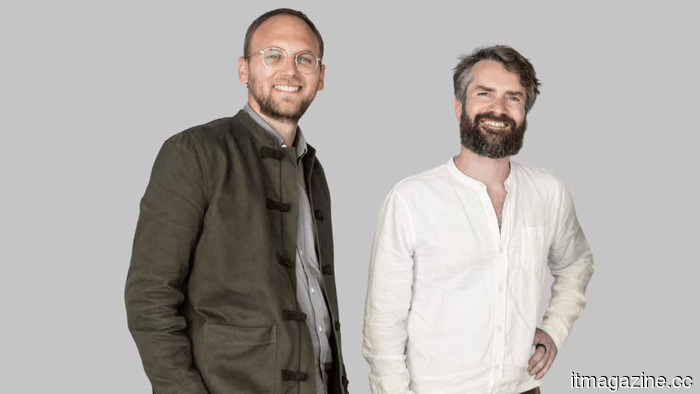 Alan secures €480 million in funding, led by Prosus, with a valuation of €5.5 billion.
Alan has secured €480 million, spearheaded by Prosus, at a €5.5 billion valuation, just months following its previous funding round, as the French insurtech focuses on AI-driven prevention.
Alan secures €480 million in funding, led by Prosus, with a valuation of €5.5 billion.
Alan has secured €480 million, spearheaded by Prosus, at a €5.5 billion valuation, just months following its previous funding round, as the French insurtech focuses on AI-driven prevention.
Chamath Palihapitiya: Meta mishandled its advantage in AI.
Chamath Palihapitiya mentioned on The Axios Show that Meta missed an opportunity with its AI leadership, the notion of a jobs apocalypse is a misconception, and that the incentives for his SPAC were not aligned properly.