

At the core of the AI revolution lies a significant human issue.
The age of AI began with striking demonstrations of its seemingly limitless potential, accompanied by the promise to revolutionize the world. Following OpenAI's instigation of the generative AI surge in 2022, the speed and magnitude of AI growth across nearly all major sectors have been remarkable.
Currently, while many of the initial promises are being fulfilled, the AI industry faces a self-imposed branding challenge. The concerning headlines predominantly revolve around expenditure. For instance, reports of $675 billion in infrastructure investments this year, alongside major AI firms like Nvidia exceeding $5 trillion in market capitalization, dominate business news. Regarding adoption, KPMG indicates that 93% of U.S. firms plan to implement AI in finance within the next 18 months. Conversely, headlines about layoffs suggest CEOs are reorganizing their companies for efficiency.
Such headlines are slowly framing AI as a public adversary, especially given the scarcity of reports like, “AI generated $X million in measurable new value for this company.” In reality, MIT discovered that 95% of enterprise AI pilot projects yield no measurable profit and loss impact. According to Cambridge’s 2026 Global AI in Financial Services Report, although 81% of organizations are embracing AI, only 14% view it as transformative. The funding is certainly abundant, but it appears that tangible results remain elusive.
Afrozy Ara, founder and CEO of LuminaData in San Jose, believes she understands the root of the problem, which her background allows her to perceive from a unique perspective different from many AI founders.
Before launching LuminaData, Ara accumulated over a decade of experience in enterprise consulting. She started at Mu Sigma, advising Fortune 500 firms on data and analytics strategies. Subsequently, she served as Vice President of Consulting at Incedo, where she led teams in helping large enterprises operationalize data in complex, multi-system environments.
Her background is not rooted in AI research; rather, it has exposed her to the challenging reality of integrating technology within organizations characterized by tangled processes, tribal knowledge, and interdepartmental coordination. This knowledge has shaped her fundamental thesis:
“AI adoption is not AI transformation,” Ara states. “This distinction remains unclear to most of the market, and the cost of overlooking it is significant.”
**The Coordination Challenge**
Ara's position may seem simply articulated, yet it holds significant implications for how companies should approach AI deployment. Each individual interacts with AI based on their curiosity and capabilities; granting unrestricted access to tools like Claude or ChatGPT invariably enhances their productivity. As people begin to uncover the possibilities, intelligence can be exchanged across different formats.
AI can exceptionally influence individual tasks—from drafting documents and emails to developing custom spreadsheets or coding. However, the growth of an organization can only keep pace with its slowest coordination point, and these points were originally designed for a slower operational environment. Such an environment is limited by handoffs and ownership boundaries, predicated on the notion that change would be infrequent and gradual.
“Organizations aren’t individuals,” Ara notes. “They comprise people working towards a shared objective. They require a common understanding and a collective vision of results, rather than individual efforts in isolated environments. That’s where adoption encounters barriers.”
According to Ara, these issues are commonplace in nearly every finance team she encounters. Such teams often utilize tools that operate effectively at distinct workflow points, resulting in a manual and undocumented process between those points, which inadvertently causes value leakage.
“I’ve witnessed order-to-cash processes where cash applications are automated, reports are visually appealing, dashboards are AI-generated, and yet DSO continues to rise each quarter. Even with functional tools, the process between them remains flawed, leading to impressive outputs from a dysfunctional input chain.”
**The Pipe Dream and the 99.999%**
Ara is candid regarding the disparity between Silicon Valley’s aspirations and the reality of enterprises.
“The startup scene revels in tales of one-person billion-dollar companies. While such a feat is possible, it often relies more on luck than a formula. For the 99.999% of businesses, that remains a fantasy.”
She asserts that real companies consist of an intricate, intertwined mix of personnel, technologies, and systems. Consequently, actual processes are significantly complicated. Additionally, tribal knowledge permeates this ecosystem; it starts in individuals' minds and quickly transitions to undocumented spreadsheets or established norms.
“When we mention ‘human in the loop,’ the humans involved must be able to keep pace with the AI,” Ara explains. “They need to comprehend AI’s actions, the rationale behind them, and their reliability. Coordination around AI-generated outputs is essential. This isn’t merely a technological hurdle; it’s a challenge of organizational design.”
LuminaData is built around addressing this somewhat paradoxical organizational design challenge.
**What LuminaData Actually Does**
Supported by Techstars, LuminaData has developed an AI transformation platform aimed at finance operations, particularly focusing on order-to-cash and record-to-report workflows. Their platform

Other articles
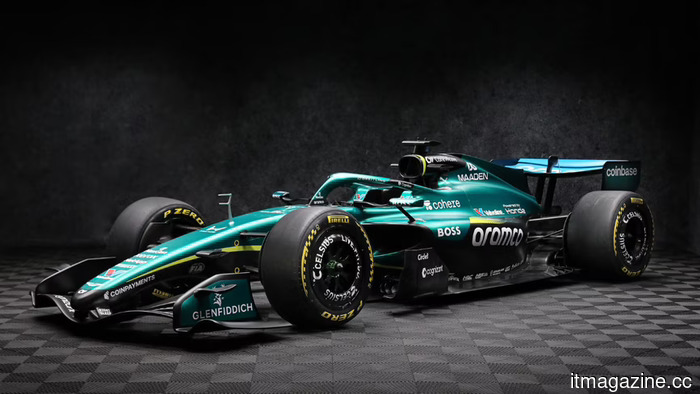 Aston Martin Aramco has appointed Zscaler as its worldwide cybersecurity partner.
The F1 team will implement Zscaler’s Zero Trust Exchange to protect car design, race strategy, and trackside telemetry. The branding will make its debut on the AMR26 in Austria.
Aston Martin Aramco has appointed Zscaler as its worldwide cybersecurity partner.
The F1 team will implement Zscaler’s Zero Trust Exchange to protect car design, race strategy, and trackside telemetry. The branding will make its debut on the AMR26 in Austria.
 At the core of the AI revolution lies a significant human issue.
Afrozy Ara, the founder of LuminaData, contends that the $675 billion AI infrastructure surge will not yield benefits until companies cease automating flawed workflows and begin reengineering the foundational processes, starting with financial operations.
At the core of the AI revolution lies a significant human issue.
Afrozy Ara, the founder of LuminaData, contends that the $675 billion AI infrastructure surge will not yield benefits until companies cease automating flawed workflows and begin reengineering the foundational processes, starting with financial operations.
 Airwallex secures $320 million with an $11 billion valuation.
Airwallex has successfully secured $320 million at an $11 billion valuation, an increase from its previous $8 billion valuation, and is shifting its focus towards autonomous finance and AI agents that handle transactions on your behalf.
Airwallex secures $320 million with an $11 billion valuation.
Airwallex has successfully secured $320 million at an $11 billion valuation, an increase from its previous $8 billion valuation, and is shifting its focus towards autonomous finance and AI agents that handle transactions on your behalf.
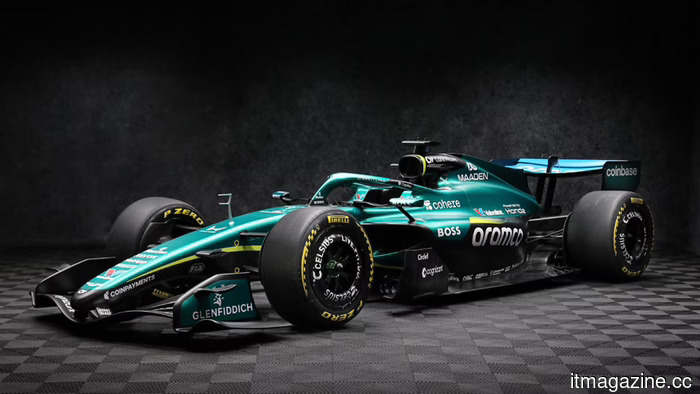 Aston Martin Aramco has appointed Zscaler as its global partner for cybersecurity.
The F1 team will utilize Zscaler’s Zero Trust Exchange to enhance the security of car design, race strategy, and trackside telemetry. The branding will be showcased on the AMR26 in Austria.
Aston Martin Aramco has appointed Zscaler as its global partner for cybersecurity.
The F1 team will utilize Zscaler’s Zero Trust Exchange to enhance the security of car design, race strategy, and trackside telemetry. The branding will be showcased on the AMR26 in Austria.
 Airwallex secures $320 million, reaching an $11 billion valuation.
Airwallex has secured $320 million at an $11 billion valuation, increasing from $8 billion, and is shifting its focus towards autonomous finance and AI agents that conduct transactions on your behalf.
Airwallex secures $320 million, reaching an $11 billion valuation.
Airwallex has secured $320 million at an $11 billion valuation, increasing from $8 billion, and is shifting its focus towards autonomous finance and AI agents that conduct transactions on your behalf.
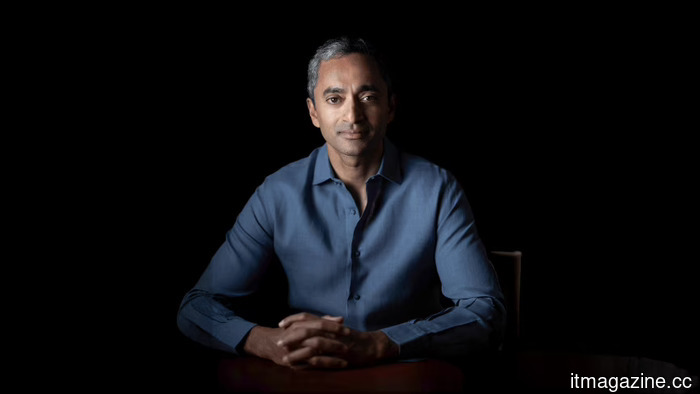 Chamath Palihapitiya: Meta mishandled its advantage in AI.
Chamath Palihapitiya mentioned on The Axios Show that Meta missed an opportunity with its AI leadership, the notion of a jobs apocalypse is a misconception, and that the incentives for his SPAC were not aligned properly.
Chamath Palihapitiya: Meta mishandled its advantage in AI.
Chamath Palihapitiya mentioned on The Axios Show that Meta missed an opportunity with its AI leadership, the notion of a jobs apocalypse is a misconception, and that the incentives for his SPAC were not aligned properly.
At the core of the AI revolution lies a significant human issue.
Afrozy Ara, the founder of LuminaData, contends that the $675 billion surge in AI infrastructure won't yield benefits until companies cease automating flawed workflows and instead focus on reengineering the underlying processes, starting with financial operations.