
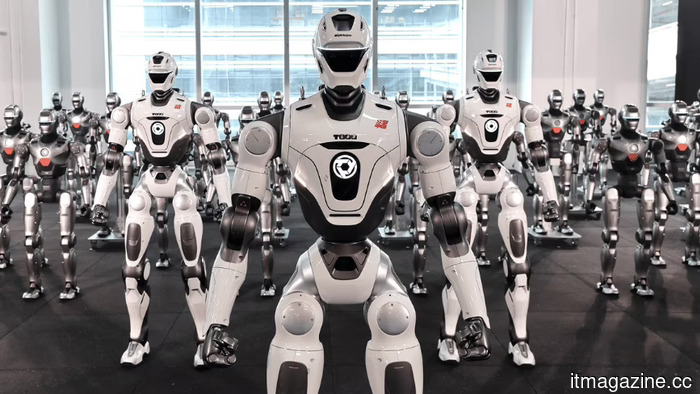
Hyundai robotic strike: union decides to challenge automation.
Hyundai workers have overwhelmingly voted to authorize a strike, marking the first time robots are part of the dispute. A potential Hyundai robot strike would challenge who holds power on the production floor as humanoid machines are introduced.
South Korea's largest automaker is poised for a confrontation regarding robots. Hyundai's union has voted to permit a strike, fueled by concerns that machines may replace its members, as reported by the Financial Times. The workers seek a voice in how AI and automation are integrated into production.
The vote was decisive. Out of the union's 39,668 members, 92% supported the strike after 11 rounds of unsuccessful wage negotiations. While the union has not yet called for a walkout, they now possess the mandate to do so.
This significant result comes from a prominent union. Hyundai is one of South Korea’s largest private employers, and its Ulsan factory is among the biggest car manufacturing facilities globally. When this union takes action, it captures national attention.
A familiar conflict, with a new dimension
The latest updates from the EU tech scene include insights from our founder Boris and some questionable AI-generated artwork. It’s free and delivered to your inbox weekly. Sign up today! Many aspects of the dispute are conventional. The union is demanding a larger performance bonus, increased base wages, and a later retirement age, issues that Korean automakers frequently face.
However, the context has intensified. South Korea's automotive sector is wrestling with tariffs, declining demand, and strong competition from Chinese manufacturers. Management aims for flexibility, while workers seek job security. The introduction of robots has sharpened this conflict.
A new demand has arisen. The union is seeking guarantees regarding job security and working conditions as Hyundai incorporates AI and robots. This concern was not part of previous wage discussions, but it has become a central issue this time.
The robot that caused concern
The catalyst for this situation is named Atlas. Hyundai owns Boston Dynamics, the U.S. company behind the humanoid robot, which revealed Atlas's manufacturing potential at CES in January. This announcement sent shockwaves through the industry.
Hyundai is committed; it acquired a controlling interest in Boston Dynamics in 2021 and is pushing the company towards factory applications. The current iteration of Atlas can lift loads of approximately 100 pounds and work extended hours. On paper, it matches the roles currently performed by Hyundai's workforce.
The figures drive home the anxiety. Hyundai plans to produce as many as 30,000 Atlas units annually by 2028, with over 25,000 designated for its Hyundai and Kia plants. Production will commence at a new robot factory in Savannah, Georgia.
The company presents a soft approach. Initially, Atlas will handle dangerous, monotonous, and physically demanding tasks like parts sequencing before proceeding to assembly. However, workers interpret this differently. The Korean Metal Workers’ Union highlights that each robot will cost less than two years of a worker’s salary, which sounds less like an assistant and more like a replacement.
This discrepancy between the company's perspective and the union's encapsulates the overall dispute. Hyundai emphasizes safety and labor shortages, while the union focuses on jobs and negotiation power. Both are referring to the same machine.
“No robot without union agreement”
The union has taken a firm stance. “Not a single humanoid robot will be allowed on the production lines without a labor-management agreement,” they declared. They are seeking a veto, rather than simply being informed.
This demand reframes the entire discussion. The conflict is no longer just about compensation; it revolves around who makes decisions regarding the replacement of humans with machines. Hyundai wishes to implement changes on its own schedule, while the union insists on being included in that decision-making process.
The union also possesses bargaining power. Hyundai's employees have previously gone on strike, and a walkout could halt thousands of vehicle productions each day. This influence is precisely why the demand regarding robots carries significant weight; the company cannot afford to simply wait it out.
A test for Korea
This has emerged in a country already reevaluating the relationship between labor and technology. Unions at Samsung have become more assertive, and the recent Samsung pay agreement indicates a shift in how Korean workers negotiate. Hyundai's robot-related conflict further advances this trend.
Politicians are closely observing the situation. The South Korean government has posited that the benefits of AI should be distributed to the public, rather than just to shareholders. A strike concerning robots at the nation’s largest automaker puts this theoretical proposition to the test.
There is a demographic dimension to this issue. South Korea's rapidly aging population means automakers argue that robots will fill labor voids that humans cannot. However, the union is skeptical of the narrative of pure labor shortages and perceives a company eager to reduce costs, disguised as preparing for the future.
The imminent confrontation
Hyundai is not alone in this endeavor; across Asia, factories are racing to introduce humanoid robots. From Chinese smartphone manufacturers pivoting toward robotics to
Other articles
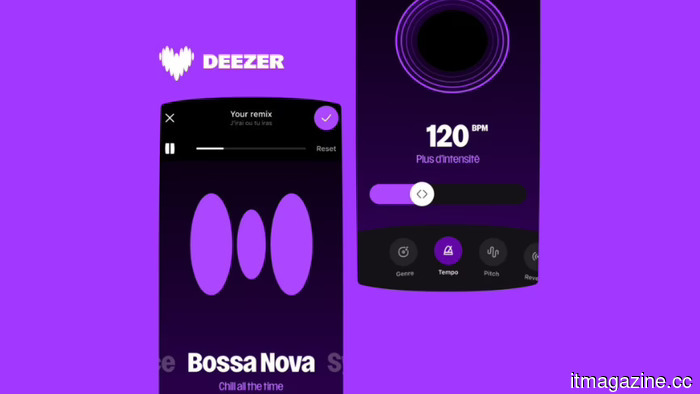 Deezer introduces a remix tool that operates without AI and compensates artists for each stream.
Deezer's Remix Lab enables fans to remix songs with the approval of artists using in-app tools, rather than AI, and provides royalties for every stream of the remixed songs.
Deezer introduces a remix tool that operates without AI and compensates artists for each stream.
Deezer's Remix Lab enables fans to remix songs with the approval of artists using in-app tools, rather than AI, and provides royalties for every stream of the remixed songs.
 Laifen Día Prime
Explore Laifen's Prime Day offers, featuring a 40% discount on the SE 2 Hair Dryer and P3 Pro Electric Shaver—top-notch grooming devices aimed at streamlining your everyday tasks.
Laifen Día Prime
Explore Laifen's Prime Day offers, featuring a 40% discount on the SE 2 Hair Dryer and P3 Pro Electric Shaver—top-notch grooming devices aimed at streamlining your everyday tasks.
 The new trailer for One Piece has arrived, but why is Netflix choosing to remake it at this time?
The first season of Netflix's One Piece remake adapts only 50 chapters of the manga, featuring the original voice of Luffy, Mayumi Tanaka, making a comeback.
The new trailer for One Piece has arrived, but why is Netflix choosing to remake it at this time?
The first season of Netflix's One Piece remake adapts only 50 chapters of the manga, featuring the original voice of Luffy, Mayumi Tanaka, making a comeback.
 The House votes on legislation regarding energy expenses for AI data centers.
Congress is urging Big Tech to take on the energy expenses associated with AI data centers. This week, a House committee will vote on a proposal to prevent the costs of AI expansion from being passed on to household electricity bills.
The House votes on legislation regarding energy expenses for AI data centers.
Congress is urging Big Tech to take on the energy expenses associated with AI data centers. This week, a House committee will vote on a proposal to prevent the costs of AI expansion from being passed on to household electricity bills.
 I would take advantage of this 8BitDo Prime Day keyboard offer before purchasing another dull gaming keyboard.
8BitDo’s mechanical keyboard, inspired by Xbox, is now available at a discounted price for Prime Day. It combines a transparent green design that evokes nostalgia, wireless connectivity, hot-swappable switches, and an 87-key layout, making it a more appealing option for upgrading your desk.
I would take advantage of this 8BitDo Prime Day keyboard offer before purchasing another dull gaming keyboard.
8BitDo’s mechanical keyboard, inspired by Xbox, is now available at a discounted price for Prime Day. It combines a transparent green design that evokes nostalgia, wireless connectivity, hot-swappable switches, and an 87-key layout, making it a more appealing option for upgrading your desk.
 By 2028, the expenses associated with AI coding may surpass those of developer salaries.
Gartner cautions that by 2028, expenses related to AI coding will surpass the average salary of a developer due to the rise in token utilization and consumption-based pricing.
By 2028, the expenses associated with AI coding may surpass those of developer salaries.
Gartner cautions that by 2028, expenses related to AI coding will surpass the average salary of a developer due to the rise in token utilization and consumption-based pricing.
Hyundai robotic strike: union decides to challenge automation.
Workers at Hyundai voted 92% in favor of authorizing a strike, seeking control over the robots that are poised to inundate its factories. A strike involving Hyundai robots may be imminent.