
Mistral OCR 4: an affordable, self-hosted document AI solution.
Mistral OCR 4 perceives a document as a structured map rather than a mere block of text. It is cost-effective, supports 170 languages, and can be operated entirely on your own servers. As Europe’s AI frontrunner, Mistral focuses on enhancing enterprise back office operations.
On June 23, the French company introduced Mistral OCR 4, a system designed to convert documents into structured data, as stated in a blog post. The model remains compact and concentrated on a significant objective: tackling the world's administrative paperwork.
Optical character recognition has existed for many years. The unique aspect of this model is what it produces. Earlier systems converted pages into simple text, while OCR 4 provides a detailed map of the page with each segment labeled and positioned. According to Mistral, independent evaluators preferred this approach over every competing system tested, achieving an average success rate of 72%.
Transitioning from flat pages to structured maps, OCR 4 introduces three innovations simultaneously. It outlines bounding boxes for every component, helping software identify the exact location of each line. It categorizes each segment by type, identifying titles, tables, equations, and even signatures, and includes a confidence score for each page and word, indicating which areas need human verification.
Mistral noted that customers prioritized the bounding boxes feature above all others, as they allow an application to pinpoint the precise origin of an answer. When combined with the identified block types and confidence scores, they support citations, redactions, and human reviews. The output is also formatted in clean markdown.
This change is important due to what it enables next. A chatbot may summarize a contract, but an agent needs to file it. For that, software must differentiate between a signature and a subtotal while also knowing their positions. OCR 4 offers this framework, unlike older tools that provided only a flat block of text.
OCR 4 marks a distinct shift from its predecessor. While OCR 3 aimed to convert pages into tidy text and tables, OCR 4 delivers the entire structural layout. Each block is associated with a location, type, and confidence score, allowing downstream applications to comprehend not only what a document conveys but also how it is organized.
Targeting back-office inefficiencies, OCR 4 aids retrieval systems, particularly the “RAG” pipelines that empower chatbots to access a company’s files. It equips AI agents with the structure necessary to perform actions, such as completing forms, processing invoices, and conducting compliance checks.
Its capabilities are extensive, as the model can process PDFs, Word documents, PowerPoint presentations, and OpenDocument files and supports 170 languages from 10 different groups. Mistral claims it performs well with lower-resource languages where competitors struggle. Early adopters are utilizing it to digitize archives, convert invoices into structured fields, and extract clean text from scientific documents.
Moreover, OCR 4 integrates with Mistral’s newly launched Search Toolkit, an open-source framework introduced at the AI Now Summit. The model’s structured output directly feeds into this pipeline, aiming to provide developers with citation-ready inputs, ensuring answers are traceable back to their source pages.
Speed is also a selling point. Anaqua, which manages intellectual property filings, reported that the model operates approximately four times faster per page than its previous solution. In high-volume docketing scenarios, where deadlines are critical, speed can determine workflow scalability.
This development is part of Mistral’s broader strategy to expand beyond chatbot technology. The company already supplies industrial AI solutions to clients like Airbus, BMW, and EDF, and its document management efforts represent a similar enterprise focus.
A key feature appealing to European clients is where the model can operate. OCR 4 is compact enough to reside in a single container, allowing companies to host it on their own infrastructure and keep sensitive documents secure.
This aligns with Mistral's core proposition of positioning itself as Europe’s sovereign alternative to American AI. The option to self-host addresses data residency concerns stemming from Europe’s stricter sovereignty regulations. For banks, hospitals, and governments, maintaining control over documentation within national borders is crucial.
Its pricing is competitive as well. The API is priced at $4 per 1,000 pages, which drops to $2 in batch processing. A more advanced Document AI product, which customizes output into specific fields, costs $5 per 1,000 pages. One client, financial-research company Rogo, reported that it achieved comparable accuracy to its previous provider at approximately an eighth of the cost.
Distribution is also comprehensive. OCR 4 can be accessed through Mistral’s own platform, as well as Amazon SageMaker and Microsoft’s Foundry, with integration into Snowflake expected soon. Mistral, currently valued around €20 billion amid new funding discussions, is ensuring that its tools are compatible with existing cloud services used by its clients.
Microsoft recognized the launch as a crucial milestone in its partnership with Mistral, which enhances
Other articles
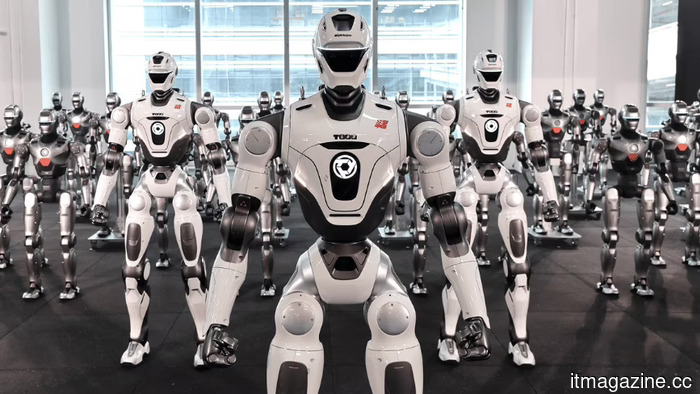 Hyundai robotic strike: union decides to challenge automation.
Workers at Hyundai voted 92% in favor of authorizing a strike, seeking control over the robots that are poised to inundate its factories. A strike involving Hyundai robots may be imminent.
Hyundai robotic strike: union decides to challenge automation.
Workers at Hyundai voted 92% in favor of authorizing a strike, seeking control over the robots that are poised to inundate its factories. A strike involving Hyundai robots may be imminent.
 House votes on legislation regarding energy costs for AI data centers.
Congress is looking to have Big Tech responsible for the energy expenses of AI data centers. This week, a House committee is voting to ensure that the costs related to the AI expansion do not get passed on to household electricity bills.
House votes on legislation regarding energy costs for AI data centers.
Congress is looking to have Big Tech responsible for the energy expenses of AI data centers. This week, a House committee is voting to ensure that the costs related to the AI expansion do not get passed on to household electricity bills.
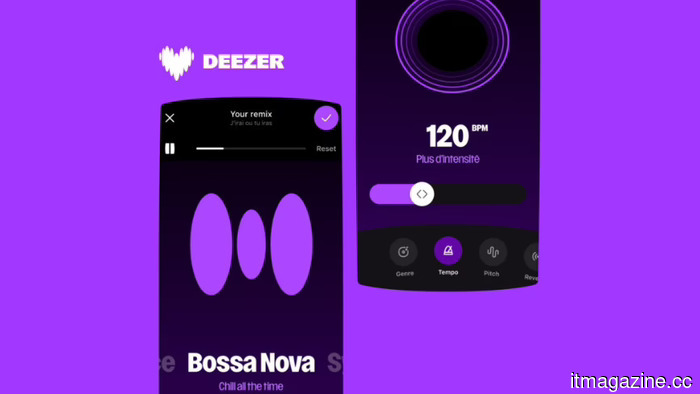 Deezer introduces a remix tool that operates without AI and compensates artists for each stream.
Deezer's Remix Lab allows fans to remix songs with the artists' approval using tools within the app, rather than relying on AI, and ensures that royalties are paid for each stream of the remixed songs.
Deezer introduces a remix tool that operates without AI and compensates artists for each stream.
Deezer's Remix Lab allows fans to remix songs with the artists' approval using tools within the app, rather than relying on AI, and ensures that royalties are paid for each stream of the remixed songs.
 Riviera Partners has purchased the AI startup recruitment firm Lateral Labs as the competition for talent transforms the executive search landscape.
Riviera Partners, an executive search firm, has purchased Lateral Labs, an AI recruitment startup with clients such as Cursor and ElevenLabs.
Riviera Partners has purchased the AI startup recruitment firm Lateral Labs as the competition for talent transforms the executive search landscape.
Riviera Partners, an executive search firm, has purchased Lateral Labs, an AI recruitment startup with clients such as Cursor and ElevenLabs.
 By 2028, the expenses associated with AI coding may surpass those of developer salaries.
Gartner cautions that by 2028, expenses related to AI coding will surpass the average salary of a developer due to the rise in token utilization and consumption-based pricing.
By 2028, the expenses associated with AI coding may surpass those of developer salaries.
Gartner cautions that by 2028, expenses related to AI coding will surpass the average salary of a developer due to the rise in token utilization and consumption-based pricing.
 The projection for humanoid robots in China has increased to 50,000.
Morgan Stanley has raised its forecast for humanoid robots in China to 50,000 this year, marking the second increase as these machines are now being utilized in actual factories and stores.
The projection for humanoid robots in China has increased to 50,000.
Morgan Stanley has raised its forecast for humanoid robots in China to 50,000 this year, marking the second increase as these machines are now being utilized in actual factories and stores.
Mistral OCR 4: an affordable, self-hosted document AI solution.
Mistral OCR 4 transforms documents into structured data, operates on your own servers, and begins at $2 for every 1,000 pages. It's Europe's choice for back-office operations.