
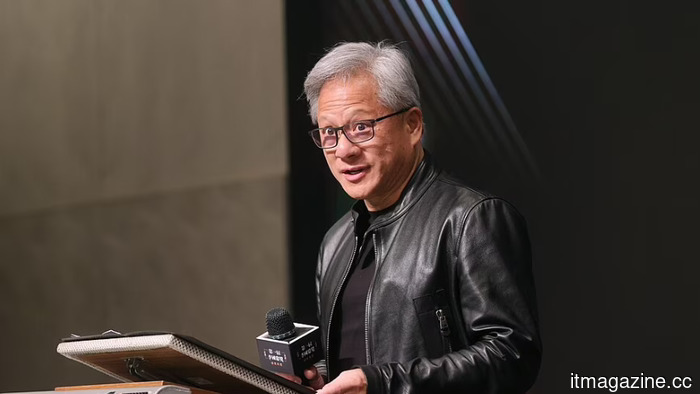
Nvidia CEO Jensen Huang believes that smuggled data centers are a futile approach, emphasizing that national security must take precedence.
**TL;DR** Jensen Huang informed shareholders that national security is the top priority and that data centers using smuggled Nvidia chips would not be able to operate effectively without support.
During a session following Nvidia's annual stockholder meeting on Wednesday, CEO Jensen Huang emphasized that the company would prioritize U.S. national interests over commercial opportunities if there were conflicts. He stated, “National security comes first” and addressed the issue of chip smuggling, asserting that efforts to build AI data centers with illegally obtained Nvidia hardware would ultimately fail. “Advanced AI data centers are large integrated systems that depend on trusted hardware, software, networking, and ongoing support,” he explained, labeling the attempt to construct these centers with smuggled components as a futile endeavor.
Huang made it clear that companies attempting to smuggle Nvidia chips or systems into countries with export restrictions, such as China, would struggle to get the hardware operational because Nvidia would not extend support or repair services. He argued that without this ongoing relationship, the systems would not meet the operational standards necessary for modern AI.
His comments come amid increasing enforcement actions. In March, Wally Liaw, co-founder of Supermicro, was indicted for allegedly conspiring to smuggle approximately $2.5 billion worth of Nvidia-equipped servers to China via a front company in Southeast Asia, utilizing heat guns to alter serial numbers and creating dummy servers to mislead auditors. Liaw has pleaded not guilty, with the trial scheduled for November.
Taiwan also initiated its first criminal prosecution for AI chip smuggling in May, conducting raids at 12 locations and seeking detention for three individuals accused of using counterfeit documents to send Nvidia servers to mainland China. As a result of this crackdown, grey-market prices for Nvidia's B300 servers in China have soared to about one million dollars, nearly double the U.S. list price.
Huang's remarks followed a recent move by the U.S. government to order Anthropic to halt its most advanced AI models, Fable 5 and Mythos 5, citing national security concerns over a reported jailbreak. Anthropic, which utilizes Nvidia chips for training, described the action as excessive, highlighting the U.S. government's increasingly stringent stance on sensitive AI technology.
Nvidia's relationship with China has been declining steadily due to export controls implemented since 2022. In fiscal 2026, about nine percent of the company’s revenue came from China and Hong Kong, down from 13 percent the previous year. Although the Trump administration authorized sales of Nvidia's H200 chip to approved Chinese firms last year, Huang reassured shareholders that the company has not realized any revenue from those licenses and is uncertain whether China will permit imports.
On the business front, Huang proclaimed that the question of AI return on investment “has been answered,” citing GitHub, where AI-generated code has led to nearly triple the number of pull requests this year, as proof that effective AI output directly drives demand for additional computing power.
“Nvidia systems may not be the least expensive to purchase, but Nvidia produces the lowest-cost tokens, the highest token throughput, and the most revenue,” stated Huang. In fiscal 2026, the company generated over $96 billion in free cash flow on revenues of $216 billion.
He reiterated Nvidia’s commitment to returning 50 percent of its free cash flow to investors via share buybacks and dividends in the coming years. The board approved an additional $80 billion for buybacks in May and increased the quarterly dividend from one cent to 25 cents per share.
During the meeting, shareholders re-elected all ten board members, approved the executive compensation plan in an advisory vote, and passed an outside proposal requiring all shareholder votes to succeed by a simple majority. The company also ratified PricewaterhouseCoopers as its auditor for fiscal 2027.
The characterization of the situation as a “dead end” is a strategic move. Huang is reassuring Washington that Nvidia is taking export controls seriously while simultaneously conveying to customers in restricted markets that purchasing smuggled hardware is a poor investment. Whether this message truly reaches the brokers and intermediaries routing billions of dollars' worth of Nvidia servers through Southeast Asia remains uncertain.
Other articles
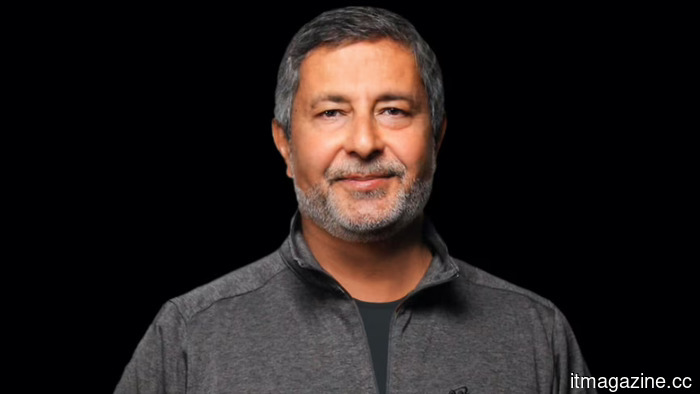 Micron's revenue increased fourfold as the demand for AI memory has driven gross margins to surpass 81 percent.
Micron reported $41 billion in revenue for Q3, marking a fourfold increase compared to the previous year, as HBM4 chips for Nvidia and Google pushed gross margins over 81 percent for the first time.
Micron's revenue increased fourfold as the demand for AI memory has driven gross margins to surpass 81 percent.
Micron reported $41 billion in revenue for Q3, marking a fourfold increase compared to the previous year, as HBM4 chips for Nvidia and Google pushed gross margins over 81 percent for the first time.
 Save the date, Batman: Caped Crusader Season 2 is set to launch in a single big binge drop this July.
The first trailer for Season 2 of Batman: Caped Crusader highlights The Riddler and concludes with a short glimpse of The Joker.
Save the date, Batman: Caped Crusader Season 2 is set to launch in a single big binge drop this July.
The first trailer for Season 2 of Batman: Caped Crusader highlights The Riddler and concludes with a short glimpse of The Joker.
 Tissium secures €60 million for sutureless nerve repair.
France's Tissium has secured €60 million to introduce COAPTIUM CONNECT, the sole FDA-approved sutureless nerve repair system, to operating rooms in the United States.
Tissium secures €60 million for sutureless nerve repair.
France's Tissium has secured €60 million to introduce COAPTIUM CONNECT, the sole FDA-approved sutureless nerve repair system, to operating rooms in the United States.
 Runpod achieves a $1 billion valuation after raising $100 million.
Runpod has successfully secured $100 million at a valuation of $1 billion, marking a tenfold increase over the past two years, and has stated that it rejected acquisition offers exceeding $500 million.
Runpod achieves a $1 billion valuation after raising $100 million.
Runpod has successfully secured $100 million at a valuation of $1 billion, marking a tenfold increase over the past two years, and has stated that it rejected acquisition offers exceeding $500 million.
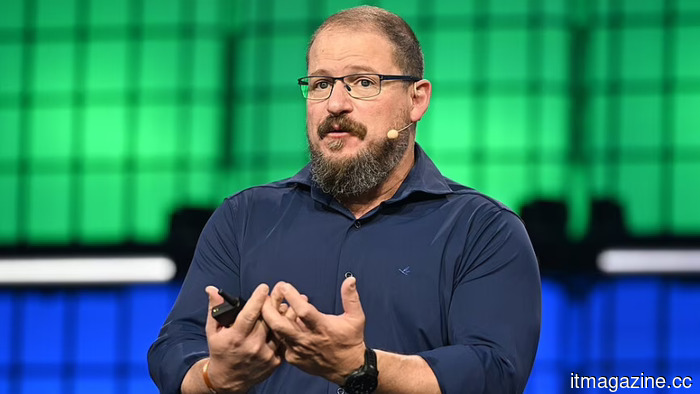 Qualcomm secures Meta as its first identified customer for the Dragonfly data centre chips.
Qualcomm announced its Dragonfly C1000 data center chip, with Meta being its first specified customer, and confirmed its acquisition of AI startup Modular for $3.9 billion.
Qualcomm secures Meta as its first identified customer for the Dragonfly data centre chips.
Qualcomm announced its Dragonfly C1000 data center chip, with Meta being its first specified customer, and confirmed its acquisition of AI startup Modular for $3.9 billion.
 Google Wallet has the potential to expedite your experience at airport security through TSA PreCheck's Touchless ID feature.
TSA and Google Wallet have introduced a simplified opt-in feature for PreCheck Touchless ID, allowing travelers to share their digital ID and boarding pass, enabling them to pass through security without needing a physical ID.
Google Wallet has the potential to expedite your experience at airport security through TSA PreCheck's Touchless ID feature.
TSA and Google Wallet have introduced a simplified opt-in feature for PreCheck Touchless ID, allowing travelers to share their digital ID and boarding pass, enabling them to pass through security without needing a physical ID.
Nvidia CEO Jensen Huang believes that smuggled data centers are a futile approach, emphasizing that national security must take precedence.
Jensen Huang informed shareholders that Nvidia would focus on US national security over sales and described smuggled chip data centers as impractical.