
Tissium secures €60 million for sutureless nerve repair.
Tissium has secured €60M to introduce the world’s only FDA-approved sutureless nerve repair system into operating rooms in the US. The Paris-based medtech company aims to replace the traditional surgeon's needle with a small application of light-cured adhesive.
For repairing severed nerves, the standard procedure has seen little change over the years. Surgeons typically stitch the damaged ends together using a microscope, hoping the needle will not harm the tissue it intends to heal. However, the outcomes are inconsistent; a recent meta-analysis indicated that only 54% of patients regain significant function post-surgery.
Tissium believes it has a superior alternative. The company has just concluded a €60M funding round, which will help its sutureless technology enter US operating rooms, with its first product already available for sale there.
The funding consists of two parts: the first is a €30M Series D2 round, finalized at the end of 2025, led by an undisclosed family-owned investor from the US, along with contributions from new family offices, high-net-worth individuals, and existing investors. The second part is a credit line of up to €30M from the European Investment Bank, disbursed in three €10M tranches, contingent on meeting commercial, clinical, and financing milestones. The deal comprises both dilutive and venture debt, with Tissium expecting to access the first tranche before the end of June.
This funding brings Tissium’s total financing to over €200M since its inception in 2013. Its previous funding round, a €50M Series C, was led by Cathay Health in 2024, with support from the French life-sciences investor Sofinnova.
The challenges posed by needle use in nerve surgery are significant. The procedure is intricate; the tissue is soft, and every stitch results in additional trauma. Introducing a needle can lead to scarring of the fibers that need to regenerate, contributing to suboptimal recovery rates.
Tissium’s strategy is to eliminate the need to pierce the nerve entirely. Its leading product, COAPTIUM CONNECT, consists of a small 3D-printed chamber that encircles the two severed ends without penetrating them. The surgeon applies a liquid polymer around the joint, which hardens with a blue-light pen. This seal stabilizes the nerve while it heals and ultimately dissolves, leaving no residue.
The key asset for Tissium lies in its proprietary material, described as a biomorphic programmable polymer. This synthetic adhesive does not contain any human or animal tissue, unlike competing products that depend on donor materials. Conceptually, this platform can be adapted for a variety of repair applications.
Although the clinical data available is limited, it is compelling. In a study with 12 patients suffering from digital nerve injuries, all participants regained complete mobility and reported no pain a year post-surgery. Based on this evidence, COAPTIUM CONNECT received FDA De Novo authorization and became available in the US in November 2025.
The company asserts that it is the only FDA-approved sutureless nerve repair system of its kind, which is a central element of its marketing strategy and the reason investors are willing to support a device with such a brief performance history.
Tissium has a longstanding history; it was co-founded by Christophe Bancel and Maria Pereira in 2013. Pereira developed the core polymer during her PhD at the MIT Portugal Program, collaborating in laboratories with Robert Langer and Jeffrey Karp. The company operates out of Paris, has a US presence in Cambridge, Massachusetts, and a manufacturing facility in Roncq, northern France.
“We are currently executing our transition into a commercially active medtech company,” said CEO and co-founder Christophe Bancel. This lengthy development period is typical for medical devices, where regulatory processes take time and validation requires years. This context clarifies the nature of the current funding round—Tissium is no longer in the invention phase but is instead focused on sales.
The potential market is significant and expanding. The global market for peripheral nerve repair devices was valued at approximately $13.4 billion in 2025, with projections suggesting it could reach $30.5 billion by 2033, growing at an annual rate of about 15%. Increasing trauma cases and the trend towards gentler, absorbable repairs are pushing this growth.
However, Tissium will face competition. Axogen, a US firm, currently leads with a market capitalization around $1.67 billion and received full FDA biologics approval for its main nerve graft in December 2025. Integra LifeSciences also holds strong positions in nerve conduits and wraps, although both companies rely on donor-derived materials and still require sutures to complete their procedures. Tissium’s gamble is that surgeons will favor a synthetic solution that doesn’t invade the nerve’s interior.
The arrangement of the deal reflects trends in European medtech financing. The European Investment
Other articles
 Micron's revenue increased fourfold due to the demand for AI memory, resulting in gross margins surpassing 81 percent.
Micron reported $41 billion in revenue for Q3, a fourfold increase compared to the previous year, as HBM4 chips for Nvidia and Google contributed to gross margins exceeding 81 percent for the first time.
Micron's revenue increased fourfold due to the demand for AI memory, resulting in gross margins surpassing 81 percent.
Micron reported $41 billion in revenue for Q3, a fourfold increase compared to the previous year, as HBM4 chips for Nvidia and Google contributed to gross margins exceeding 81 percent for the first time.
 Micron's revenue increased fourfold as the demand for AI memory drives gross margins over 81 percent.
Micron reported $41 billion in revenue for Q3, marking a fourfold increase compared to the previous year, as HBM4 chips for Nvidia and Google propelled gross margins above 81 percent for the first time.
Micron's revenue increased fourfold as the demand for AI memory drives gross margins over 81 percent.
Micron reported $41 billion in revenue for Q3, marking a fourfold increase compared to the previous year, as HBM4 chips for Nvidia and Google propelled gross margins above 81 percent for the first time.
 Micron's revenue increased fourfold as the demand for AI memory has driven gross margins to surpass 81 percent.
Micron reported $41 billion in revenue for Q3, marking a fourfold increase compared to the previous year, as HBM4 chips for Nvidia and Google pushed gross margins over 81 percent for the first time.
Micron's revenue increased fourfold as the demand for AI memory has driven gross margins to surpass 81 percent.
Micron reported $41 billion in revenue for Q3, marking a fourfold increase compared to the previous year, as HBM4 chips for Nvidia and Google pushed gross margins over 81 percent for the first time.
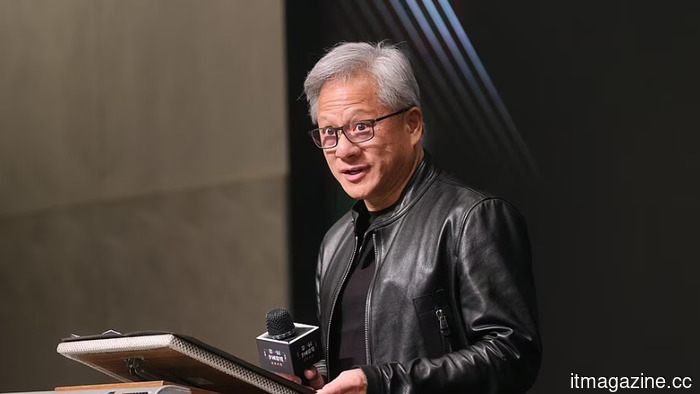 Nvidia's CEO Jensen Huang asserts that illicit data centers are a futile endeavor and that national security should take precedence.
Jensen Huang informed shareholders that Nvidia would place US national security above sales and described smuggled chip data centers as unfeasible.
Nvidia's CEO Jensen Huang asserts that illicit data centers are a futile endeavor and that national security should take precedence.
Jensen Huang informed shareholders that Nvidia would place US national security above sales and described smuggled chip data centers as unfeasible.
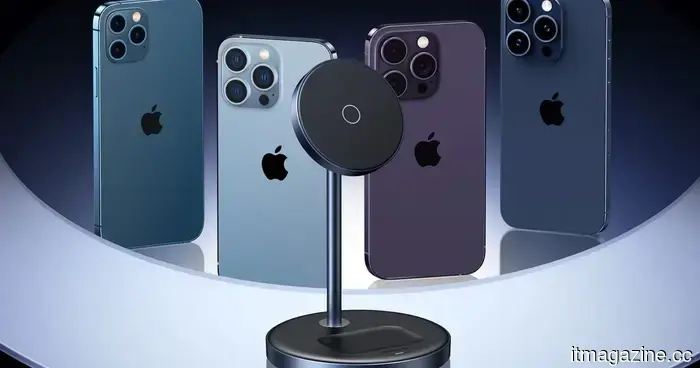 I would suggest these Prime Day charger deals before the prices rise again.
Prime Day has reduced prices on practical charging accessories from Anker, Ugeen, and Belkin, which feature GaN power bricks and magnetic charging stands.
I would suggest these Prime Day charger deals before the prices rise again.
Prime Day has reduced prices on practical charging accessories from Anker, Ugeen, and Belkin, which feature GaN power bricks and magnetic charging stands.
 Save the date, Batman: Caped Crusader Season 2 is set to launch in a single big binge drop this July.
The first trailer for Season 2 of Batman: Caped Crusader highlights The Riddler and concludes with a short glimpse of The Joker.
Save the date, Batman: Caped Crusader Season 2 is set to launch in a single big binge drop this July.
The first trailer for Season 2 of Batman: Caped Crusader highlights The Riddler and concludes with a short glimpse of The Joker.
Tissium secures €60 million for sutureless nerve repair.
France's Tissium has secured €60 million to introduce COAPTIUM CONNECT, the sole FDA-approved sutureless nerve repair system, to operating rooms in the United States.