
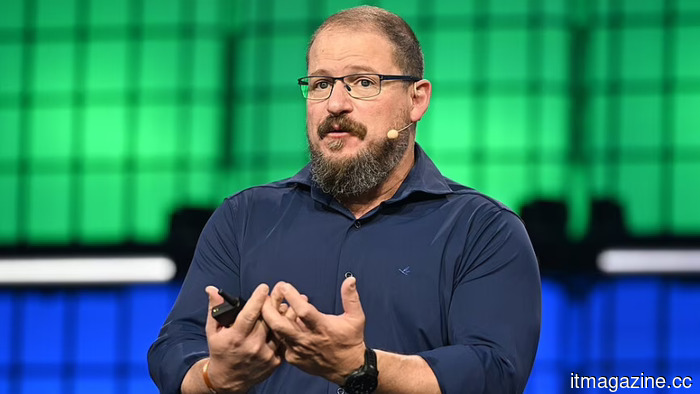
Qualcomm secures Meta as its first identified customer for the Dragonfly data centre chips.
Qualcomm has announced Meta as the inaugural customer for its Dragonfly C1000 data center chip, which is scheduled for release in 2028, and confirmed its acquisition of Modular for $3.9 billion. This partnership signals Qualcomm's serious intent to contend in the AI infrastructure space. The announcement was made during its investor day in New York, where it also introduced the new AI300 accelerator chip.
The Dragonfly C1000 is a versatile server processor intended for use in data centers alongside Qualcomm’s AI accelerator chips. Meta has pledged to utilize the C1000 and its future iterations across its operations, though the chip's availability is set for 2028, indicating this collaboration is a long-term commitment instead of an immediate rollout.
The Dragonfly brand, first unveiled at Computex in early June, encompasses three categories of products: data center CPUs, AI inference accelerators, and custom silicon tailored for hyperscalers. The details about these products were further elaborated during Wednesday's event.
On the accelerator front, Qualcomm introduced the AI300 chip to complement the existing AI200 and AI250 models. The AI200, built on Qualcomm’s Hexagon neural processing unit technology and featuring direct liquid cooling with up to 768GB of LPDDR memory, is slated for initial customer shipments later this year, with the AI250 expected in 2027.
These accelerators are optimized for inference—executing pre-trained AI models at scale rather than training new models. Qualcomm asserts that its extensive history in mobile chip design provides an edge in power efficiency, a crucial factor given the pressures on electricity grids worldwide. However, the effectiveness of this mobile expertise in data center environments remains to be validated at a larger scale.
The Modular acquisition, which was reported by TNW to be nearing completion earlier this week, is now confirmed as an all-stock deal valued at approximately four billion dollars. Qualcomm will issue around 19 million shares to the owners of Modular, and the transaction is anticipated to finalize in the latter half of this year.
Modular is known for developing the Mojo programming language and the MAX inference engine, which allows AI models to operate across various chips from Nvidia, AMD, Intel, and Qualcomm without necessitating code rewrites. This directly challenges Nvidia’s CUDA platform, which has kept AI developers reliant on Nvidia hardware for two decades. Overcoming this lock-in is a primary obstacle for any competitor looking to rival Nvidia in AI infrastructure.
The strategic reasoning behind this acquisition is clear. While Qualcomm can create competitive chips, the absence of a supportive software ecosystem for developers can hinder their adoption. Modular’s cross-platform tools could provide the developer access that Qualcomm currently lacks.
CEO Cristiano Amon presented the acquisition as part of a broader industry shift towards open, multi-vendor architectures, positioning Qualcomm against Nvidia by emphasizing flexibility instead of loyalty demanded by CUDA.
Qualcomm's ambitions are substantial, but its experience in the data center market is limited. The company primarily earns its revenue from smartphone processors and modems, and its prior attempt to enter the server market with the Centriq processor in 2017 was unsuccessful. The current effort has gained more institutional backing, a confirmed hyperscaler partnership with Meta, and a distinct market opportunity in AI inference, although a significant gap still exists between announcements and actual revenue generation.
The partnership with Meta is significant for its implications regarding diversification. Currently, Meta relies mostly on Nvidia GPUs for its AI infrastructure while also investing in its custom MTIA chips. By integrating Qualcomm into its supply chain, Meta appears to seek additional supplier options for scaling inference, rather than replacing Nvidia, which recently established a multiyear strategic alliance with Meta.
Qualcomm’s stock has risen by around 30 percent this year, driven by the belief that AI will provide an additional growth avenue beyond smartphones. The investor day aimed to translate this anticipation into a concrete plan. With the Modular acquisition adding a necessary software component, Meta serving as the first major customer, and the AI200 nearing shipments, the foundational elements seem to be coming together.
However, whether these elements will manifest effectively depends on the execution in the upcoming two years. The C1000 won't be available until 2028, the Modular deal is still pending closure, and there are no published performance benchmarks for the AI accelerator lineup in comparison to Nvidia’s current or forthcoming hardware. Although Qualcomm is taking steps to enter the market, it faces a competitive landscape where Nvidia holds a significant advantage and where every major cloud provider is also developing custom silicon.
Other articles
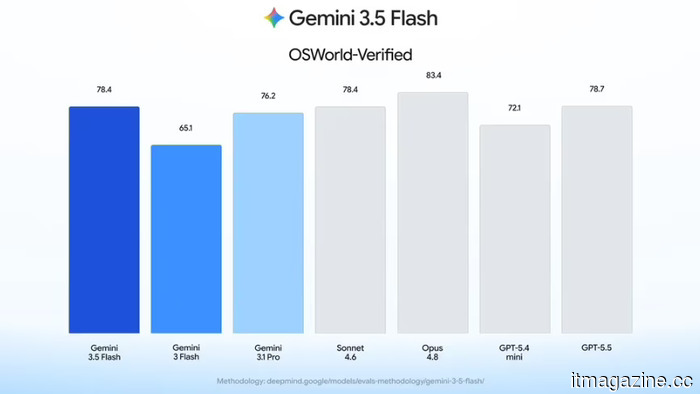 Gemini 3.5 Flash is now capable of viewing and managing your screen, and Google aims for businesses to have confidence in it.
Google has integrated computer usage into Gemini 3.5 Flash, moving away from the standalone model and incorporating enterprise safety measures.
Gemini 3.5 Flash is now capable of viewing and managing your screen, and Google aims for businesses to have confidence in it.
Google has integrated computer usage into Gemini 3.5 Flash, moving away from the standalone model and incorporating enterprise safety measures.
 EXCLUSIVE: Sam C. Wilson, a star of Masters of the Universe, discusses the film's striking visuals, action sequences, and practical effects.
In a special interview, Sam C. Wilson, the star of Masters of the Universe, shares insights about portraying the antagonist Trap-Jaw, the film's practical effects, stunt performance, and his collaboration with director Travis Knight.
EXCLUSIVE: Sam C. Wilson, a star of Masters of the Universe, discusses the film's striking visuals, action sequences, and practical effects.
In a special interview, Sam C. Wilson, the star of Masters of the Universe, shares insights about portraying the antagonist Trap-Jaw, the film's practical effects, stunt performance, and his collaboration with director Travis Knight.
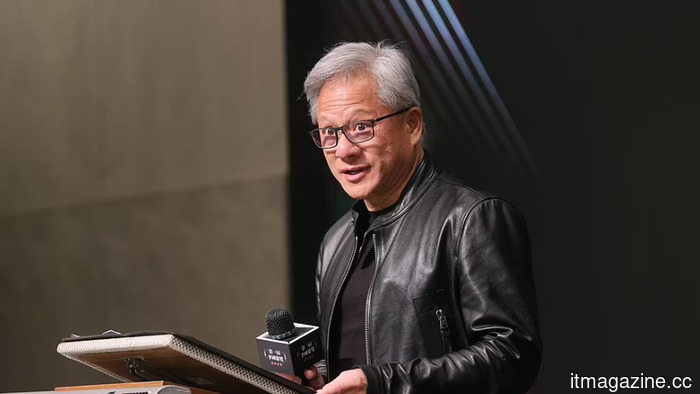 Nvidia CEO Jensen Huang states that illicit data centers are a futile venture and emphasizes that national security is the top priority.
Jensen Huang informed shareholders that Nvidia would place greater importance on US national security than on sales, describing smuggled chip data centers as impractical.
Nvidia CEO Jensen Huang states that illicit data centers are a futile venture and emphasizes that national security is the top priority.
Jensen Huang informed shareholders that Nvidia would place greater importance on US national security than on sales, describing smuggled chip data centers as impractical.
 Save the date, Batman: Caped Crusader Season 2 is set to launch in a single big binge drop this July.
The first trailer for Season 2 of Batman: Caped Crusader highlights The Riddler and concludes with a short glimpse of The Joker.
Save the date, Batman: Caped Crusader Season 2 is set to launch in a single big binge drop this July.
The first trailer for Season 2 of Batman: Caped Crusader highlights The Riddler and concludes with a short glimpse of The Joker.
 Tissium secures €60 million for sutureless nerve repair.
France's Tissium has secured €60 million to introduce COAPTIUM CONNECT, the sole FDA-approved sutureless nerve repair system, to operating rooms in the United States.
Tissium secures €60 million for sutureless nerve repair.
France's Tissium has secured €60 million to introduce COAPTIUM CONNECT, the sole FDA-approved sutureless nerve repair system, to operating rooms in the United States.
 I compiled a list of the top laptop deals for Prime Day 2026, and these five are my top picks.
After reviewing all the options on Amazon, I've compiled a shortlist of Prime Day 2026 laptop deals, ranging from a $499.99 student laptop to a $1,239.99 gaming rig.
I compiled a list of the top laptop deals for Prime Day 2026, and these five are my top picks.
After reviewing all the options on Amazon, I've compiled a shortlist of Prime Day 2026 laptop deals, ranging from a $499.99 student laptop to a $1,239.99 gaming rig.
Qualcomm secures Meta as its first identified customer for the Dragonfly data centre chips.
Qualcomm announced its Dragonfly C1000 data center chip, with Meta being its first specified customer, and confirmed its acquisition of AI startup Modular for $3.9 billion.