

Micron's revenue increased fourfold as the demand for AI memory has driven gross margins to surpass 81 percent.
Micron's Q3 revenue reached $41 billion, a fourfold increase year-over-year driven by soaring demand for AI memory, with gross margins exceeding 81 percent and guidance for Q4 at $50 billion.
Micron Technology reported nearly $42 billion in revenue for its fiscal third quarter, up from just over $9 billion the previous year and surpassing Wall Street's expectations significantly. These results, released on Tuesday, indicate that the company benefiting most from the AI memory surge is one whose stock has already surged about 700 percent in the past year.
Adjusted earnings were above $25 per share, exceeding analyst predictions of around $21. GAAP net income topped $28 billion, or nearly $25 per share, a rise from nearly $2 billion a year prior. Gross margins rose to over 81 percent, compared to 69 percent in the previous quarter and 27 percent a year ago.
The primary highlight was revenue growth. Micron's nearly $42 billion in revenue compared to the consensus estimate of approximately $36 billion was mainly driven by increasing demand for high-bandwidth memory (HBM), which are stacked DRAM chips used alongside GPUs in AI accelerators from companies like Nvidia and Google. HBM has become a critical limitation in the expansion of AI infrastructure, and Micron is one of only three manufacturers globally capable of producing it.
CEO Sanjay Mehrotra noted that Micron currently meets only about 50 to 66 percent of customer demand for HBM. The company has sold out its entire HBM supply for 2026 under multi-year contracts and has received $22 billion in customer cash deposits, essentially prepayments from major clients looking to secure supply.
Micron's upcoming HBM4 chips are ramping up production at twice the rate of the previous HBM3E generation, with revenue already exceeding one billion dollars. This technology is crucial for the latest offerings from Nvidia and Google, where the focus is increasingly on memory bandwidth rather than raw computational power.
Micron's forward guidance was similarly bold; it estimated fiscal fourth-quarter revenue of around $50 billion, plus or minus one billion, compared to analyst forecasts of about $44 billion and a figure of just over $11 billion from the previous year. The company also increased its yearly capital expenditure outlook to over $25 billion from a previous target of $20 billion in order to boost production capabilities for HBM and advanced DRAM.
Micron's market capitalization surpassed one trillion dollars on May 26, making it the latest memory chip manufacturer to achieve this level as the AI-fueled memory supercycle alters industry valuations. Its roughly 700 percent stock increase over the last year signifies that the market is viewing memory not merely as a cyclical commodity but as essential AI infrastructure.
The company anticipates the total addressable market for HBM will grow at a compound annual growth rate of about 40 percent through 2028, increasing from roughly $35 billion in 2025 to around $100 billion. Micron plans to return all excess free cash flow to shareholders, a promise facilitated by its cash deposit program, which lowers the capital risk associated with its expansion.
However, there are important considerations. Micron remains the smallest of the three HBM producers, trailing SK Hynix and Samsung, and has the smallest share of Nvidia's HBM4 allocation among the three. Additionally, the wider memory market is evolving, with Chinese firms like CXMT aggressively entering consumer DRAM sectors that the leading three have deprioritized in favor of AI chips.
Memory prices tend to be cyclical, and the current supercycle relies on the continued robust capital expenditure from hyperscalers. If AI infrastructure investment slows or if HBM supply catches up to demand, the margins reported by Micron this quarter could shrink rapidly. An 81 percent gross margin is historically exceptional for a memory firm and reflects market imbalances as much as product quality.
For the moment, the figures are compelling. A year-over-year revenue increase of four times, tripled margins, and a guidance figure exceeding estimates by over $6 billion are exceptional outcomes for any company, particularly one that was experiencing losses two years ago. Micron's earnings underscore that the AI memory shortage is worsening, not lessening, with chip manufacturers profiting at a rate the market is still adjusting to reflect.
Other articles
 I compiled a list of the top laptop deals for Prime Day 2026, and these five are my top picks.
After reviewing all the options on Amazon, I've compiled a shortlist of Prime Day 2026 laptop deals, ranging from a $499.99 student laptop to a $1,239.99 gaming rig.
I compiled a list of the top laptop deals for Prime Day 2026, and these five are my top picks.
After reviewing all the options on Amazon, I've compiled a shortlist of Prime Day 2026 laptop deals, ranging from a $499.99 student laptop to a $1,239.99 gaming rig.
 Tissium secures €60M for nerve repair without sutures.
France's Tissium has secured €60M to introduce COAPTIUM CONNECT, the sole FDA-approved sutureless nerve repair system, into operating rooms across the United States.
Tissium secures €60M for nerve repair without sutures.
France's Tissium has secured €60M to introduce COAPTIUM CONNECT, the sole FDA-approved sutureless nerve repair system, into operating rooms across the United States.
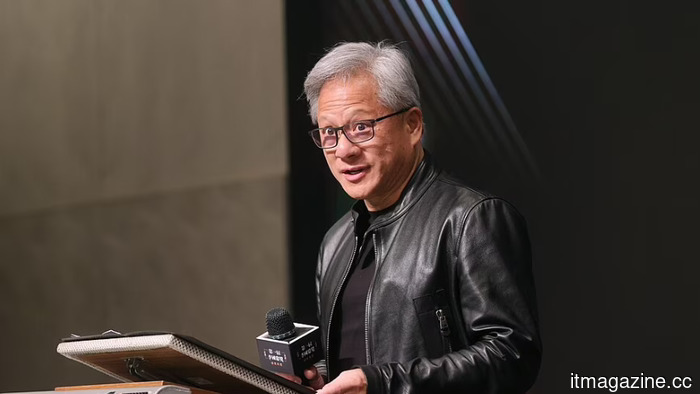 Nvidia CEO Jensen Huang believes that smuggled data centers are a futile approach, emphasizing that national security must take precedence.
Jensen Huang informed shareholders that Nvidia would focus on US national security over sales and described smuggled chip data centers as impractical.
Nvidia CEO Jensen Huang believes that smuggled data centers are a futile approach, emphasizing that national security must take precedence.
Jensen Huang informed shareholders that Nvidia would focus on US national security over sales and described smuggled chip data centers as impractical.
 Runpod achieves a $1 billion valuation after raising $100 million.
Runpod has successfully secured $100 million at a valuation of $1 billion, marking a tenfold increase over the past two years, and has stated that it rejected acquisition offers exceeding $500 million.
Runpod achieves a $1 billion valuation after raising $100 million.
Runpod has successfully secured $100 million at a valuation of $1 billion, marking a tenfold increase over the past two years, and has stated that it rejected acquisition offers exceeding $500 million.
 EXCLUSIVE: Sam C. Wilson, a star of Masters of the Universe, discusses the film's striking visuals, action sequences, and practical effects.
In a special interview, Sam C. Wilson, the star of Masters of the Universe, shares insights about portraying the antagonist Trap-Jaw, the film's practical effects, stunt performance, and his collaboration with director Travis Knight.
EXCLUSIVE: Sam C. Wilson, a star of Masters of the Universe, discusses the film's striking visuals, action sequences, and practical effects.
In a special interview, Sam C. Wilson, the star of Masters of the Universe, shares insights about portraying the antagonist Trap-Jaw, the film's practical effects, stunt performance, and his collaboration with director Travis Knight.
 Tissium secures €60 million for suture-free nerve repair.
France's Tissium has secured €60 million to introduce COAPTIUM CONNECT, the sole FDA-cleared sutureless nerve repair system, into operating rooms in the United States.
Tissium secures €60 million for suture-free nerve repair.
France's Tissium has secured €60 million to introduce COAPTIUM CONNECT, the sole FDA-cleared sutureless nerve repair system, into operating rooms in the United States.
Micron's revenue increased fourfold as the demand for AI memory has driven gross margins to surpass 81 percent.
Micron reported $41 billion in revenue for Q3, marking a fourfold increase compared to the previous year, as HBM4 chips for Nvidia and Google pushed gross margins over 81 percent for the first time.