
Tissium secures €60 million for suture-free nerve repair.
Tissium has secured €60M to launch the world’s only FDA-approved sutureless nerve repair system in US hospitals. The Paris-based medtech company aims to replace the surgeon's needle with a small amount of light-cured adhesive.
For repairing a severed nerve, the conventional method has scarcely evolved over the years. A surgeon carefully stitches the two damaged ends together under a microscope, hoping to avoid causing additional harm to the tissue that needs to heal. Outcomes can be inconsistent; a recent meta-analysis indicated that only 54% of patients experience significant recovery post-surgery.
Tissium believes it has found a superior approach. The company has finalized a €60M funding round to advance its sutureless system into US operating theaters, with its first product already available in the market.
The funding details
The funding is divided into two parts. The first is a €30M Series D2 round, which wrapped up at the end of 2025, led by an undisclosed US family-owned investor. Additional contributions came from new family offices, affluent individuals, and existing investors.
The second part consists of a credit line of up to €30M from the European Investment Bank, distributed in three €10M tranches, contingent on achieving commercial, clinical, and financing milestones. This arrangement includes both dilutive funding and venture debt, and Tissium plans to utilize the first tranche by the end of June.
With this new funding, the company’s total financing has surpassed €200M since 2013. Cathay Health led its prior funding round, which raised €50M in Series C, in 2024, with support from the French life-sciences investor Sofinnova.
The issues with traditional methods
Nerve surgery is intricate, with soft tissue where each stitch creates a new wound. Inserting a needle into a nerve can lead to scarring, hindering the necessary regrowth of fibers, contributing to the often inadequate recovery rates.
Tissium proposes a solution that avoids piercing the nerve entirely. Its primary product, COAPTIUM CONNECT, uses a small 3D-printed chamber that encircles the two severed ends without penetrating them. The surgeon applies a liquid polymer around the junction, solidifying it with a blue-light pen. This seal stabilizes the nerve during healing and dissolves over the following months, leaving no residue.
The proprietary material is a key advantage for the company. Tissium refers to it as a biomorphic programmable polymer, which does not contain human or animal tissue, in contrast to competing products that depend on donor materials. The technology potentially has broad applicability for various repairs.
Initial findings
The clinical evidence, although limited, is noteworthy. In a study of 12 patients with digital nerve injuries, all participants regained full movement, and none reported pain a year post-surgery. This success was the basis for COAPTIUM CONNECT receiving FDA De Novo authorization and entering the US market in November 2025.
According to the company, it is the only FDA-approved sutureless nerve repair system of its kind, which is central to its marketing strategy and a key reason investors are willing to support a device with a brief history.
From MIT to market
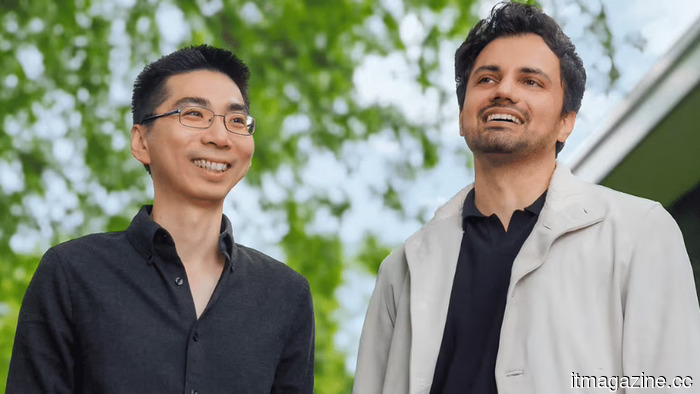
Tissium has been in operation since 2013, co-founded by Christophe Bancel and Maria Pereira. Pereira developed the foundational polymer during her PhD in the MIT Portugal Program while collaborating with Robert Langer and Jeffrey Karp. The company is based in Paris, has a US office in Cambridge, Massachusetts, and a manufacturing facility in Roncq, northern France.
“We are now executing our transition into a commercially-focused medtech company,” said Christophe Bancel, CEO and co-founder. This lengthy development phase is typical in medical devices due to slow regulatory processes and lengthy proof requirements, also explaining the nature of this funding. Tissium is no longer in the invention stage; it is focused on marketing.
A competitive and expanding market
The opportunity is substantial and expanding. The global market for peripheral nerve repair devices was valued at approximately $13.4bn in 2025 and is projected to reach $30.5bn by 2033, growing at an annual rate of about 15%. Rising trauma cases and a trend toward less invasive, absorbable repairs are driving this growth.
Tissium will face competition, especially from the US firm Axogen, which currently holds a dominant position with a market valuation around $1.67bn and has recently received full FDA approval for its main nerve graft. Integra LifeSciences also maintains strong positions in nerve conduits and wraps, yet both rely on donor materials and still require sutures to complete the procedure. Tissium's strategy is that surgeons will prefer a synthetic solution that does not directly contact the nerve.
European investment landscape
The deal structure reflects trends in European medtech. The EIB has increasingly supported the region’s health and deep tech companies, recently investing in
Other articles
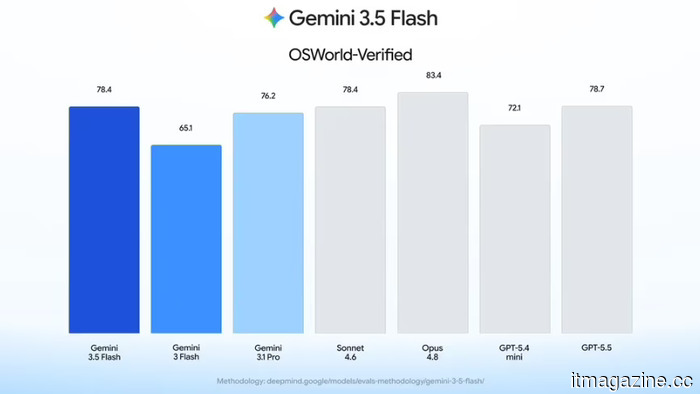 Gemini 3.5 Flash is now capable of viewing and managing your screen, and Google aims for businesses to have confidence in it.
Google has integrated computer usage into Gemini 3.5 Flash, moving away from the standalone model and incorporating enterprise safety measures.
Gemini 3.5 Flash is now capable of viewing and managing your screen, and Google aims for businesses to have confidence in it.
Google has integrated computer usage into Gemini 3.5 Flash, moving away from the standalone model and incorporating enterprise safety measures.
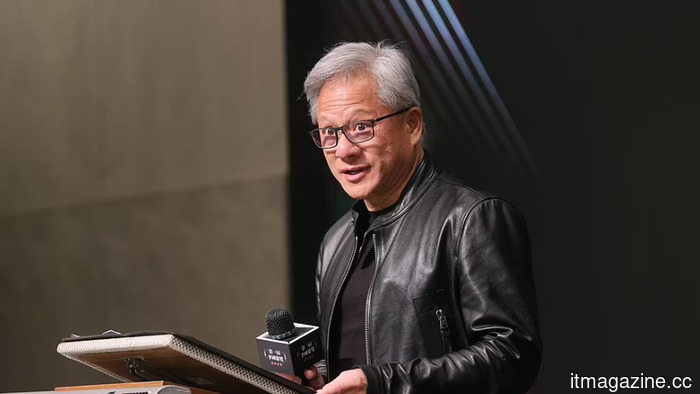 Nvidia CEO Jensen Huang states that illicit data centers are a futile venture and emphasizes that national security is the top priority.
Jensen Huang informed shareholders that Nvidia would place greater importance on US national security than on sales, describing smuggled chip data centers as impractical.
Nvidia CEO Jensen Huang states that illicit data centers are a futile venture and emphasizes that national security is the top priority.
Jensen Huang informed shareholders that Nvidia would place greater importance on US national security than on sales, describing smuggled chip data centers as impractical.
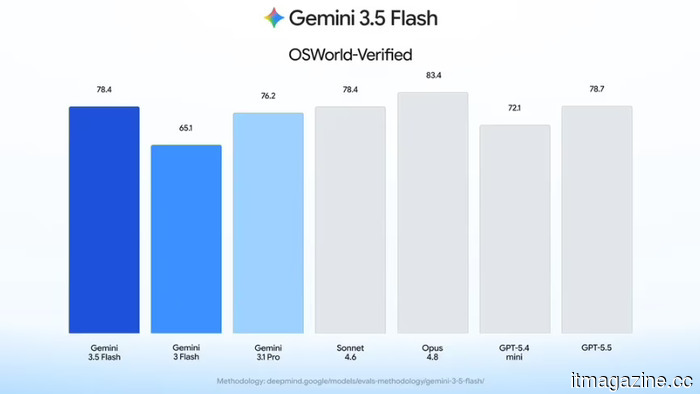 Gemini 3.5 Flash is now capable of viewing and managing your screen, and Google aims to gain the trust of enterprises in this feature.
Google has integrated computer use as a core feature in Gemini 3.5 Flash, replacing the standalone model and incorporating enterprise safety measures.
Gemini 3.5 Flash is now capable of viewing and managing your screen, and Google aims to gain the trust of enterprises in this feature.
Google has integrated computer use as a core feature in Gemini 3.5 Flash, replacing the standalone model and incorporating enterprise safety measures.
 Runpod achieves a $1 billion valuation after raising $100 million.
Runpod has successfully secured $100 million at a valuation of $1 billion, marking a tenfold increase over the past two years, and has stated that it rejected acquisition offers exceeding $500 million.
Runpod achieves a $1 billion valuation after raising $100 million.
Runpod has successfully secured $100 million at a valuation of $1 billion, marking a tenfold increase over the past two years, and has stated that it rejected acquisition offers exceeding $500 million.
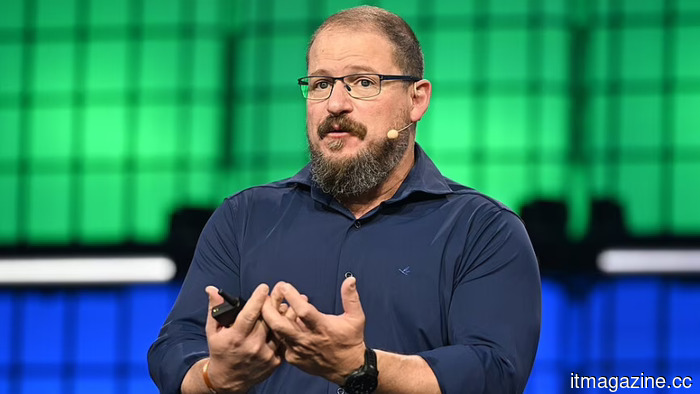 Qualcomm secures Meta as its first identified customer for the Dragonfly data centre chips.
Qualcomm announced its Dragonfly C1000 data center chip, with Meta being its first specified customer, and confirmed its acquisition of AI startup Modular for $3.9 billion.
Qualcomm secures Meta as its first identified customer for the Dragonfly data centre chips.
Qualcomm announced its Dragonfly C1000 data center chip, with Meta being its first specified customer, and confirmed its acquisition of AI startup Modular for $3.9 billion.
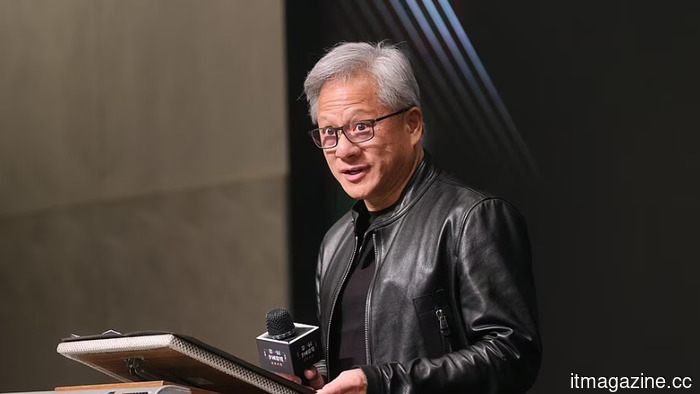 Nvidia's CEO Jensen Huang asserts that illicit data centers are a futile endeavor and that national security should take precedence.
Jensen Huang informed shareholders that Nvidia would place US national security above sales and described smuggled chip data centers as unfeasible.
Nvidia's CEO Jensen Huang asserts that illicit data centers are a futile endeavor and that national security should take precedence.
Jensen Huang informed shareholders that Nvidia would place US national security above sales and described smuggled chip data centers as unfeasible.
Tissium secures €60 million for suture-free nerve repair.
France's Tissium has secured €60 million to introduce COAPTIUM CONNECT, the sole FDA-cleared sutureless nerve repair system, into operating rooms in the United States.