
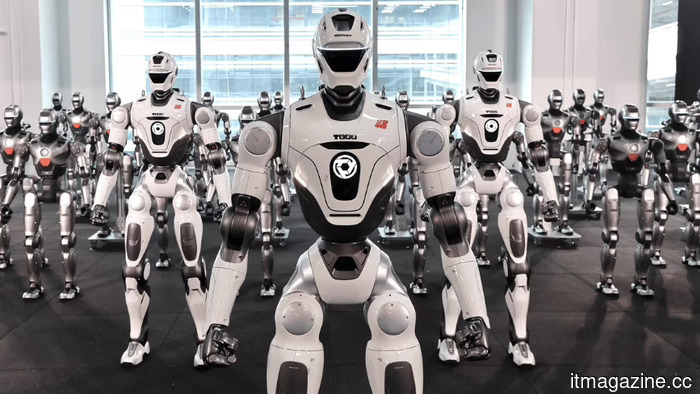
Hyundai workers vote to oppose automation in robot strike.
Hyundai employees have overwhelmingly voted to authorize a strike, with robots making their debut in this labor dispute. A strike involving Hyundai’s robots would challenge the dynamics of control on the factory floor as humanoid machines are introduced.
South Korea's leading automotive manufacturer is on the brink of a confrontation regarding the use of robots. As reported by the Financial Times, Hyundai’s union has voted to authorize a strike, partly due to concerns that machines may take over jobs held by union members. The workers are demanding a voice in how AI and automation are integrated into their operations.
The vote revealed strong support for strike action, with 92% of the union’s 39,668 members in favor, following a stalemate after 11 rounds of wage negotiations. Although the union has yet to call for a walkout, they now possess the mandate to do so.
This is significant as Hyundai is one of the largest private employers in South Korea, with its Ulsan facility being among the largest automobile manufacturing plants globally. When this union takes action, it garners national attention.
The underlying issues in this conflict are familiar. The union is seeking increased performance bonuses, higher base salaries, and a later retirement age. These concerns are typically raised by Korean automakers annually.
However, the context has intensified. South Korea’s automotive industry is grappling with tariffs, dwindling demand, and strong competition from China. While management seeks flexibility, workers are calling for job security, and the introduction of robots complicates this standoff.
One of the union’s new demands is for assurances regarding job security and working conditions as Hyundai introduces AI and automation, an issue that wasn't highlighted in previous wage negotiations but is now central to discussions.
The catalyst for this concern is a robot named Atlas. Hyundai owns Boston Dynamics, the company behind this humanoid robot, which was showcased with production capabilities at CES in January. The introduction of Atlas caused a stir in the industry.
Hyundai is not merely experimenting; it acquired a controlling interest in Boston Dynamics in 2021 and is steering the company towards manufacturing applications. The new Atlas can lift approximately 100 pounds and operate for extended shifts, making it well-suited for the tasks performed by Hyundai’s workforce.
The figures are alarming for workers. Hyundai intends to produce up to 30,000 Atlas units annually by 2028, with over 25,000 designated for its Hyundai and Kia facilities. Production is set to begin at a new robot factory in Savannah, Georgia.
Hyundai characterizes this rollout cautiously, stating that Atlas will initially handle dangerous and laborious tasks before progressing to assembly roles. However, workers interpret this differently. The Korean Metal Workers' Union points out that each robot will cost less than two years' worth of a worker's wages, suggesting more of a replacement than an assistive role.
This disparity between the company’s narrative and the union’s perspective encapsulates the entire dispute. Hyundai focuses on safety and labor shortages, while the union emphasizes job security and negotiating power, both referring to the same robotic technology.
The union has taken a firm stance, declaring, “Not a single humanoid robot will be permitted on the production lines without a labor-management agreement.” The union demands a voice in decisions surrounding the deployment of robots in place of human workers.
This issue reshapes the overall discussion. The conflict is no longer solely centered on salaries; it now encompasses who holds the authority to determine when robotic systems take over human roles. Hyundai wants to implement changes according to its timeline, while the union insists on participating in those decisions.
The union also possesses negotiating leverage. Hyundai’s workforce has previously gone on strike, and a work stoppage could halt the production of thousands of vehicles daily. This power makes the union's demands regarding robots even more substantial. The company cannot afford to simply wait out any labor actions.
This situation unfolds in a nation that is already reconsidering the relationship between labor and technology. Unions at Samsung have become more assertive, and recent labor negotiations signal a shift in bargaining strategies among Korean workers. The discord surrounding Hyundai's robots likely accelerates these changes.
Politicians are closely monitoring the situation. South Korea’s government has contended that the benefits of AI advancements should extend to the public and not just to corporate shareholders. A strike at the country’s preeminent car manufacturer regarding robotics transforms that claim into an immediate challenge.
An additional factor at play is the demographic reality. South Korea's population is rapidly aging, and carmakers argue that robots will fill labor shortages that cannot be addressed by human workers. The union, however, doesn't subscribe to the notion of a simple labor shortage; instead, it perceives a company eager to reduce expenditures disguised as future-proofing.
The landscape is expanding rapidly. Hyundai is not isolated in its initiatives; across Asia, manufacturers are racing to integrate humanoid robots into their operations, from China's smartphone producers adopting robotic processes to logistics firms like JD.com suggesting
Other articles
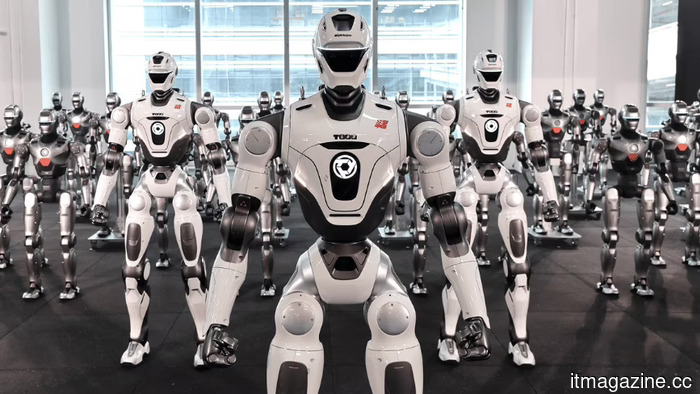 Hyundai robotic strike: union decides to challenge automation.
Workers at Hyundai voted 92% in favor of authorizing a strike, seeking control over the robots that are poised to inundate its factories. A strike involving Hyundai robots may be imminent.
Hyundai robotic strike: union decides to challenge automation.
Workers at Hyundai voted 92% in favor of authorizing a strike, seeking control over the robots that are poised to inundate its factories. A strike involving Hyundai robots may be imminent.
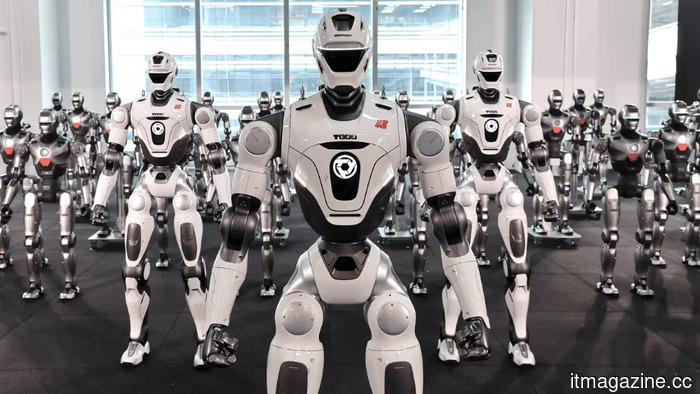 Hyundai robot strike: union decides to combat automation
Workers at Hyundai voted 92% in favor of authorizing a strike, seeking control over the influx of robots expected in its factories. A strike involving Hyundai robots may be forthcoming.
Hyundai robot strike: union decides to combat automation
Workers at Hyundai voted 92% in favor of authorizing a strike, seeking control over the influx of robots expected in its factories. A strike involving Hyundai robots may be forthcoming.
 The House legislates on a bill regarding energy expenses for AI data centers.
Congress is aiming for Big Tech to take on the energy expenses of AI data centers. A House committee is set to vote this week on a measure to ensure that the costs associated with AI development do not fall on household electricity bills.
The House legislates on a bill regarding energy expenses for AI data centers.
Congress is aiming for Big Tech to take on the energy expenses of AI data centers. A House committee is set to vote this week on a measure to ensure that the costs associated with AI development do not fall on household electricity bills.
 I would take advantage of this 8BitDo Prime Day keyboard offer before purchasing another dull gaming keyboard.
8BitDo’s mechanical keyboard, inspired by Xbox, is now available at a discounted price for Prime Day. It combines a transparent green design that evokes nostalgia, wireless connectivity, hot-swappable switches, and an 87-key layout, making it a more appealing option for upgrading your desk.
I would take advantage of this 8BitDo Prime Day keyboard offer before purchasing another dull gaming keyboard.
8BitDo’s mechanical keyboard, inspired by Xbox, is now available at a discounted price for Prime Day. It combines a transparent green design that evokes nostalgia, wireless connectivity, hot-swappable switches, and an 87-key layout, making it a more appealing option for upgrading your desk.
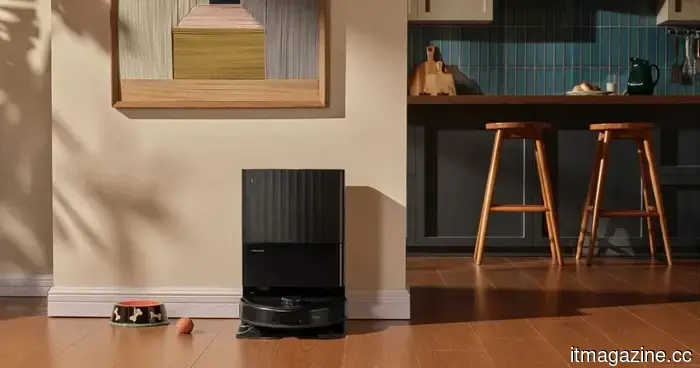 This Roborock robot vacuum has received a significant discount, and it could be the most intelligent home improvement you'll undertake this summer.
Robot vacuums have advanced significantly from the gimmicky devices they used to be. The high-end models available today not only clean your floors but also map your home, navigate around obstacles, mop hard surfaces, and manage one of the most labor-intensive household tasks with minimal effort from homeowners. This is precisely why the Roborock Qrevo S Pro has gained popularity.
This Roborock robot vacuum has received a significant discount, and it could be the most intelligent home improvement you'll undertake this summer.
Robot vacuums have advanced significantly from the gimmicky devices they used to be. The high-end models available today not only clean your floors but also map your home, navigate around obstacles, mop hard surfaces, and manage one of the most labor-intensive household tasks with minimal effort from homeowners. This is precisely why the Roborock Qrevo S Pro has gained popularity.
 EXCLUSIVE: Sam C. Wilson, a star of Masters of the Universe, discusses the film’s lively visuals, stunt work, and practical effects.
In a unique interview, Sam C. Wilson, the star of Masters of the Universe, talks about his role as the villain Trap-Jaw, the practical effects used in the film, the stunt work involved, and his collaboration with director Travis Knight.
EXCLUSIVE: Sam C. Wilson, a star of Masters of the Universe, discusses the film’s lively visuals, stunt work, and practical effects.
In a unique interview, Sam C. Wilson, the star of Masters of the Universe, talks about his role as the villain Trap-Jaw, the practical effects used in the film, the stunt work involved, and his collaboration with director Travis Knight.
Hyundai workers vote to oppose automation in robot strike.
Workers at Hyundai voted 92% in favor of authorizing a strike, seeking control over the robots that are expected to fill its factories. This could lead to a strike involving Hyundai robots.