
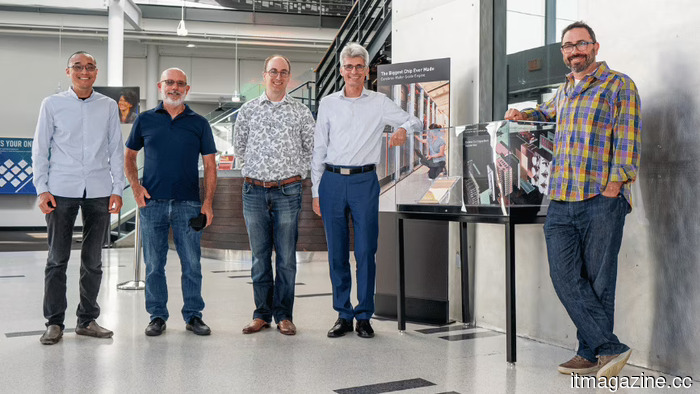
Cerebras shares decline as a shortage of buildings impacts the company.
Cerebras has nearly doubled its revenue and projected 2026 sales to surpass Wall Street's estimates, yet its stock dropped around 10%. This decline was attributed to a margin squeeze, which stemmed not from a chip shortage but from a lack of infrastructure.
Cerebras recently experienced the consequences of going public during a market frenzy. On Tuesday, the AI chip manufacturer released its first results following a successful listing in May. Revenue nearly doubled, and the full-year forecast exceeded analyst expectations. However, the stock still fell by about 10%.
The financial results were positive: first-quarter revenue reached $193.4 million, a 92% year-over-year increase, according to CNBC. The net loss decreased to $14 million from $23.9 million, outperforming Wall Street's projections. Cerebras also forecasted full-year revenue between $855 million and $865 million, well above the $824.8 million expected by analysts.
So why the stock decline? Investors were more concerned with margins than demand, and the source of the margin issue is quite revealing.
A notable irony
Cerebras cautioned that its core gross margin would drop to between 36% and 38% this quarter, down significantly from 46.5% in the previous quarter. This is a significant decrease for a company that was marketed to investors as a high-margin chip manufacturer. The reasoning is almost poetic.
“It’s a grand irony that after all this technology that we’ve invented, and Nvidia has invented, buildings are the limiting factor,” said chief executive Andrew Feldman. Cerebras is struggling to find enough data center space for its chips.
To compensate, it is renting back some of its systems from customers and quickly expanding its own infrastructure. Finance chief Bob Komin informed analysts that these expenses would reduce margins by 10 to 15 points this year.
This bottleneck was largely overlooked in market expectations. The constraint on AI is transitioning from silicon to concrete and energy. Even the company with the world’s largest chip faces difficulties in securing sufficient powered floor space to operate them. US utilities are planning to invest $1.4 trillion by 2030 to address this demand, and the resulting wait for power is directly impacting Cerebras' margins.
Why Wall Street reacted harshly
A positive financial result that triggers a sell-off indicates prevailing market sentiment. Cerebras went public in May at $185 per share, with an opening price of $350 and a closing price above $311 on its first day. Since then, it has seen a substantial decline, closing Tuesday at $226.72, down nearly 28% from its peak.
The IPO was historic, raising over $6 billion, making it the largest semiconductor IPO to date and the biggest US tech debut since Uber in 2019.
The timing was also unfortunate. Cerebras reported on a particularly tough day for chip stocks, with the Philadelphia Semiconductor Index dropping 7.9%, described by one analyst as a “chip-wreck,” largely led by Micron's sell-off. When sentiment turns negative for the sector, even a single good quarter struggles to make an impact.
Additionally, there is a deeper trap of expectations. Investors have become accustomed to Nvidia and a few other companies consistently exceeding estimates each quarter, raising the benchmark. For a newly public competitor to Nvidia, simply beating expectations isn't sufficient; anything less than extraordinary is perceived as disappointing.
The business beyond the stock price
When filtering out the market noise, Cerebras remains a compelling company. It produces the Wafer Scale Engine, a chip the size of a dinner plate, promoting itself as delivering the fastest AI inference globally.
Inference refers to executing models for users rather than training them. This is the niche Cerebras has chosen, positioning itself to partner with everyone except Nvidia.
The customer roster reflects this ambition.
In January, Cerebras secured a deal with OpenAI to provide 750 megawatts of inference capacity, valued at more than $20 billion at full rollout, along with a $1 billion working capital loan. It is also collaborating with Amazon Web Services on a split model, where AWS chips handle part of a query while Cerebras manages the faster component.
Group 42 and an AI university in Abu Dhabi complete a list of significant collaborators. The revenue mix is also changing, with cloud and services revenue—the segment that executes models for clients—surging 178% year over year, indicating a shift towards the inference tasks that Cerebras specializes in.
The product story is strong as well. Cerebras co-launched Codex-Spark, a coding model optimized for near-instant responses, claiming it processes over 1,000 tokens per second. Speed is the key selling point. Feldman argues that faster AI is inherently more valuable than slower alternatives and is worth the investment.
The case for caution
The risks are evident. Cerebras relies heavily on a few customers, particularly OpenAI, so any instability there could have serious repercussions. The scale
Other articles
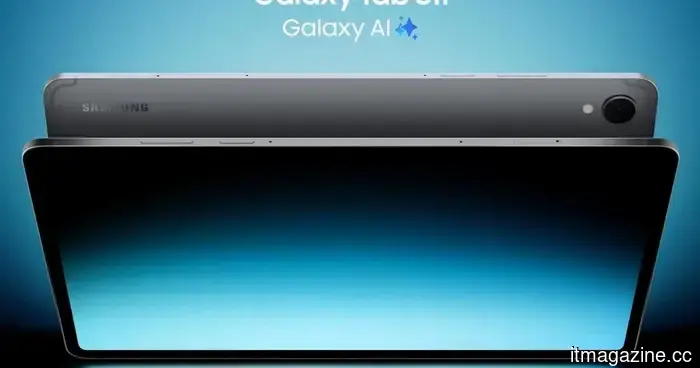 You can avoid overspending on a high-end Android tablet with this Galaxy Tab S11 offer.
Samsung's Galaxy Tab S11 has received a price reduction for Prime Day, making its AMOLED display, sleek design, and included S Pen more appealing for those looking for Android tablets at this time.
You can avoid overspending on a high-end Android tablet with this Galaxy Tab S11 offer.
Samsung's Galaxy Tab S11 has received a price reduction for Prime Day, making its AMOLED display, sleek design, and included S Pen more appealing for those looking for Android tablets at this time.
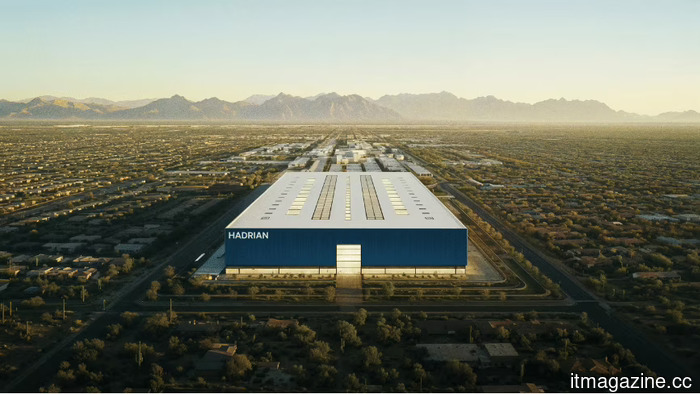 Hadrian's $7.5 billion valuation: physical-AI wager, rejected.
Hadrian is said to be negotiating to secure $1 billion at a valuation of $7.5 billion, a figure it describes as "inaccurate." This occurs amidst the surge in physical AI and reindustrialization.
Hadrian's $7.5 billion valuation: physical-AI wager, rejected.
Hadrian is said to be negotiating to secure $1 billion at a valuation of $7.5 billion, a figure it describes as "inaccurate." This occurs amidst the surge in physical AI and reindustrialization.
 OpenAI's Jalapeño chip: an alternative to Nvidia
OpenAI has introduced Jalapeño, its inaugural AI chip developed in collaboration with Broadcom for inference purposes, as it seeks to reduce its significant dependence on Nvidia.
OpenAI's Jalapeño chip: an alternative to Nvidia
OpenAI has introduced Jalapeño, its inaugural AI chip developed in collaboration with Broadcom for inference purposes, as it seeks to reduce its significant dependence on Nvidia.
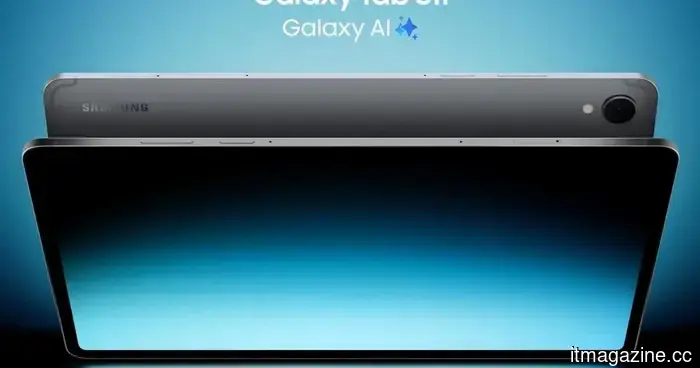 You don't have to spend extra on a high-end Android tablet thanks to this Galaxy Tab S11 offer.
Samsung’s Galaxy Tab S11 has received a price reduction for Prime Day, making its AMOLED display, sleek design, and bundled S Pen more appealing for those looking to purchase an Android tablet at this time.
You don't have to spend extra on a high-end Android tablet thanks to this Galaxy Tab S11 offer.
Samsung’s Galaxy Tab S11 has received a price reduction for Prime Day, making its AMOLED display, sleek design, and bundled S Pen more appealing for those looking to purchase an Android tablet at this time.
 iOS 27 developer beta 2 has arrived. Below is a list of all the new features included.
Apple has released the second developer beta of iOS 27, featuring a significantly quicker Siri, a resolved cropping issue, Wallet Insight, inline RCS responses, and several other appreciated enhancements. Here’s a summary of all the new features.
iOS 27 developer beta 2 has arrived. Below is a list of all the new features included.
Apple has released the second developer beta of iOS 27, featuring a significantly quicker Siri, a resolved cropping issue, Wallet Insight, inline RCS responses, and several other appreciated enhancements. Here’s a summary of all the new features.
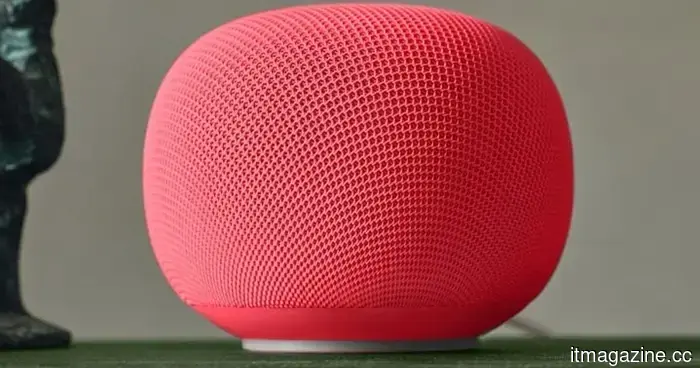 The Google Home Speaker is quite remarkable, but that impression changes when you examine the power cable.
A buyer managed to get the new Google Home Speaker ahead of time and shared their initial thoughts. The sound quality is impressive, the setup is fast, but the non-removable power cable is a significant drawback for repairability.
The Google Home Speaker is quite remarkable, but that impression changes when you examine the power cable.
A buyer managed to get the new Google Home Speaker ahead of time and shared their initial thoughts. The sound quality is impressive, the setup is fast, but the non-removable power cable is a significant drawback for repairability.
Cerebras shares decline as a shortage of buildings impacts the company.
Cerebras saw its revenue nearly double and exceeded sales projections for 2026, yet its stock dropped by 10% due to margin pressures from a shortage in the data-center sector.